

Loading, please wait...
Loading, please wait...
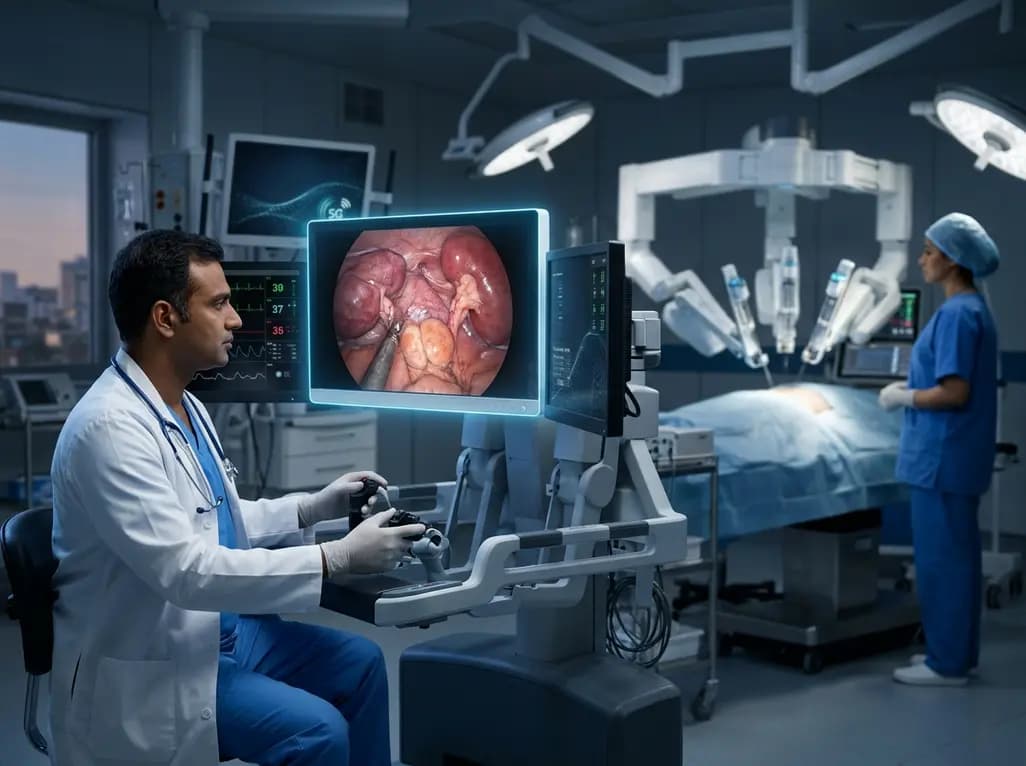
Modern telecommunications and advanced surgical systems are converging to transform remote operative care. In recent years, robotic telesurgery in urology has shifted from an experimental concept to an attainable clinical reality across specialized medical centers. Surgeons can now operate on patients situated hundreds or even thousands of kilometers away with exceptional dexterity. High-bandwidth communication channels and multi-articulated robotic instruments facilitate this breakthrough. Consequently, urological specialists increasingly explore remote operations to democratize access to subspecialized surgical care.
Reliable connectivity forms the backbone of remote operative interventions. Specifically, robotic platforms demand stable telecommunication pipelines with minimal packet loss and jitter. Engineers currently utilize fifth-generation wireless technology alongside dedicated fiber-optic terrestrial cables to link master consoles with slave patient carts. These networks consistently achieve bidirectional latency under one hundred milliseconds over intermediate distances. As a result, the operating surgeon experiences virtually zero perceptible lag during complex tissue manipulation.
Furthermore, network engineers integrate dual-redundancy systems to safeguard procedural continuity. In particular, secondary fiber connections or cellular links remain continuously active in the background. If the primary connection degrades, the transmission seamlessly switches to the backup route without interrupting instrument control. Consequently, telecommunication stability reassures clinical teams during delicate microvascular dissection. In addition, local network routers prioritize surgical telemetry and high-definition stereoscopic video streams above all other facility traffic. This network architecture maintains crisp visual feedback and reliable haptic responsiveness throughout the procedure.
The global surgical market has expanded significantly with the arrival of novel multiport robotic systems. Platforms such as the Toumai and Edge systems introduce native digital communication interfaces designed specifically for remote telemetry. These platforms integrate high-definition three-dimensional endoscopes that transmit real-time operative imagery with negligible compression artifacts. Furthermore, their robotic arms offer multi-directional articulation that replicates the full degrees of freedom found in human wrists.
Meanwhile, decentralized robotic designs enhance operating room flexibility. Unlike older proprietary platforms, newer systems easily interface with hospital local-area networks and standard enterprise protocols. Robotic consoles provide adjustable ergonomics, intuitive master controllers, and integrated head-tracking sensors that protect patient safety. Therefore, the console automatically disengages instrument clutches whenever the surgeon looks away from the optical viewer. Moreover, these systems feature dual-console operational modes. This setup allows senior surgeons to mentor distant colleagues or immediately transfer instrument command during critical operative phases.
Urological procedures have consistently spearheaded remote robotic milestones in modern medicine. In particular, robot-assisted radical prostatectomy serves as the benchmark procedure for clinical feasibility trials. Urologists choose radical prostatectomy because the operation requires meticulous pelvic lymph node dissection, dorsal venous complex control, and precise vesicourethral anastomosis. European surgical groups recently achieved seamless transcontinental prostatectomies linking surgical consoles and patients across thousands of kilometers.
Additionally, academic centers are extending remote interventions to upper tract urological pathologies. Clinical teams have successfully documented remote partial nephrectomies, pyeloplasties, and adrenalectomies in selected cohorts. These achievements prove that skilled operators can manage vascular clamping and intracorporeal suturing across vast physical distances. However, the existing clinical evidence remains concentrated in specialized academic centers and live surgical symposiums. Consequently, academic societies emphasize that widespread clinical translation requires structured registry studies and systematic comparative trials against standard local robotic surgery.
Patient safety remains the paramount priority during remote operative care. Therefore, hospitals deploy an experienced bedside surgical team physically present beside the patient at all times. This local team includes a credentialed robotic surgeon, an anesthesiologist, and specialized scrub personnel. Before commencing remote console manipulation, the bedside surgeon executes port placement, verifies robotic arm clearance, and establishes pneumoperitoneum.
Furthermore, local surgical staff maintain continuous visual and vocal contact with the remote console operator via dedicated communication channels. If unexpected physiological instability or unmanageable technical failure occurs, the local surgeon assumes direct physical control. For example, severe vascular injury or sudden network interruption requires rapid mechanical decoupling of the robotic arms. The bedside team can immediately complete the intervention using conventional laparoscopy or open surgical conversion. Accordingly, comprehensive preoperative simulation training and shared crisis management protocols establish safe operational parameters for every scheduled telesurgical intervention.
Despite remarkable technical triumphs, legal and ethical frameworks still struggle to keep pace with remote surgery. Specifically, medical licensing authorities currently limit surgical privileges to predefined national or state borders. Cross-border telesurgery across European nations or international boundaries raises contentious questions regarding legal liability, jurisdiction, and credentialing. Moreover, clinical data privacy regulations, such as European data protection mandates, require robust end-to-end encryption to shield sensitive patient telemetry from cyber threats.
Meanwhile, telesurgery holds profound relevance for countries with expansive geographical expanses, such as India. Advanced robotic telesurgery can link premier academic institutions in metropolitan hubs with regional healthcare centers in underserved areas. Furthermore, adopting low-cost robotic platforms and indigenous communications networks can dramatically reduce patient travel expenses and expand specialized urological access. Over the coming decade, standardized regulatory frameworks, structured fellowship accreditations, and artificial intelligence-assisted network management will solidify telesurgery as an indispensable pillar of global surgical care.
Clinical studies indicate that an ideal round-trip network latency should remain below 100 milliseconds for precise surgical manipulation. However, experienced urologists can safely navigate latencies up to 200 milliseconds during standard procedural steps. Latency exceeding 300 milliseconds noticeably impairs fine motor coordination and depth perception. Consequently, engineering teams employ dedicated high-speed fiber connections alongside redundant 5G channels to ensure seamless data transmission and prevent dangerous operational lags.
Urological surgeons select radical prostatectomy because it follows standardized anatomical landmarks and reproducible dissection planes. Furthermore, the confined pelvic cavity provides a relatively static surgical field, minimizing sudden unexpected anatomical shifts. Extensive experience with robot-assisted laparoscopic prostatectomy also provides clear operative benchmarks. Therefore, pioneering surgical teams leverage this established baseline to evaluate remote robotic instruments, stereoscopic visualization, and latency tolerances before expanding telesurgical applications into emergent or variable procedures.
The on-site bedside surgeon retains ultimate clinical responsibility for patient safety throughout the entire procedure. Although the remote operator controls the robotic console during active dissection, local clinicians must manage patient stability and anesthesia. In addition, the on-site surgical team maintains immediate authority to disconnect the telecommunication link. If signal disruption or severe hemorrhage occurs, local surgeons step in instantly to perform open or conventional laparoscopic conversion.
Disclaimer: This content is for informational and educational purposes only. It does not constitute medical advice, diagnosis, or treatment. Healthcare professionals should exercise independent clinical judgment. Refer to the latest local and national guidelines for clinical practice.
References

Read summarized clinical updates, watch expert medical content, and earn CME certifications right from your smartphone.
Open your smartphone camera to scan and install.





Robotic telesurgery in urology is entering clinical practice across Europe, driven by ultra-low-latency 5G and fiber-optic networks. This review analyzes procedural milestones, safety protocols, platform innovations, and regulatory challenges defining the future of remote urological care.
Today

The randomized EARLY-RESYNC trial reveals that early left bundle branch pacing combined with guideline-directed medical therapy significantly improves LVEF and reduces LV end-systolic volume compared to medical therapy alone in patients with complete LBBB and mildly reduced ejection fraction (36%-50%).
Today

Public health experts urge policymakers to review rigorous clinical evidence before scaling up double fortified salt. With only half of India's anaemia cases stemming from iron deficiency, specialists highlight structural trial limitations, dietary diversity needs, and pending data from the SAMPADA national survey.
Today
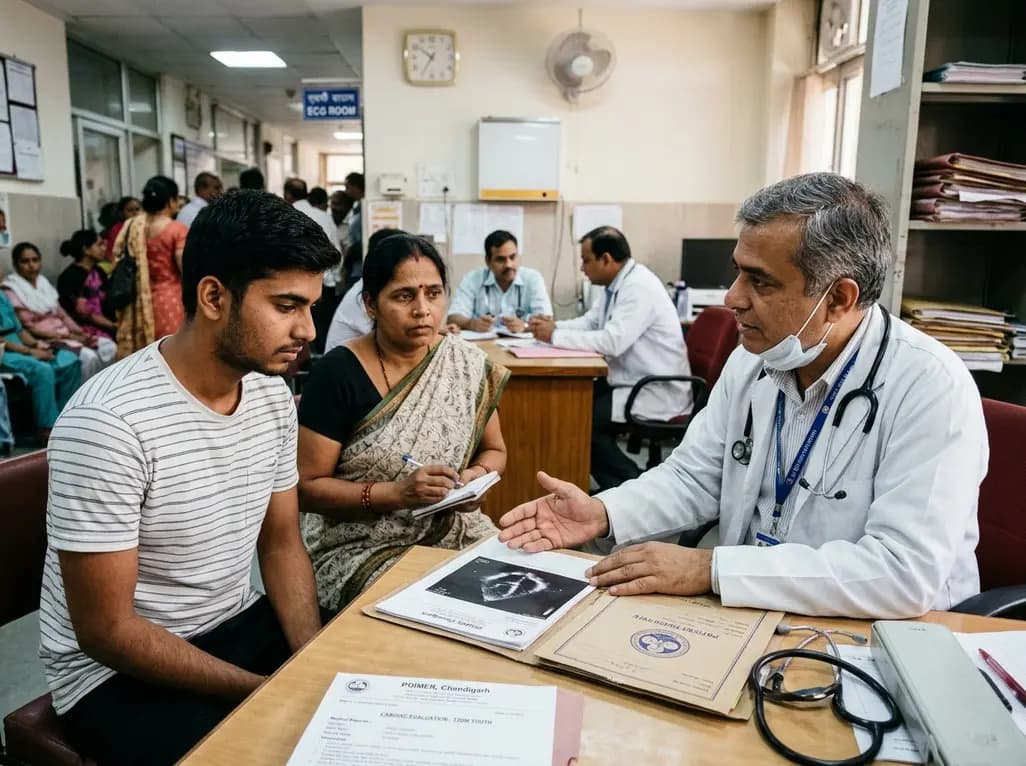
Recent data from PGIMER reveals that young adults diagnosed with type 2 diabetes face an aggressive disease trajectory. They encounter severe cardiovascular and microvascular damage within five years, occurring at higher rates than in type 1 diabetes despite lower mean blood glucose levels.
Today

A clinical overview of resveratrol supplementation in mitigating exercise-induced muscle damage. This narrative review explores physiological mechanisms, reductions in soreness markers like creatine kinase, dosage strategies, and bioavailability enhancements for sports medicine and nutrition practitioners.
Today

A novel smartphone-assisted biosensor utilizing molecularly imprinted polymers and catalytic nanozymes offers antibody-free, enzyme-free urinary microalbumin testing, enabling rapid, low-cost point-of-care screening for early chronic kidney disease.
Today
