.webp&w=384&q=75)

Loading, please wait...
Loading, please wait...
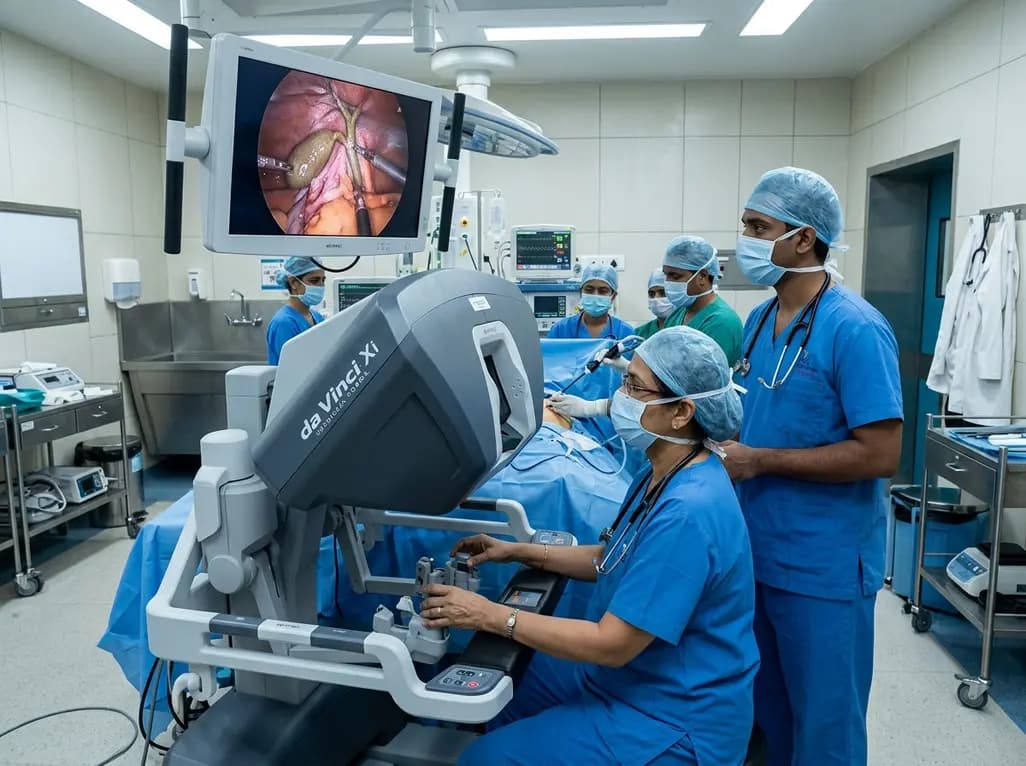
The rapid adoption of robotic surgery has transformed emergency general surgery over the past decade. Specifically, the utilization of robotic platforms for urgent abdominal conditions has expanded more than threefold since 2011. While elective robotic procedures have well-established safety protocols, urgent interventions present distinct clinical challenges. Acute gallbladder inflammation frequently distorts normal tissue planes, which complicates anatomical identification. Consequently, surgeons must navigate severe edema and friable tissue during acute cholecystitis. Prior analyses evaluating robotic cholecystectomy relied heavily on administrative payer claims. However, those datasets could not accurately evaluate individual surgeon experience or operative learning curves. To address this limitation, investigators examined collaborative data across twelve hospitals to compare clinical outcomes between robotic and conventional laparoscopic techniques. The multicenter analysis included 8,221 minimally invasive total cholecystectomy procedures, with 2,141 cases completed robotically. Researchers applied entropy balancing and multivariable models to eliminate baseline differences between cohorts. Furthermore, they constructed linear spline curves with a single knot at case seventy to track surgeon progress. This rigorous methodology offers crucial insight into the genuine learning curve of urgent robotic interventions.
Surgical teams often worry that the early adoption curve compromises patient safety during urgent operations. However, the multicenter findings revealed that robotic cholecystectomy was associated with significantly lower technical complications compared to laparoscopic procedures. Specifically, patients undergoing robotic surgery demonstrated a 62 percent reduction in technical adverse events, yielding an adjusted odds ratio of 0.38. Remarkably, this protective benefit persisted independently of cumulative surgeon experience. Even surgeons performing their initial twenty cases maintained exceptionally low rates of technical complications. The robotic platform provides three-dimensional stereoscopic visualization and articulated wrist instruments with tremor filtration. Consequently, these technical capabilities allow surgeons to execute precise dissection around the triangle of Calot, even amidst intense inflammation. Furthermore, stable camera control minimizes inadvertent tissue tearing and vascular disruption during critical operative steps. Spline curve modeling confirmed that technical complication rates remained consistently low across all volume tiers. Therefore, the early phase of robotic adoption does not elevate mechanical or anatomical complications during acute gallbladder removal. In addition, these objective findings reassure clinical department chairs who oversee quality metrics during institutional robotic onboarding.
Although technical precision improved, the statewide investigation identified notable differences in overall operative duration and secondary systemic events. Specifically, robotic cases required an average of 13.1 additional minutes when compared to standard laparoscopic operations. This modest prolongation frequently reflects robotic docking time, instrument exchanges, and specialized room preparation. In addition, statistical analysis demonstrated a slight increase in nontechnical complications among the robotic cohort. These nontechnical events primarily encompassed systemic medical issues such as urinary retention, mild respiratory compromise, and prolonged postoperative ileus. Furthermore, extended anesthesia exposure and underlying patient comorbidities often contribute to these postoperative systemic challenges. However, as surgeons accumulated case volume beyond the seventy-case threshold, total operative duration decreased progressively. Thus, institutional repetition and operative team familiarity substantially shorten procedural intervals over time. Meanwhile, the overall length of hospital stay remained largely comparable between both operative approaches after statistical adjustment. Clinicians must recognize that robotic procedures involve comprehensive workflow steps that extend beyond the primary surgeon. Consequently, coordinated theater nursing and dedicated anesthesia teams play pivotal roles in reducing perioperative delays.
In India, the utilization of robotic surgical systems is expanding rapidly across private tertiary care centers and government teaching institutions. Acute biliary emergencies, including calculus cholecystitis and biliary pancreatitis, represent a substantial proportion of daily general surgical admissions across the country. However, many Indian healthcare facilities face resource constraints, elevated capital costs, and intense operating room turnover pressure. Therefore, adopting robotic surgery for emergency cholecystectomy requires careful economic and logistical evaluation. The findings from this study provide vital clinical reassurance for Indian surgical departments initiating robotic emergency coverage. Because the robotic approach reduces technical complications from the very outset, patient safety remains uncompromised during initial surgeon onboarding. Nevertheless, administrators must optimize theater efficiency to manage the extra operating time effectively. Robotic systems like the da Vinci and newer modular platforms like CMR Versius allow surgical units to broaden emergency access. Additionally, hospitals should invest in multidisciplinary simulation drills so that scrub technicians and nursing officers dock instruments rapidly. Ultimately, Indian centers can maintain high patient throughput while providing advanced minimally invasive surgical care for complex biliary pathology.
Establishing a successful robotic emergency program requires structured institutional governance alongside meticulous operative oversight. First, hospital leadership must prioritize comprehensive simulation training for surgeons before they perform emergency interventions. Standardizing console curriculum benchmarks ensures that operators master instrument articulation, energy application, and camera manipulation in high-fidelity environments. Furthermore, surgical programs should implement proactive proctoring models during the initial seventy cases. Experienced robotic surgeons can provide real-time guidance during difficult dissections, which preserves patient safety and reinforces efficient operative habits. In addition, hospital quality improvement committees must systematically track both technical and nontechnical outcomes using risk-adjusted clinical registries. Monitoring critical parameters such as conversion rates, bile duct injuries, docking intervals, and operative duration facilitates prompt identification of procedural bottlenecks. Meanwhile, theater managers must train dedicated nursing teams to streamline robot draping and patient positioning. When surgical units cultivate supportive institutional ecosystems, they accelerate the learning trajectory for all participating team members. Consequently, emergency general surgery services can achieve superior clinical outcomes while minimizing unnecessary theater expenditures and avoidable complications.
No, clinical evidence demonstrates that surgeon experience does not elevate technical complications during robotic cholecystectomy. In fact, patients undergoing robotic procedures experienced significantly fewer technical adverse events compared to those undergoing standard laparoscopy. Enhanced stereoscopic visualization, tremor filtration, and articulated instrument dexterity allow surgeons to dissect inflamed tissues safely. As a result, even early-career robotic surgeons maintain exceptionally low technical complication rates during acute gallbladder interventions.
Robotic cholecystectomy typically requires slightly longer operative time primarily due to specialized theater workflow demands rather than console dissection delays. Surgical teams must position the robotic cart, secure optical trocars, dock mechanical arms, and perform instrument calibrations before commencing surgery. However, as operating room staff gain procedural familiarity and surgeons surpass seventy cases, total operative time decreases significantly, bringing procedure duration closer to conventional laparoscopic benchmarks.
Surgical departments should establish structured multi-tier training programs that combine virtual simulation with supervised clinical proctoring. Surgeons must complete rigorous console curriculum modules to master instrument kinematics before tackling emergency cases. Additionally, experienced robotic mentors should supervise junior faculty through their initial seventy procedures. Dedicated nursing and scrub team cross-training ensures rapid docking, thereby minimizing total room turnover and maximizing acute patient safety.
Disclaimer: This content is for informational and educational purposes only... Refer to the latest local and national guidelines for clinical practice.
References
Levy SC et al. Does Surgeon Experience Affect Outcomes in Robotic Cholecystectomy for Emergency Biliary Disease? A Statewide Analysis. J Trauma Acute Care Surg. 2026 Oct 09. doi: 10.1097/TA.0000000000005203. PMID: 42853238.
Picciariello A, et al. Robotic cholecystectomy during surgical training: learning curve and perioperative outcomes of 441 consecutive cases in a high-volume teaching center. J Robot Surg. 2026;20(1):125.
De Simone B, et al. Robotic emergency general surgery, future or fallacy?: case-matched comparison of operative and clinical outcomes during the adoption phase in a tertiary centre. Updates Surg. 2025;77(5):1489-1498.

Read summarized clinical updates, watch expert medical content, and earn CME certifications right from your smartphone.
Open your smartphone camera to scan and install.





A statewide analysis evaluates robotic cholecystectomy in emergency general surgery, finding significantly lower technical complication rates compared to laparoscopic procedures, regardless of surgeon experience, despite modestly longer operative times.
Today

India's antidepressant market crossed Rs 2,842 crore in 2026 even as unit sales declined. Clinicians analyze the shift toward newer drugs, widespread clonazepam combination use, social media-driven self-diagnosis, and persistent treatment gaps to assess genuine therapeutic recovery across diverse patient groups.
Today

Integrating adult genetic services into reproductive and pregnancy care substantially alters clinical management. A study reveals that diagnostic genetic evaluations directly inform maternal, fetal, and neonatal care in nearly 57% of tested patients, highlighting the value of preconception and antenatal genomics.
Today
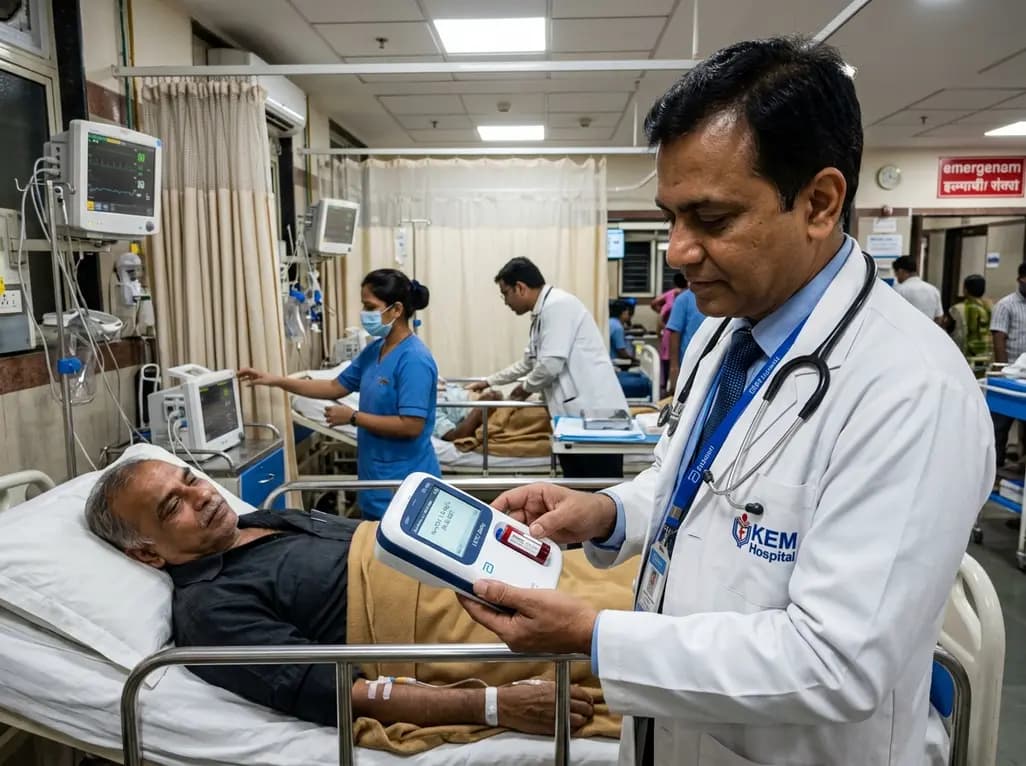
A real-world emergency department evaluation demonstrates that the Abbott i-STAT Alinity point-of-care high-sensitivity troponin I assay achieves excellent analytical precision and safely rules out myocardial infarction without false negatives, offering rapid bedside results to decongest acute care pathways.
Today
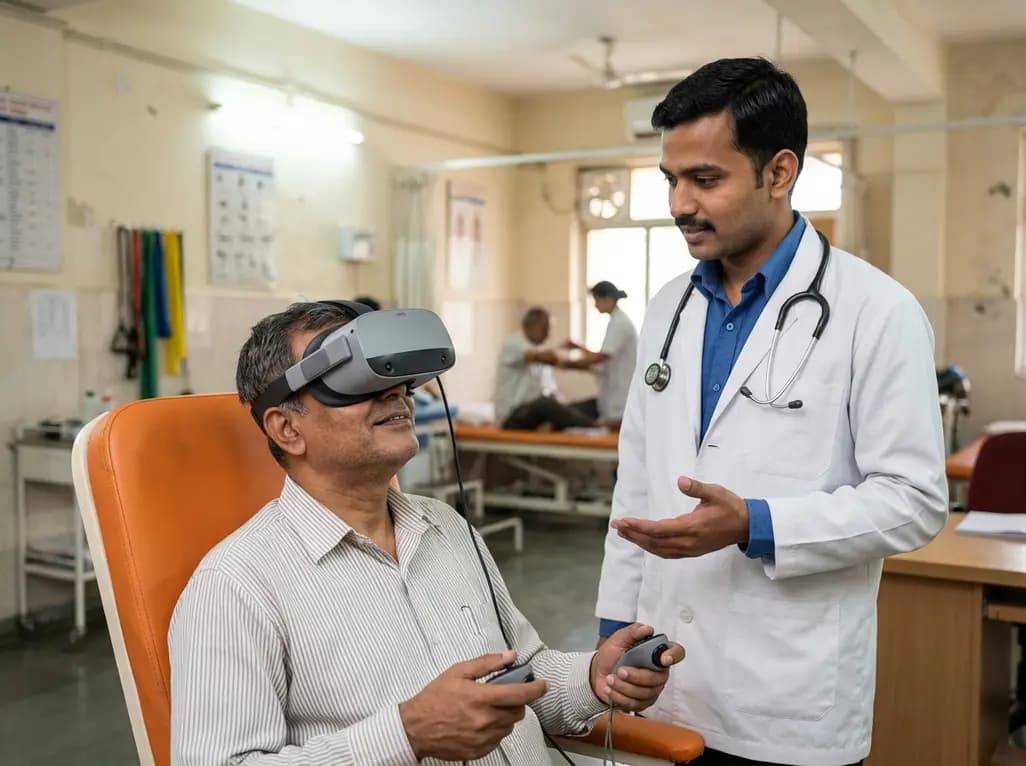
A recent scoping review highlights the efficacy, usability, and patient satisfaction of virtual reality pain management for chronic musculoskeletal pain, emphasizing psychotherapy-based VR protocols.
Today

A cross-sectional study in Nepal evaluates cardiovascular risk factors among adults working above 4,000 meters. The findings reveal unexpected rates of diabetes, hypertension, and mountain sickness, underscoring the urgent need for targeted cardiometabolic screening in high-altitude occupational cohorts.
Today
