

Loading, please wait...
Loading, please wait...
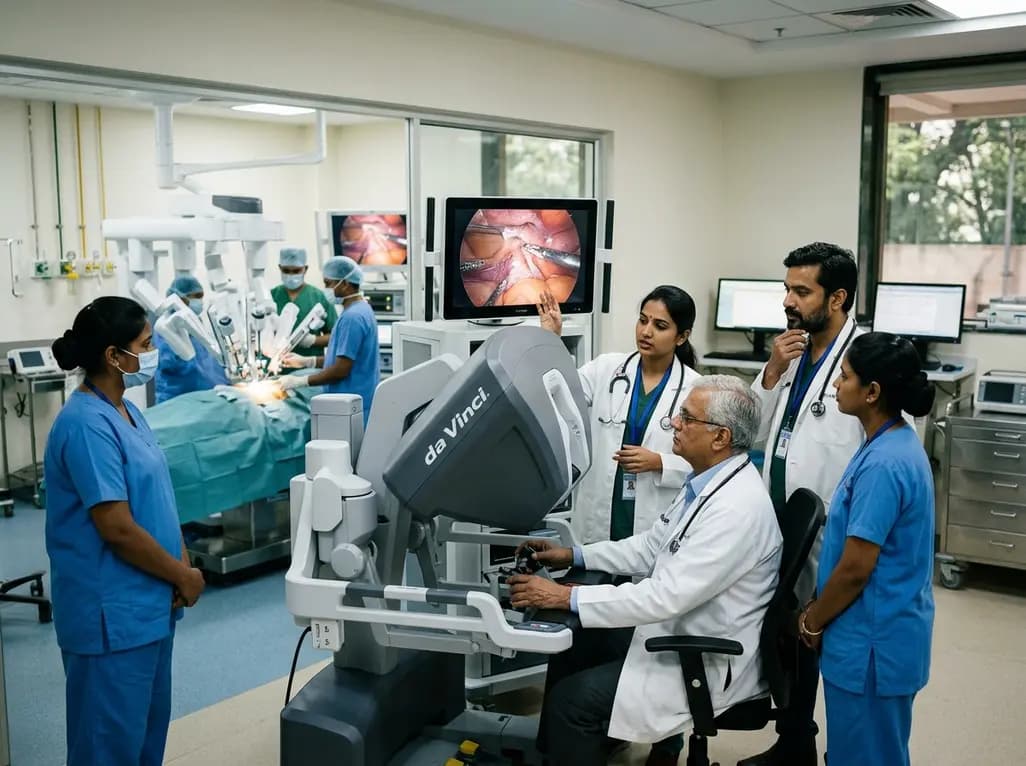
The global medical technology ecosystem recently witnessed a notable realignment as Intuitive Surgical narrowed its annual performance outlook. Specifically, modern robotic-assisted surgery continues to redefine minimally invasive interventions across major surgical disciplines worldwide. Consequently, hospital administrators and surgical specialists closely monitor these procedural shifts to forecast institutional investments and patient care trends.
Intuitive Surgical recently adjusted its full-year 2026 forecast for procedures performed using its flagship da Vinci surgical systems. The manufacturer now projects worldwide procedure volume growth to center near the midpoint of a 14% to 15% range. Previously, leadership had projected an expansion between 13.5% and 15.5%. Following this announcement, the company's shares declined by approximately 7% during extended market trading.
Procedure growth represents the primary operational metric for Intuitive because surgical volume directly drives recurring instrument and accessory sales. In fact, consumables generate the largest single revenue segment for the corporation. During the third quarter, the company delivered adjusted earnings of $3 per diluted share on total revenues of $3.05 billion. These financial figures comfortably surpassed consensus market estimates of $2.64 per share and $2.91 billion.
Nevertheless, regional performance diverged sharply across international territories. In the United States, quarterly da Vinci procedure volume expanded by 10%. In contrast, procedure volumes in markets outside the United States grew by an impressive 20%. Consequently, healthcare leaders must evaluate these geographic variations to understand how surgical adoption curves mature differently across diverse health economies.
Macroeconomic variables and legislative updates significantly shape surgical utilization rates across North America. Intuitive leadership noted that shifting public insurance eligibility continues to exert downward pressure on hospital operational throughput. In particular, lower enrollment numbers within the Affordable Care Act have dampened procedural velocity. Furthermore, recent revisions to Medicaid enrollment policies have altered coverage parameters for elective and semi-elective procedures.
Hospital executives are also monitoring potential statutory updates to the federal 340B drug pricing program. In July, Intuitive acknowledged that the expiration of enhanced federal insurance subsidies produced a measurable, modest adverse impact on overall surgical growth. Consequently, healthcare organizations face tighter operational margins and must navigate volatile patient reimbursement pathways.
Therefore, institutional planners are scrutinizing equipment capital investments and procedural cost-effectiveness more rigorously. When federal subsidies recede, patients often defer elective procedures or choose conventional surgical alternatives. However, high-acuity interventions, such as complex oncologic resections, typically demonstrate greater resilience against macroeconomic policy fluctuations. As health systems adapt to these regulatory changes, clinicians must balance clinical excellence with procedural efficiency to maintain sustainable operating margins.
To counter reimbursement pressures, Intuitive plans to roll out its innovative Extended Use Program across hospital networks. This strategic program redesigns selected instruments to deliver higher lifecycle usage per component. Consequently, the initiative lowers per-procedure consumable costs for surgical teams and broadens institutional access to modern robotic-assisted surgery. Pending regulatory clearance, the company expects the United States to serve as the inaugural commercial market for this rollout.
For surgical suites, consumable expenses represent a substantial portion of ongoing operative budgets. Traditional robotic instruments have strictly calibrated lifespans that require frequent replacement after a predetermined number of surgical fires. In contrast, the Extended Use model enhances instrument durability without sacrificing surgical precision or ergonomic performance.
Moreover, lowering procedural expenses directly facilitates wider clinical uptake in cost-sensitive hospital environments. By reducing the marginal cost per case, hospitals can expand robotic applications beyond niche indications. Surgical department heads can utilize these economical instruments across higher-volume general surgical caseloads. Therefore, this pricing framework bridges the gap between state-of-the-art technological capabilities and stringent departmental budget constraints, optimizing both operational viability and patient care.
While domestic United States procedure growth slowed to 10%, international markets experienced robust 20% year-over-year procedural gains. This sharp divergence underscores rapid technology adoption across developing healthcare systems, including India. Across major metropolitan hubs like Mumbai, Delhi, Bengaluru, and Hyderabad, tertiary hospitals are aggressively establishing comprehensive robotic surgery centers of excellence.
In India, leading private healthcare networks have embraced multi-arm robotic consoles to differentiate their surgical oncology and reconstructive programs. However, the Indian surgical landscape operates primarily under out-of-pocket expenditure models alongside private insurance networks. Consequently, high capital acquisition costs and expensive single-use instruments historically restricted robotic access to affluent urban centers. Initiatives similar to the Extended Use Program could dramatically accelerate adoption across tier-two Indian cities.
Furthermore, domestic regulatory developments and expanding health insurance coverage in India are encouraging surgical innovation. Modern corporate hospitals now view robotic consoles not merely as marketing assets, but as essential tools to shorten inpatient hospital stays. Reduced recovery intervals free up critical bed capacity and diminish overall perioperative infection rates. Thus, emerging markets outside North America will likely provide the main engine for future procedural growth.
The expansion of robotic technology relies heavily on proven clinical efficacy across specialized surgical fields. Initially, robotic systems gained widespread acceptance in urology, specifically establishing radical prostatectomy as the premier robotic application. Surgeons appreciate the magnified three-dimensional visualization and articulation that preserve delicate neurovascular bundles. Consequently, robotic radical prostatectomy remains the standard of care for localized prostate adenocarcinoma.
However, modern robotic growth now stems predominantly from general surgery, gynecology, and surgical oncology. In colorectal surgery, robotic instrumentation facilitates precise total mesorectal excision within the narrow bony pelvis. Similarly, gynecologic oncologists utilize robotic platforms for complex lymphadenectomies and staging procedures in endometrial malignancies. These technical capabilities minimize tissue trauma and reduce intraoperative blood loss.
Additionally, hepatobiliary and upper gastrointestinal surgeons are increasingly performing robotic partial hepatectomies and pancreaticoduodenectomies. Tremor filtration and endo-wristed mobility grant clinicians superior dexterity when dissecting near major retroperitoneal vessels. As training programs incorporate robotic simulation into standard surgical residency curricula, young specialists achieve procedural proficiency earlier in their careers. Consequently, multi-specialty utilization ensures steady robotic theater scheduling and robust long-term clinical dividends.
Hospital administrators and surgical directors in India must extract valuable operational lessons from these global market trends. First, institutions must recognize that procedure volume dictates the long-term economic sustainability of any robotic program. A robotic console sitting idle accumulates substantial maintenance overhead without generating offsetting revenue. Therefore, cross-departmental sharing among urology, surgical oncology, and gynecology is vital to maximize weekly console hours.
Second, surgical leadership must continuously monitor instrument economics and procurement terms. With medical device companies introducing cost-reduction programs, hospital procurement committees should actively negotiate consumable agreements. Reduced per-case instrument expenditure allows centers to offer competitive robotic package pricing to self-paying patients.
Finally, surgical teams must maintain uncompromising dedication to evidence-based outcomes and structured credentialing. Hospital credentialing committees should establish rigid proctorship milestones to guarantee patient safety throughout the technological learning curve. By aligning clinical excellence with prudent fiscal management, Indian healthcare institutions can successfully deliver next-generation surgical care. Consequently, adopting structured robotic pathways will elevate regional surgical standards while maintaining institutional financial health.
Q1: Why did Intuitive adjust its procedure growth forecast for 2026?
Intuitive tightened its worldwide procedure growth projection to the midpoint of 14% to 15%, narrowing its previous range of 13.5% to 15.5%. This adjustment reflects decelerating procedure expansion in the United States, where quarterly growth reached 10%. Furthermore, shifts in public insurance enrollment and subsidy expirations constrained domestic hospital throughput, even though robust 20% international growth partially offset these domestic challenges.
Q2: What is the Extended Use Program and how does it lower surgery costs?
The Extended Use Program is Intuitive's strategic commercial initiative designed to increase the number of surgical uses permitted per robotic instrument. Consequently, it lowers the recurring consumable cost for each surgical intervention without compromising mechanical reliability or clinical safety. By reducing marginal operational expenditures, the program assists hospitals in expanding robotic access across cost-sensitive patient populations and higher-volume general surgical specialties.
Q3: How do global robotic procedure trends affect healthcare providers in India?
Global procedural patterns directly influence the Indian surgical ecosystem because international markets currently drive robotic expansion with 20% growth rates. Furthermore, manufacturer initiatives to reduce instrument costs make advanced robotics far more accessible for Indian hospitals operating under out-of-pocket payment models. Consequently, Indian institutions can improve case viability across oncology, urology, and gynecology, facilitating broader adoption in secondary and tertiary medical centers.
Disclaimer: This content is for informational and educational purposes only. It does not constitute medical advice or replace professional judgment. Refer to the latest local and national guidelines for clinical practice.
References

Read summarized clinical updates, watch expert medical content, and earn CME certifications right from your smartphone.
Open your smartphone camera to scan and install.





Intuitive Surgical tightened its 2026 worldwide da Vinci procedure forecast to approximately 14-15%, reflecting mature US volumes alongside rapid 20% international growth. For Indian healthcare providers and surgical teams, evolving instrument utilization models highlight key considerations for clinical robotics.
Today

A systematic review of 56 studies classifies hospital nurse occupational hazards into physical, chemical, biological, ergonomic, and psychosocial domains. It outlines crucial protective behaviors and institutional guidelines needed to ensure clinician safety, operational resilience, and optimal patient care.
Today

A novel high-permeation vesicle-in-gel platform enhances transdermal fulvestrant delivery, achieving sustained release, robust intradermal retention, and superior antitumor efficacy in breast cancer models while circumventing the drawbacks of painful intramuscular depot injections.
Today
A landmark ten-year WHO report reveals how socioeconomic status, geography, and gender disparities profoundly aggravate chronic disease risks, diagnosis delays, and therapeutic outcomes globally. Discover actionable primary care strategies to bridge screening divides and optimize vulnerable patient management.
Today
A recent single-institution analysis identifies advanced patient age and progressive systemic disease as primary negative prognostic factors for five-year survival in chondrosarcoma, underscoring the urgent necessity of precise risk stratification, clear surgical margins, and dedicated oncologic follow-up.
Today

A critical review evaluates whether starch-polyphenol complexes meet structural and metabolic criteria to qualify as type 5 resistant starch. The proposed tiered evidence framework distinguishes true inclusion complexes from simple mixtures, clarifying mechanisms for glycemic modulation and gut fermentation.
Today
