.webp&w=384&q=75)

Loading, please wait...
Loading, please wait...
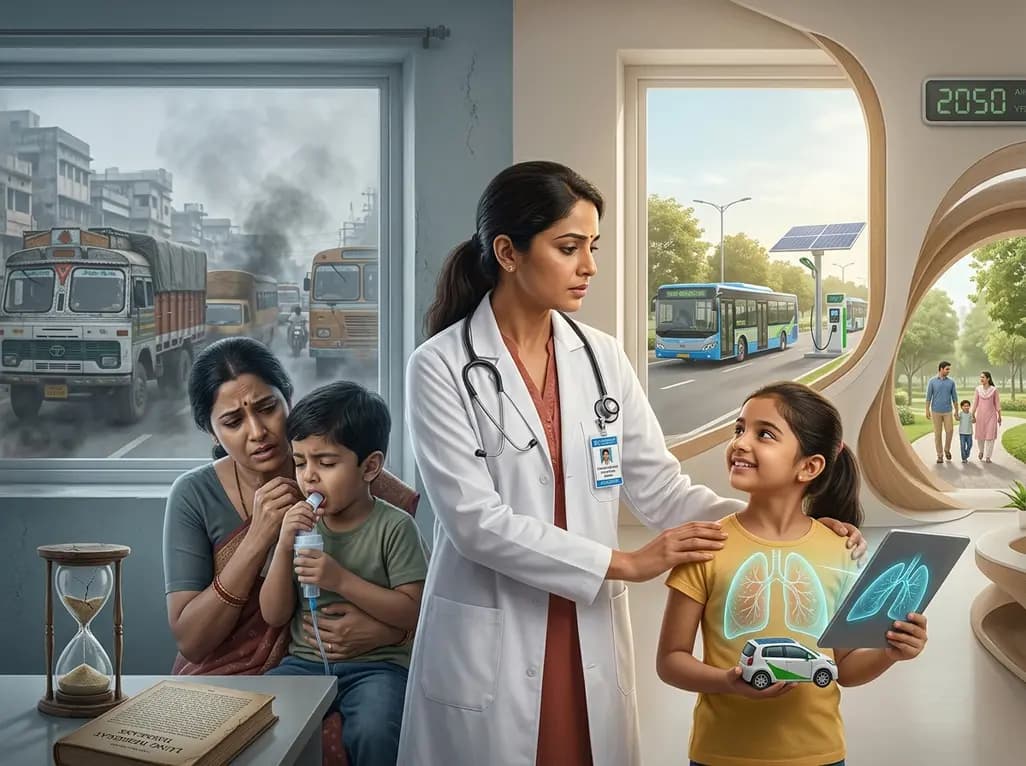
Recent data from the International Council on Clean Transportation highlights an alarming public health crisis in India. Road transport pollution is now directly linked to one premature death every six minutes and a new case of childhood asthma every thirty-four minutes across the nation. Specifically, vehicular emissions contribute to approximately ninety thousand premature deaths and over fifteen thousand new paediatric asthma cases every single year. Furthermore, these figures position India as second globally in transport-attributable mortality, reflecting an urgent epidemiological challenge for healthcare providers. Consequently, understanding the systemic health consequences of fine particulate matter and nitrogen oxides has become essential for clinical practitioners. Furthermore, clinicians must recognize how ambient air quality directly influences emergency department presentations and chronic disease trajectory. Therefore, addressing mobile source pollution requires both aggressive policy measures and heightened clinical vigilance.
Exposure to vehicular exhaust represents a massive environmental risk factor for acute and chronic systemic diseases. Consequently, road transport pollution releases dangerous fine particulate matter and toxic gaseous compounds into breathing zones. In addition, these fine particles easily penetrate deep into human lung parenchyma and pass directly into the systemic circulation. Furthermore, long-term exposure triggers persistent endothelial inflammation, oxidative stress, and accelerated vascular aging. Clinicians frequently encounter patients presenting with acute exacerbations of pre-existing cardiovascular and pulmonary conditions during periods of heightened traffic congestion. Consequently, chronic pulmonary conditions such as chronic obstructive pulmonary disease, interstitial lung pathology, and bronchiectasis show heightened morbidity in heavily polluted urban corridors. Moreover, prolonged exposure elevates long-term risks for ischemic heart disease, cerebral vascular accidents, and metabolic dysfunction. Therefore, understanding these physiological mechanisms helps medical professionals provide tailored clinical advice to vulnerable populations. Medical practitioners should emphasize exposure reduction strategies, especially for patients living near major arterial roadways.
The geographical distribution of traffic-attributable health burden across India remains starkly uneven. Notably, Delhi and the National Capital Region face an exceptionally disproportionate share of adverse health outcomes. Although the National Capital Region houses approximately five percent of India's total population, it accounts for nearly twenty-three percent of all national paediatric asthma cases caused by vehicular exhaust. Furthermore, the region accounts for nine percent of all premature deaths linked to road transport emissions in the country. Within Delhi alone, vehicle emissions caused an estimated two thousand eight hundred premature deaths and fifteen hundred new childhood asthma cases in 2024. Moreover, population-weighted exposure to traffic-derived fine particulate matter in Delhi reached thirteen micrograms per cubic metre. Consequently, this concentration alone exceeds the World Health Organization annual recommendation for total air pollution exposure by more than two and a half times. Therefore, pediatricians and pulmonologists in Northern India must manage a perpetual burden of environmental airway diseases.
A critical insight from recent atmospheric analyses highlights the outsized contribution of heavy commercial vehicles. Specifically, heavy-duty trucks and buses constitute a relatively small fraction of the total registered vehicle fleet in India. However, these diesel-powered commercial fleets account for seventy-nine percent of tailpipe nitrogen oxide emissions from road transport. Additionally, heavy-duty transport contributes sixty-four percent of total tailpipe fine particulate matter emissions nationwide. Consequently, nitrogen oxides react readily in the atmosphere to generate secondary inorganic aerosols and ground-level ozone. Furthermore, these secondary pollutants cause severe upper and lower respiratory mucosal inflammation, triggering severe bronchial hyperreactivity. In addition, diesel exhaust particles carry potent toxic organic compounds directly into deep alveolar spaces. Therefore, targeted regulation of freight fleets offers the most impactful opportunity for immediate air quality improvement. Clinicians advocating for environmental health policies should support accelerated freight electrification and strict fleet retirement mandates.
Inhalation of tailpipe pollutants triggers multiple pathological pathways within the human body. Specifically, fine particulate matter causes localized bronchial cell injury, disruption of tight epithelial junctions, and heightened airway hyperresponsiveness. Furthermore, nitrogen dioxide impairs pulmonary macrophage clearance mechanisms, predisposing young children to frequent viral and bacterial respiratory tract infections. Consequently, young children exposed daily to vehicular traffic show reduced lung function growth and accelerated asthma development. Additionally, systemic absorption of ultrafine particles causes systemic inflammatory cascades, elevated arterial stiffness, and autonomic nervous system dysfunction. Therefore, adult patients exposed to chronic traffic pollution display higher incidence rates of hypertension, coronary heart disease, and fatal arrhythmia events. Medical professionals should regularly screen pediatric and adult patients in polluted areas for early signs of airway hyperreactivity and cardiovascular disease. Furthermore, physicians ought to recommend high-efficiency indoor air filtration and high-filtration masks during severe pollution episodes.
Mitigating the health crisis requires rapid adoption of clean transport technologies and strong regulatory frameworks. According to comprehensive public health modeling, accelerating the shift toward zero-emission vehicles can prevent 1.7 million premature deaths in India between now and 2050. Specifically, achieving complete zero-emission new vehicle sales by 2045 would decrease annual transport-related premature deaths by fifty-five percent by mid-century. Furthermore, this aggressive transition would reduce new childhood asthma incidence by eighty-five percent nationwide. In addition, regulatory mandates must prioritize the phased retirement of older, high-emitting diesel vehicles across major urban transport corridors. Consequently, healthcare providers play a crucial educational role by counseling patients on minimizing traffic exposure and advocating for clean air initiatives. Therefore, uniting medical expertise with progressive environmental policy provides the ultimate strategy for protecting vulnerable populations against vehicular pollution.
Q1: How does road transport pollution specifically increase paediatric asthma risk?
Vehicle tailpipe emissions release high concentrations of nitrogen dioxide and fine particulate matter into breathing zones. Furthermore, these toxic pollutants damage airway epithelial barriers, elevate bronchial inflammation, and induce severe hyperreactivity in developing pediatric lungs. Consequently, young children living or studying near heavy traffic corridors experience significantly higher rates of new-onset asthma and frequent symptom flare-ups.
Q2: Why do heavy-duty vehicles contribute so heavily to urban air pollution?
Heavy-duty vehicles like trucks and buses rely predominantly on high-displacement diesel engines that produce vast quantities of combustion byproducts. Specifically, heavy-duty fleets account for nearly seventy-nine percent of tailpipe nitrogen oxides and sixty-four percent of fine particulate matter from road transport in India. Consequently, inefficient combustion and legacy fleet usage amplify urban atmospheric pollution significantly.
Q3: What clinical measures can physicians recommend to reduce patient exposure to traffic exhaust?
Physicians should advise patients to minimize outdoor physical exertion near busy roadways during peak traffic hours. Furthermore, clinicians can recommend using certified N95 respirators during high-exposure commutes and installing high-efficiency particulate air filters indoors. Additionally, prescribing preventive asthma controller medications and monitoring lung function regularly helps manage vulnerable individuals exposed to ambient transport emissions.
Disclaimer: This content is for informational and educational purposes only. It does not constitute medical advice or replace professional judgment. Refer to the latest local and national guidelines for clinical practice.
References

Read summarized clinical updates, watch expert medical content, and earn CME certifications right from your smartphone.
Open your smartphone camera to scan and install.





A report by the International Council on Clean Transportation reveals that vehicular pollution causes 90,000 premature deaths and over 15,000 new paediatric asthma cases yearly in India. Phasing out heavy-duty emissions and adopting zero-emission vehicles could save 1.7 million lives by 2050.
last month

The Supreme Court rejected industry pleas for per-serve metrics, directing FSSAI to provide a firm timeline for mandatory front-of-pack food warning labels. Clinicians welcome this crucial regulatory intervention to curb rising rates of obesity, hypertension, and pediatric metabolic syndrome across India.
Today

India has achieved a historic public health milestone by administering over 80 lakh HPV vaccine doses to adolescent girls. Integrated into the U-WIN network and administered across government healthcare facilities, this nationwide campaign offers vital protection against cervical cancer and associated HPV infections.
Today

The Supreme Court dismissed packaged food industry pleas for per-serve metrics while directing the FSSAI to establish a definitive timeline for nutritional warning labels. This analysis examines the clinical impact of high fat, sugar, and salt regulation on non-communicable diseases and preventive healthcare in India.
Today

A retrospective cohort study demonstrates that patients with anorexia nervosa and bulimia nervosa face significantly higher risks of lower extremity soft tissue injuries, including ACL tears and ligament sprains, along with heightened rates of orthopedic revision surgery, highlighting the need for systemic screening.
Today

Groundbreaking multiomics research reveals that adipose-derived miR-30e-5p travels via exosomes to vascular endothelial cells, silencing SLC7A11 and accelerating atherosclerosis. This discovery highlights novel therapeutic avenues within cardiovascular-kidney-metabolic syndrome.
Today
