

Loading, please wait...
Loading, please wait...

Managing refractory autoimmune neuromuscular disorders poses major therapeutic hurdles for neurologists worldwide. Historically, clinicians have relied heavily on broad immunosuppressants and chronic corticosteroids to control symptoms. However, targeted monoclonal antibodies have transformed the contemporary therapeutic paradigm. In particular, the clinical adoption of rituximab in myasthenia gravis provides a potent mechanism to deplete pathogenic B-cell populations. A landmark real-world longitudinal study tracking patients over sixteen years has delivered robust insights into antibody-specific outcomes, durable remission rates, and steroid-sparing capabilities across distinct generalized phenotypes.
The longitudinal study evaluated forty-four patients with generalized myasthenia gravis who demonstrated refractory disease or inadequate symptom management. Among these individuals, twenty-two possessed acetylcholine receptor autoantibodies while twenty-two carried muscle-specific kinase autoantibodies. Investigators tracked patient progress from January 2009 through May 2025 to capture genuine real-world therapeutic trajectories.
Importantly, the primary study endpoint evaluated post-intervention status success according to the Myasthenia Gravis Foundation of America criteria. Over an extended follow-up period of 60 months, one-third of individuals with acetylcholine receptor antibodies reached successful post-intervention status. In striking contrast, two-thirds of patients with muscle-specific kinase antibodies accomplished this successful milestone.
Furthermore, secondary clinical endpoints consistently mirrored these primary findings. Patients in both antibody cohorts experienced meaningful reductions in daily symptom burdens as measured by activities of daily living scores. However, the magnitude and durability of functional improvement remained decidedly superior in the muscle-specific kinase cohort. Consequently, these data establish that targeted B-cell depletion confers lasting functional benefits across both major serological subtypes. Nevertheless, clinicians should anticipate distinct timelines and response magnitudes based on the underlying antibody profile.
Neurologists have long recognized that muscle-specific kinase and acetylcholine receptor autoantibodies drive distinct neuromuscular pathophysiology. Acetylcholine receptor antibodies belong predominantly to IgG1 and IgG3 subclasses, activating complement and destroying postsynaptic architecture. Conversely, muscle-specific kinase antibodies consist primarily of the non-complement-fixing IgG4 subclass, which disrupts postsynaptic clustering mechanisms.
Because short-lived plasma cells and circulating plasmablasts largely drive IgG4 production, anti-CD20 therapy yields profound biological effects in these individuals. In statistical multivariable analyses, the presence of muscle-specific kinase antibodies emerged as the sole significant predictor of therapeutic success. Consequently, patients with this serotype experienced rapid, deep, and enduring clinical remissions.
Meanwhile, patients with acetylcholine receptor antibodies also achieved meaningful improvements, although their overall response rates lagged behind. Plasmablasts and long-lived memory plasma cells both produce acetylcholine receptor autoantibodies. Because mature CD20-negative plasma cells resist rituximab-induced lysis, pathogenic autoantibody production can partially persist. Therefore, acetylcholine receptor-positive patients frequently exhibit slower symptom resolution and a higher propensity for eventual clinical relapses. In clinical practice, recognizing this mechanistic divergence helps neurologists tailor therapeutic expectations and counseling for each distinct immunological subset.
Chronic corticosteroid administration remains a notorious source of iatrogenic morbidity in neuromuscular disease management. Consequently, neurologists prioritize rapid, sustained steroid tapering whenever introducing targeted biologic therapies. In this long-term cohort, rituximab demonstrated remarkable steroid-sparing capacity across both patient populations.
Specifically, over 76 percent of acetylcholine receptor-positive patients successfully reduced their daily oral steroid dose below ten milligrams. These patients achieved this milestone within a median duration of twelve months. In contrast, more than 90 percent of muscle-specific kinase-positive patients reached this steroid reduction goal within just six months. Thus, muscle-specific kinase patients achieved dose reduction in half the time required by the acetylcholine receptor cohort.
Furthermore, complete and stable steroid discontinuation occurred at impressive frequencies during long-term monitoring. Specifically, nearly 69 percent of muscle-specific kinase patients discontinued corticosteroids entirely, maintaining a drug-free remission after a median interval of twelve months. Among acetylcholine receptor-positive patients, nearly 43 percent safely ceased oral corticosteroids, though reaching this goal required a median of 84 months. Consequently, rituximab offers genuine liberation from toxic steroid regimens. Moreover, these profound steroid-sparing outcomes alleviate risks of secondary osteoporosis, metabolic dysfunction, and cardiovascular complications in chronic patients.
Optimizing biologic dosage represents an essential objective in neuromedicine, particularly to mitigate treatment burdens and financial strain. In this longitudinal cohort, researchers investigated both standard high-dose infusions and lower-dose protocols within the muscle-specific kinase subgroup. Standard administration typically entails two infusions of 1000 milligrams spaced two weeks apart or weekly 375 mg/m² dosing. In contrast, lower-dose protocols often administer reduced fixed doses or monitor CD19/CD27 cell counts.
Notably, patients receiving the 1000-milligram standard regimen demonstrated numerically higher clinical response rates during follow-up assessments. However, patients receiving low-dose protocols also experienced robust, statistically significant clinical improvements in activities of daily living scores. Furthermore, time-to-event analyses regarding corticosteroid reduction and eventual discontinuation showed no substantial divergence between the two dosing regimens.
Therefore, these clinical observations suggest that low-dose approaches offer viable alternatives when economic factors or tolerability issues arise. For healthcare systems in resource-conscious settings, reduced dosing strategies significantly enhance patient compliance and expand treatment access. Consequently, clinicians may consider individualized induction protocols tailored to disease severity. When patients experience severe bulbar crises, standard dosing provides rapid control, whereas lower doses may maintain prolonged stability effectively.
Long-term safety remains a primary clinical consideration when prescribing chronic B-cell depletion therapies. Fortunately, this extensive sixteen-year evaluation revealed an exceptionally favorable safety profile among all forty-four treated individuals. Notably, no serious adverse events, life-threatening opportunistic infections, or infusion-related fatalities occurred during the extensive surveillance period.
Nevertheless, vigilant laboratory and clinical monitoring remains standard best practice for neuromuscular specialists administering rituximab. Clinicians must routinely screen patients for latent viral infections, including hepatitis B and tuberculosis, before initiating therapy. Additionally, clinicians should track immunoglobulin levels over time, because recurrent administration can occasionally induce persistent hypogammaglobulinemia. Prompt treatment of minor respiratory or urinary tract infections prevents secondary complications in immunocompromised individuals.
Overall, these real-world findings reinforce international treatment guidelines that endorse rituximab as an early targeted intervention for muscle-specific kinase generalized myasthenia. Similarly, the evidence validates its utility as an effective second-line option for refractory acetylcholine receptor-positive cases failing conventional immunomodulators. By systematically identifying antibody serotypes, clinicians can anticipate clinical trajectories, optimize dosing schedules, and safely taper toxic corticosteroid regimens. Ultimately, targeted B-cell depletion provides lasting disease stability and restores everyday functional independence for affected individuals.
Muscle-specific kinase myasthenia gravis is driven primarily by IgG4 autoantibodies produced by short-lived plasmablasts and circulating B cells. Because rituximab effectively depletes CD20-positive B-cell precursors, it halts new antibody production rapidly. In contrast, acetylcholine receptor autoantibodies arise partly from long-lived, CD20-negative plasma cells that resist rituximab-mediated clearance.
Yes, rituximab enables significant steroid reduction and complete cessation. Real-world data show that nearly 69 percent of MuSK-positive patients completely discontinued corticosteroids within a median of twelve months. Furthermore, approximately 43 percent of refractory AChR-positive patients safely eliminated steroids over extended follow-up, dramatically decreasing long-term corticosteroid-related morbidity.
Low-dose rituximab produces substantial clinical improvements and comparable steroid-sparing outcomes, especially in MuSK-positive patients. Although standard 1000-milligram doses achieved slightly higher response rates, low-dose protocols achieved similar time to steroid tapering. Consequently, low-dose regimens offer an efficacious, cost-effective alternative for patients experiencing financial constraints or tolerability concerns.
Disclaimer: This content is for informational and educational purposes only and should not be used as a substitute for professional medical advice, diagnosis, or treatment. Always seek the advice of a physician or other qualified health provider with any questions you may have regarding a medical condition or treatment options. Refer to the latest local and national guidelines for clinical practice.
References

Read summarized clinical updates, watch expert medical content, and earn CME certifications right from your smartphone.
Open your smartphone camera to scan and install.





A 16-year real-world study reveals rituximab induces durable remission in generalized myasthenia gravis, with 66.7% success in MuSK and 33.3% in AChR subtypes, alongside robust steroid reduction and a favorable safety profile across therapeutic protocols.
Today

Novel glucose-responsive mPEG-PSA nanocarriers deliver insulin aspart on demand, achieving dual postprandial and basal glycemic control without hypoglycemia in diabetic models. This biomaterial breakthrough offers promising clinical implications for physiologic diabetes management.
Today

A novel folate-conjugated tecto-dendrimer nanoplatform successfully delivers siRNA to achieve targeted HK2 silencing, disrupting ovarian cancer glycolysis and suppressing lactate output.
Today
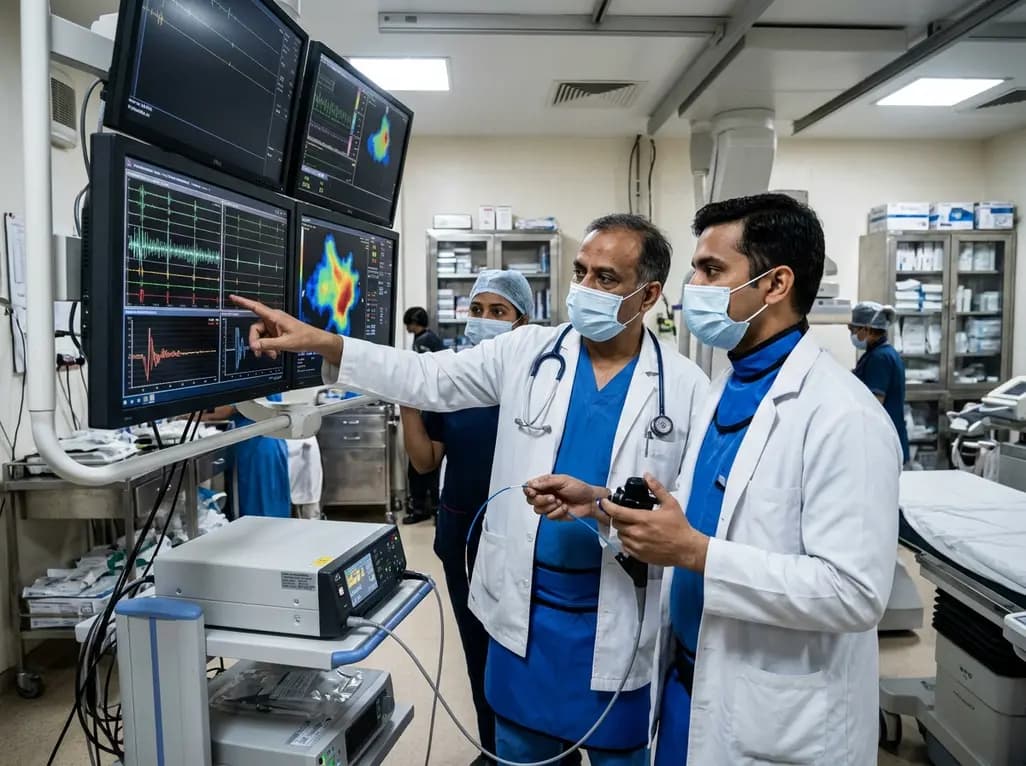
A comparative non-contact study reveals that high-power radiofrequency delivery with the QDOT MICRO catheter induces an artifactual contact force rise. Electrophysiologists must understand this power-dependent thermal and electrical phenomenon to avoid inadvertent catheter withdrawal and ineffective ablation.
Today

A novel proof-of-concept study presents a six-degree-of-freedom articulated manikin neck equipped with linear potentiometers. The system provides real-time kinematic motion feedback during cervical immobilisation, delivering sub-degree tracking accuracy to improve pre-hospital trauma training and patient safety.
Today

A retrospective comparative cohort study evaluated genitourinary safety in HFpEF between dapagliflozin and empagliflozin over six months. Rates of symptomatic UTI and asymptomatic bacteriuria showed no statistically significant differences, supporting comparable safety profiles across both SGLT2 inhibitors.
Today
