.webp&w=384&q=75)

Loading, please wait...
Loading, please wait...
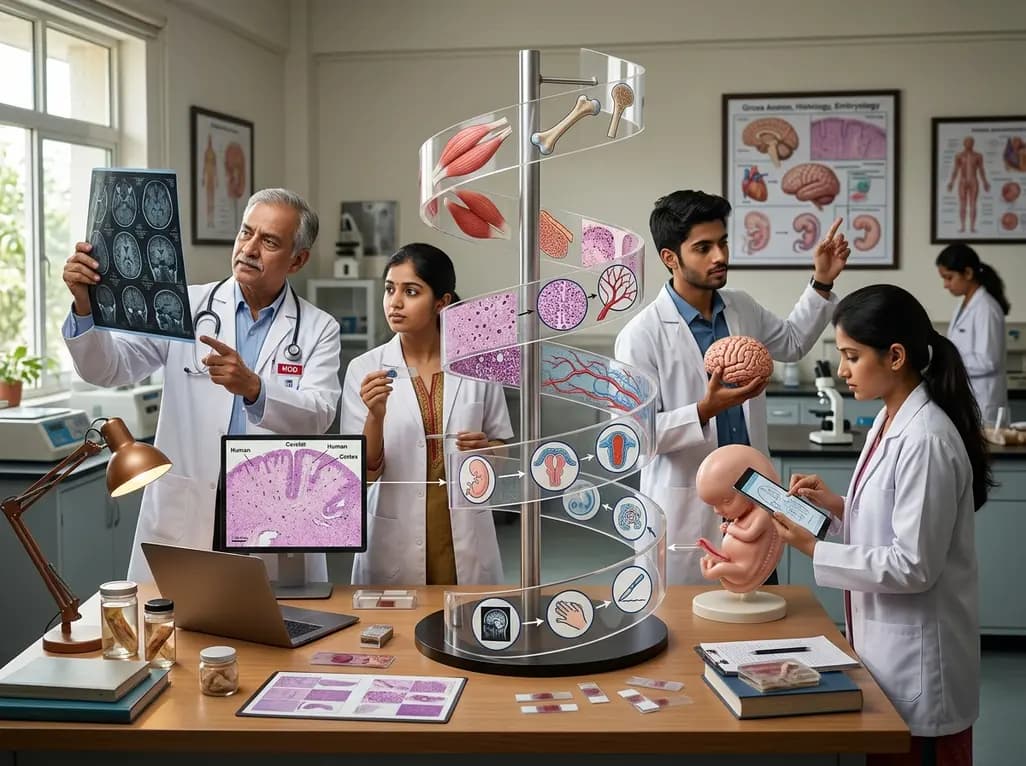
Traditionally, anatomical sciences have been taught as separate blocks of gross anatomy, histology, and embryology. This departmentalized structure often leaves students struggling to connect these disparate pieces of information when they finally enter clinical rotations. To solve this fragmentation, researchers introduced the Integrated Spiral Anatomy Model (R-ISAM). This framework emphasizes a sophisticated "spiral" approach, where students revisit anatomical concepts with increasing clinical complexity over several years. Consequently, this method helps students move beyond simple rote memorization and fosters an integrated knowledge structure that is essential for modern medical practice. In India, where the National Medical Commission has made competency-based medical education mandatory, models like R-ISAM are becoming increasingly relevant for curriculum designers. By incorporating clinical application early in the learning process, the model ensures that foundational knowledge remains contextualized and useful. This approach not only aids in long-term retention but also significantly boosts student confidence when navigating complex patient cases. Therefore, the R-ISAM represents a significant shift from simply learning about anatomy to learning how to apply it in a professional setting. It is a necessary evolution in medical pedagogy that ensures future physicians are practice-ready from their first day on the wards.
The Integrated Spiral Anatomy Model is structured around five distinct phases that guide students through a progressive and comprehensive learning journey. Initially, the first phase focuses on the fundamental principles of gross anatomy, histology, and embryology to establish a solid biological baseline. Following this, the second phase introduces basic clinical correlations to help students see the practical utility of their foundational studies. As they advance to the third phase, the curriculum integrates more complex physiological and pathological concepts. This allows students to understand the underlying "how" and "why" behind various clinical manifestations. The fourth phase involves higher-level synthesis, where students engage in active clinical reasoning tasks related to specific organ systems, such as the musculoskeletal or gastrointestinal systems. Finally, the fifth phase focuses on advanced clinical application within real or simulated clerkship environments. This phased approach ensures that information is reinforced and expanded upon, creating a robust intellectual scaffold for the learner. By the time students reach the final phase, they are well-equipped to handle the integration of basic and clinical sciences with minimal cognitive strain. This structured progression has proven to be a key factor in the model's success across various educational stages.
A primary goal of the R-ISAM framework is to enhance the clinical reasoning skills of undergraduate medical students. Traditional curricula often separate basic sciences from clinical skills by several years, which frequently leads to a significant knowledge gap during the transition to clerkships. However, the R-ISAM model employs both vertical and horizontal integration to bridge this divide effectively. Horizontal integration occurs when gross anatomy, histology, and embryology are taught together in a single system-based module. Meanwhile, vertical integration brings clinical cases and diagnostic imaging into the early years of medical training. Research indicates that this combined approach helps students develop sophisticated clinical schemas early in their education. For example, a student learning the anatomy of the stomach simultaneously explores its embryological origins and microscopic structure while reviewing common surgical presentations. This depth of understanding is much harder to achieve in a fragmented, discipline-based curriculum. Moreover, the spiral nature of the model means that these schemas are refined and tested repeatedly over time. As a result, students become more adept at synthesizing diverse pieces of information, which is the absolute cornerstone of clinical excellence in modern medicine.
The effectiveness of the R-ISAM framework has been demonstrated through rigorous quantitative analysis. During a five-year implementation period, researchers tracked the objective course scores of over 350 medical students to gauge the model's impact. The results were particularly striking in the challenging areas of neuroanatomy and neurophysiology. Historically, these subjects are considered some of the most difficult for students to master due to their abstract nature and complex spatial relationships. However, students who learned through the integrated spiral framework achieved significantly higher scores compared to traditional cohorts. Statistical analysis confirmed that these improvements were consistent and not due to chance. Furthermore, a strong positive correlation was found between student satisfaction and their objective exam performance. This suggests that when students find their learning material relevant and well-organized, they are much more motivated to excel academically. The model’s success in these difficult subjects provides strong evidence for its wider adoption in medical institutions worldwide. It shows that even the most complex anatomical concepts can be made accessible through structured, integrated education. By focusing on relevance, the R-ISAM framework transforms the learning experience from an academic hurdle into a meaningful professional achievement.
An interesting finding from the R-ISAM evaluation was the exceptionally high level of satisfaction reported by clerkship students. While students at all levels reported positive experiences, those in the clerkship phase rated the model significantly higher than those in the basic sciences phase. This suggests that the true value of the integrated approach becomes most apparent when students begin working directly with patients. During clinical rotations, students realize they must pull from all areas of their foundational knowledge to understand a case. Those trained under the R-ISAM framework found this synthesis much easier because they had been practicing integrated thinking since their first semester. They felt significantly more confident in their ability to apply anatomical principles to physical examinations and imaging interpretation. This retrospective appreciation underscores the model's success in bridging the gap between classroom theory and bedside practice. Furthermore, the high reliability of the data ensures that these results are consistent across different student populations. This provides vital assurance to medical educators that the model will deliver predictable and positive outcomes for their students. Ultimately, student feedback confirms that an integrated spiral approach is both more effective and more rewarding for the future physician.
Looking ahead, the R-ISAM represents a significant paradigm shift in medical pedagogy that is applicable on a global scale. As healthcare becomes increasingly complex, the need for physicians who can synthesize information from multiple disciplines is greater than ever before. The R-ISAM framework provides a scalable and adaptable solution that can be modified to suit various institutional and cultural contexts. In India, this model aligns perfectly with the current mandates for integrated, competency-based medical education. Educators in all specialties stand to benefit from students who possess a holistic and functional understanding of human biology. Furthermore, the model is adaptable to different resource settings; while advanced technology can enhance the experience, the core strength remains its pedagogical structure. This means it can be successfully implemented even in institutions with limited digital resources, provided there is a faculty commitment to integration. The future of medical education lies in breaking down traditional silos and focusing on the practical needs of the future clinician. By adopting the R-ISAM framework, institutions can ensure their graduates are capable of the high-level clinical synthesis required in modern practice. This model stands as a testament to how thoughtful curriculum design can solve long-standing challenges in medical training.
The R-ISAM framework consists of five progressive phases designed to integrate basic anatomical sciences with clinical practice. The initial phase covers foundational anatomy, histology, and embryology. The second phase introduces basic clinical correlations, while the third phase integrates detailed physiology and pathology. The fourth phase focuses on active clinical reasoning within specific system-based modules. Finally, the fifth phase involves advanced clinical application during clerkships. This phased structure ensures a logical progression from foundational facts to clinical mastery.
Neuroanatomy is often challenging due to its complex functional pathways and intricate spatial arrangements. The R-ISAM framework helps by providing immediate clinical relevance and revisiting topics multiple times with increasing complexity. By integrating neurophysiology and clinical neurology cases directly into the anatomy curriculum, the model makes abstract concepts more tangible and easier to grasp. Objective data shows that students using this model achieved significantly higher scores, demonstrating that integration leads to a deeper and more functional understanding.
Clerkship students value the model more because they have the immediate perspective of applying classroom knowledge to real patient care. While basic science students understand the theory, clerkship students must apply that knowledge daily. They found that the R-ISAM framework provided the necessary clinical reasoning tools and anatomical context to succeed in hospital settings. This retrospective appreciation occurs because the integrated model effectively reduced the "clinical shock" often experienced when transitioning from basic sciences to bedside medicine.
Disclaimer: This content is for informational and educational purposes only and does not constitute medical advice, diagnosis, or treatment. Always seek the advice of your physician or other qualified health provider with any questions you may have regarding a medical condition. Refer to the latest local and national guidelines for clinical practice.
References
Almasi-Turk S et al. The Roozbehi Integrated Spiral Anatomy Model (R-ISAM): a five-phase framework for fully integrated anatomical sciences education. BMC Med Educ. 2026 Jul 13. doi: 10.1186/s12909-026-09833-0. PMID: 42443881.
Brauer DG, Ferguson KJ. The integrated curriculum in medical education. AMEE Guide No. 96. Med Teach. 2015;37(4):312-322. doi: 10.3109/0142159X.2014.970998.
Harden RM. What is a spiral curriculum? Med Teach. 1999;21(2):141-143. doi: 10.1080/01421599979752.

Read summarized clinical updates, watch expert medical content, and earn CME certifications right from your smartphone.
Open your smartphone camera to scan and install.





The Roozbehi Integrated Spiral Anatomy Model (R-ISAM) addresses the fragmentation in medical education by integrating gross anatomy, histology, and embryology with clinical application through a five-phase spiral framework, leading to improved student performance in complex subjects like neuroanatomy.
3 months ago
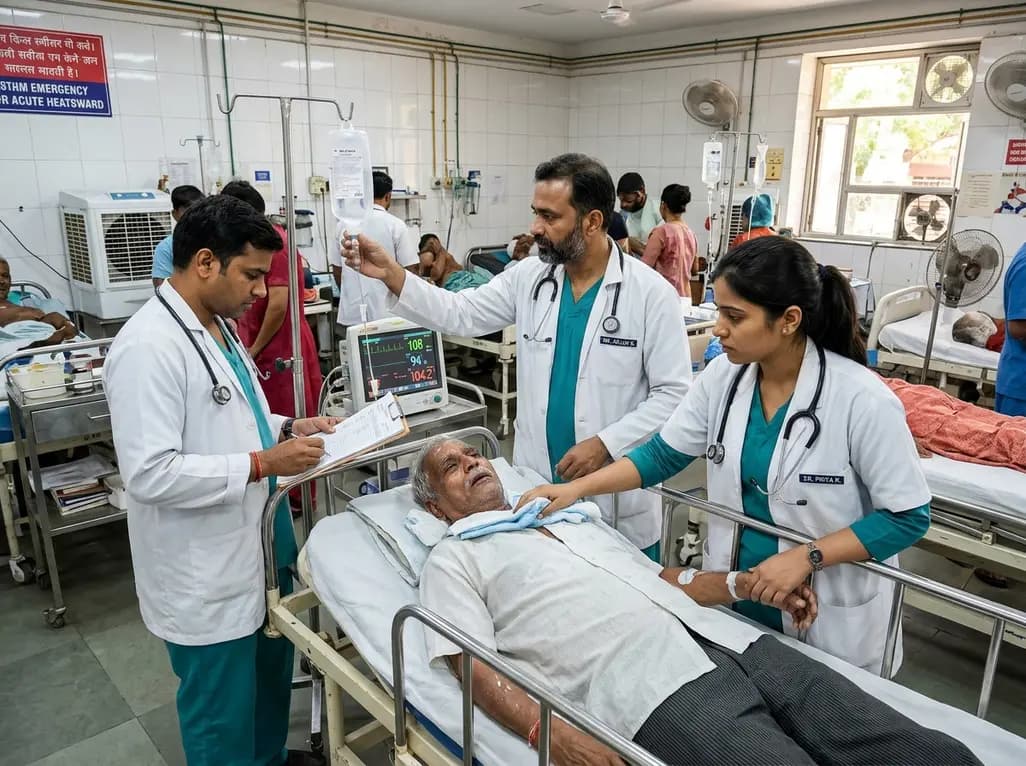
Recent epidemiological data reveals a dramatic surge in summer heat mortality driven by human-induced climate warming. This analysis explores the pathophysiological impacts on cardiac and renal systems, diagnostic dilemmas in death certification, and essential emergency cooling protocols for acute clinical care.
Today

Odisha has established India's first state-level clinical protocol specifically tailored for pregnant women with sickle cell disease. Developed with NHM and UNICEF, the framework provides structured antenatal screening, crisis mitigation, standardized referral pathways, and specialized interdisciplinary care.
Today

India is advancing preventive healthcare by integrating genomics, artificial intelligence, and quantum technologies. With the SANGAM programme sequencing one million Indian genomes, clinicians can unlock personalized therapies, detect cardiometabolic risks early, and curb the burden of diabetes and heart disease.
Today

A randomized controlled trial demonstrates that an eight-week dual-task training intervention significantly improves static and dynamic postural control over standard balance exercises in individuals with chronic ankle instability, addressing critical neurocognitive deficits during athletic and daily activities.
Today

A retrospective cohort study of 7,716 ICU patients from the MIMIC-IV database demonstrates that Gradient Boosting Decision Trees significantly outperform traditional SOFA scores in predicting in-hospital mortality among patients with sepsis and diabetes, with SHAP analysis providing clinical interpretability.
Today
