.webp&w=384&q=75)

Loading, please wait...
Loading, please wait...

Surgical resection serves as the cornerstone of therapy for symptomatic or growing intracranial meningiomas. However, recurrent or progressive lesions frequently require secondary intervention, placing teams in technically demanding scenarios. For decades, neurosurgeons have approached revision meningioma surgery with heightened vigilance due to dense scar tissue, obliterated arachnoid planes, and altered vascular anatomy. Many clinicians traditionally assume that redo operations inherently carry higher complication rates and poorer functional recovery. Consequently, objective comparative data have been urgently needed to validate or challenge this persistent surgical assumption.
Historically, comparing primary and redo neurosurgical procedures has suffered from severe selection bias. Patients requiring secondary resections often exhibit more aggressive histology, higher comorbidity indices, or larger lesions. To address these confounders, investigators recently conducted a robust retrospective cohort analysis spanning 2011 to 2023. Specifically, they utilized 1:3 propensity score matching with a rigorous 0.2 caliper. This methodology balanced 362 total patients, comprising 263 primary resections and 99 secondary procedures. Therefore, the investigative team effectively eliminated baseline differences across key variables.
Furthermore, the matching protocol controlled for age, sex, maximum tumor diameter, baseline comorbidity counts, ASA classification, and WHO tumor grade. Anatomical tumor distribution remained virtually identical across both cohorts after matching. Consequently, this study design created an exceptionally balanced framework. It isolated the true independent effect of prior surgical intervention on subsequent perioperative results.
Surgeons frequently anticipate extensive blood loss and prolonged operative times during repeat craniotomies. Nevertheless, the empirical findings demonstrated remarkable parity between the two cohorts. Operative duration did not differ significantly between primary and revision cases. Similarly, estimated blood loss remained statistically equivalent across both treatment arms. Meticulous microsurgical dissection and advanced modern neuro-navigation evidently mitigate the technical difficulties posed by distorted cranial planes.
In addition, multivariable logistic regression adjusted for the extent of resection to evaluate surgical predictability. Consequently, the statistical models demonstrated that reoperative status did not independently predict operative time or blood loss. Thus, modern neurosurgical instrumentation and refined skull-base techniques effectively neutralize the anticipated physical hurdles of scarred surgical corridors. Surgeons can therefore approach redo cases without expecting unavoidable hemodynamic instability or prolonged anesthesia exposure.
Preserving neurological function represents the foremost priority during any intracranial procedure. In this matched cohort, researchers tracked functional recovery using the modified Rankin Scale and the Karnofsky Performance Status. Interestingly, delta changes between baseline preoperative performance and postoperative metrics revealed no significant divergence between the two cohorts. Patients undergoing reoperation achieved functional preservation rates comparable to newly diagnosed individuals.
Moreover, objective complication rates directly mirrored this stability. Primary surgeries registered surgical complications in 0.7 percent of cases, whereas repeat procedures registered zero percent. Meanwhile, post-procedural neurological complications occurred in 25.3 percent of redo patients and 29.2 percent of primary patients. Likewise, systemic non-neurological complications occurred at identical rates of approximately 16 percent. Therefore, repeat craniotomy does not inherently compromise post-procedural neurological trajectory when teams maintain precise microsurgical technique.
Although immediate surgical endpoints demonstrated complete equivalence, minor differences surfaced regarding recovery logistics. Patients undergoing secondary operations experienced slightly longer hospital stays, averaging 4.7 days compared to 3.7 days for primary cases. Similarly, thirty-day readmission rates trended higher in the reoperation cohort at 10.1 percent versus 6.2 percent. However, multivariable analysis confirmed that redo status was not an independent predictor of prolonged hospitalization or hospital readmission.
Consequently, these trends likely reflect heightened clinical caution rather than catastrophic physiological setbacks. Clinicians frequently monitor re-operated patients more conservatively due to altered wound healing dynamics or radiation history. Furthermore, multidisciplinary rehabilitation planning often extends inpatient observation slightly in tertiary care settings. Accordingly, discharge planning should anticipate these modest delays while reassuring families of equivalent overall safety profiles.
These findings provide reassuring evidence for neurosurgeons, neuro-oncologists, and multidisciplinary tumor boards. Historically, concerns regarding exaggerated operative morbidity have sometimes delayed necessary surgical intervention for recurrent meningiomas. However, this rigorous analysis confirms that repeat resection carries an acceptable safety profile when clinicians practice disciplined patient selection.
Ultimately, surgical teams should evaluate recurrent meningiomas based on tumor location, clinical symptoms, and overall functional performance. Prior surgical history alone should not disqualify suitable surgical candidates. Instead, clinicians should leverage advanced intraoperative monitoring, targeted neuronavigation, and careful anatomical preservation. By applying these standards, neurosurgeons can achieve safe resections and maintain patient quality of life.
Propensity score-matched evidence demonstrates that estimated blood loss remains statistically equivalent between primary and revision surgeries. Although scar tissue and altered vascular planes present technical challenges, modern microsurgical instrumentation, refined hemostasis protocols, and precise neuronavigation prevent excessive intraoperative hemorrhage during repeat resections.
No, matched clinical data indicate that neurological complication rates do not increase during repeat craniotomies. In the reported analysis, neurological deficits occurred in 25.3 percent of revision cases compared to 29.2 percent of primary surgeries, confirming that reoperation does not inherently elevate neurological morbidity.
Patients undergoing repeat surgery average slightly longer hospitalizations, typically around 4.7 days versus 3.7 days. This modest difference stems primarily from conservative surveillance, wound healing precautions, and cautious rehabilitation planning rather than severe unexpected postoperative complications or independent surgical failure.
Disclaimer: This content is for informational and educational purposes only and should not be considered medical advice. It is not intended to replace consultation with qualified healthcare professionals. While we strive to present accurate and up-to-date information, medicine is constantly evolving, and individual cases may vary. Refer to the latest local and national guidelines for clinical practice.
References

Read summarized clinical updates, watch expert medical content, and earn CME certifications right from your smartphone.
Open your smartphone camera to scan and install.





A propensity score-matched study indicates that revision meningioma surgery achieves safety profiles and short-term functional outcomes comparable to primary resection. Neurosurgeons can proceed with reoperation confidently when guided by individualized risk assessment and meticulous operative planning.
last month
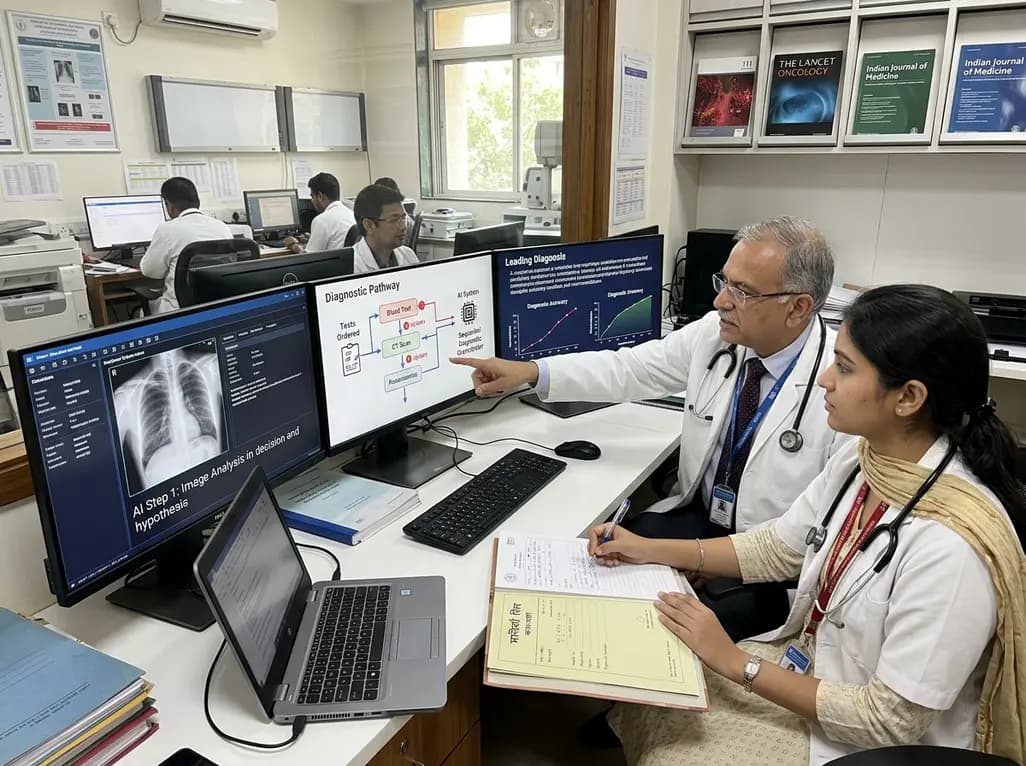
A breakthrough peer-reviewed study demonstrates that a sequential AI diagnosis system can mirror real-world clinical reasoning. By ordering stepwise tests and updating hypotheses dynamically, this multi-agent orchestrator achieved superior diagnostic accuracy while reducing investigative costs.
Today

A prenatal case highlights severe glutaric acidemia type II presenting as bilateral hyperechoic cystic kidneys at 18 weeks. Whole-exome sequencing revealed a novel homozygous ETFDH frameshift variant, demonstrating the power of rapid genetic testing in fetal renal anomalies.
Today

Review how tailored exercise programs benefit frail older patients with heart failure. Explore pathophysiological mechanisms, individualized training prescriptions, and strategies to overcome adherence barriers in clinical practice.
Yesterday

This comparative study evaluates posterior labral tears with and without glenohumeral instability, highlighting distinct demographic patterns, MRI underestimation in stable shoulders, and successful arthroscopic repair outcomes.
Yesterday

A clinical study demonstrates that early intervention with tocilizumab, either as monotherapy or bridged with corticosteroids, achieves significant proptosis reduction and resolves active inflammation in treatment-naive thyroid eye disease.
Yesterday
