.webp&w=384&q=75)

Loading, please wait...
Loading, please wait...

Retinomorphic vision sensors represent a significant leap in bio-inspired technology. These devices aim to mimic the human retina by integrating sensing, memory, and processing within a single unit. Historically, traditional vision systems faced the "von-Neumann bottleneck," where data transfer between sensors and processors caused high latency and energy use. However, the emergence of 2D ferroelectric materials has changed the landscape. These atomically thin semiconductors, such as α-InSe and CuInPS (CIPS), allow for in-sensor computing. Consequently, data is processed locally, which minimizes energy consumption and speeds up response times in artificial visual systems.
The unique properties of 2D ferroelectric materials make them ideal for advanced hardware. Specifically, these materials possess switchable polarization and strong light-matter coupling. When scientists couple ferroelectric polarization with a photoresponse, the devices can modulate photocarrier transport non-volatiley. This enables adaptive visual perception that closely follows biological processes. Furthermore, these sensors demonstrate synaptic plasticity, including short-term and long-term memory. Such features are essential for creating flexible, high-density artificial retinas that could one day restore sight to patients with retinal degenerative diseases.
Despite these advancements, several hurdles remain before clinical implementation. Scaling these materials for mass production is a primary concern. Additionally, researchers must address polarization fatigue and improve interface engineering to ensure long-term stability. Current studies are focusing on heterostructure designs and hybrid integration to overcome these barriers. As these technologies mature, they will likely provide the foundation for energy-efficient, bio-inspired vision systems and smart diagnostic hardware.
Retinomorphic vision sensors are hardware devices inspired by the biological retina. They do not just capture images; they process visual information locally using in-sensor computing, which reduces latency and power use compared to traditional cameras.
These materials are atomically thin and flexible, allowing them to conform to the eye's curvature. They integrate light sensing and memory functions, mimicking how human photoreceptors and synapses work together to process visual signals.
Disclaimer: This content is for informational and educational purposes only and does not constitute medical advice or a professional recommendation. It is not intended to replace the judgment of a healthcare provider. Refer to the latest local and national guidelines for clinical practice.
References
Pal P et al. Optoelectronic-Driven van der Waals Ferroelectric Materials-Based Memory Devices for Retinomorphic and In-Sensory Hardware. Adv Sci (Weinh). 2026 Mar 14. doi: 10.1002/advs.74794. PMID: 41831320.
Wang S et al. Coupled Ferroelectric‐Photonic Memory in a Retinomorphic Hardware for In‐Sensor Computing. PMC. 2024 Jan 17. doi: 10.1002/advs.202306263.
Lu N et al. A New Generation of Artificial Retinas Based on 2D Materials. Medical Design Briefs. 2020 Feb 14.

Read summarized clinical updates, watch expert medical content, and earn CME certifications right from your smartphone.
Open your smartphone camera to scan and install.





A look at how 2D ferroelectric materials like InSe and CIPS enable in-sensor computing and adaptive visual perception for next-generation medical vision sys...
7 months ago
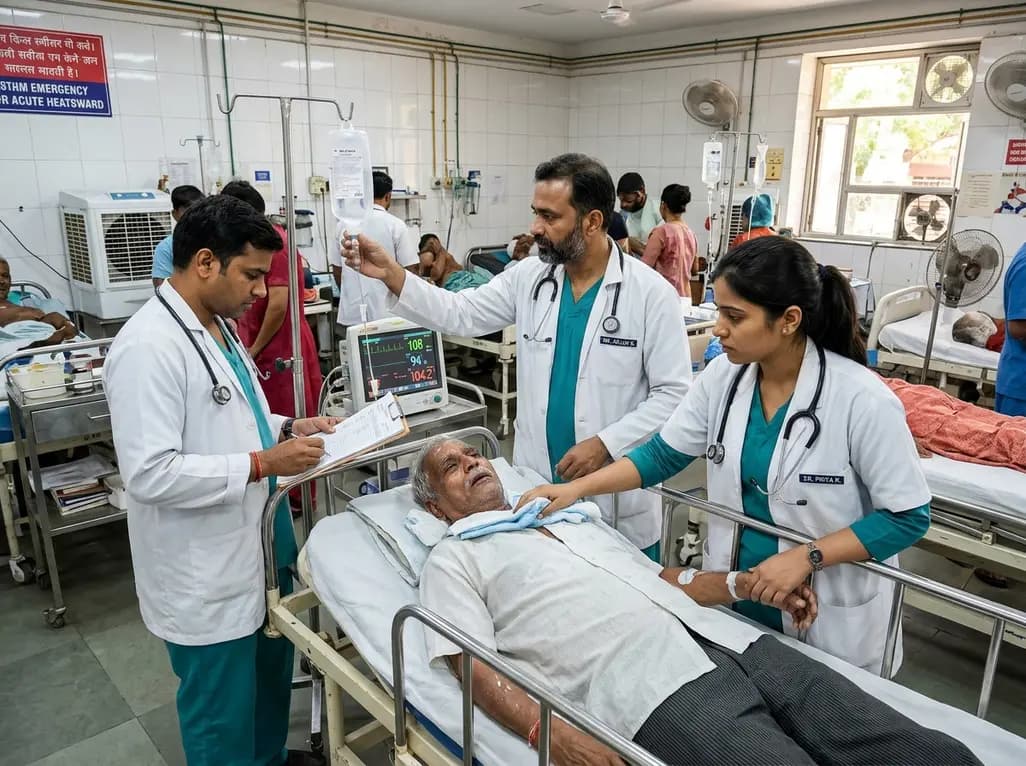
Recent epidemiological data reveals a dramatic surge in summer heat mortality driven by human-induced climate warming. This analysis explores the pathophysiological impacts on cardiac and renal systems, diagnostic dilemmas in death certification, and essential emergency cooling protocols for acute clinical care.
Today
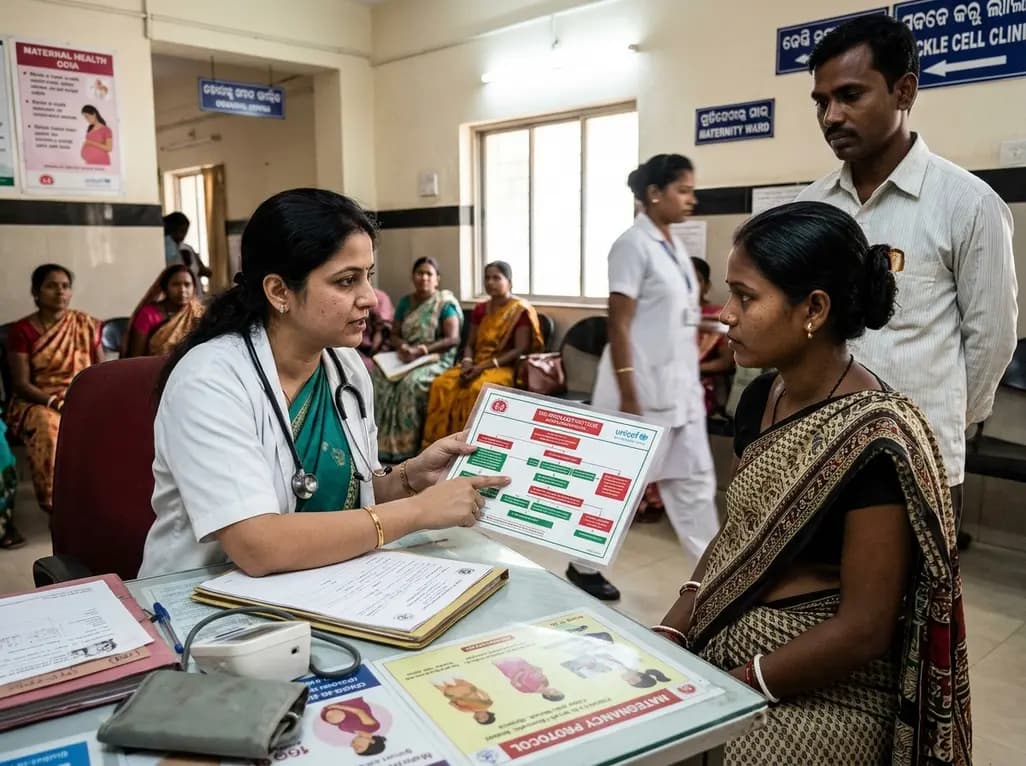
Odisha has established India's first state-level clinical protocol specifically tailored for pregnant women with sickle cell disease. Developed with NHM and UNICEF, the framework provides structured antenatal screening, crisis mitigation, standardized referral pathways, and specialized interdisciplinary care.
Today

India is advancing preventive healthcare by integrating genomics, artificial intelligence, and quantum technologies. With the SANGAM programme sequencing one million Indian genomes, clinicians can unlock personalized therapies, detect cardiometabolic risks early, and curb the burden of diabetes and heart disease.
Today
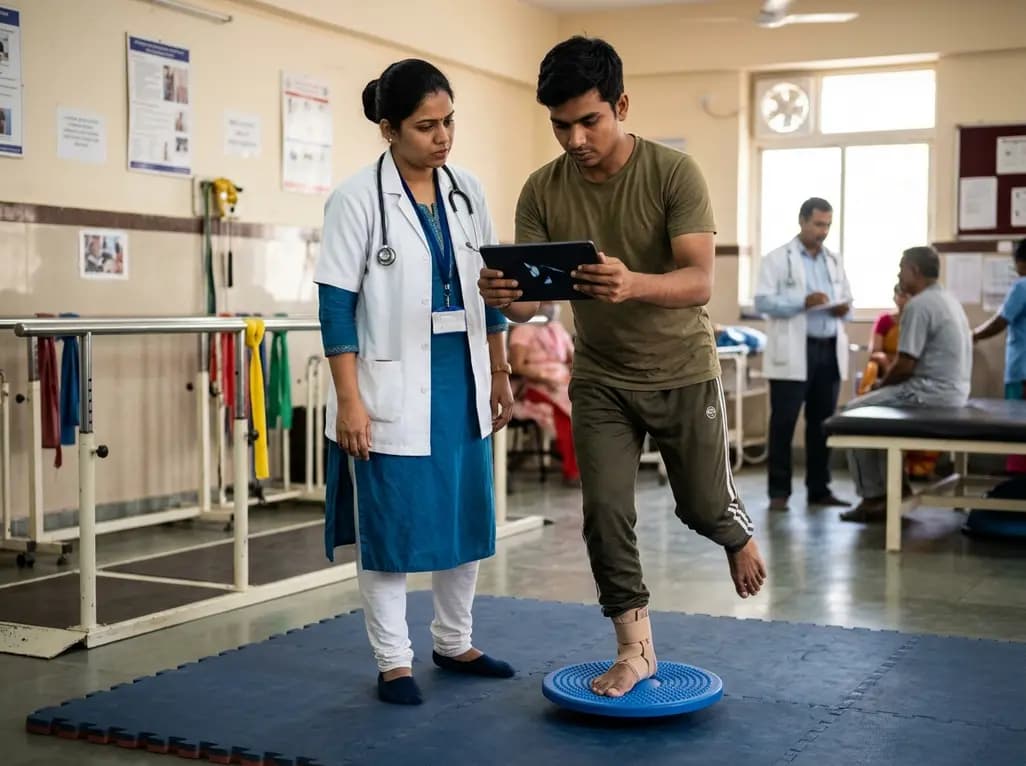
A randomized controlled trial demonstrates that an eight-week dual-task training intervention significantly improves static and dynamic postural control over standard balance exercises in individuals with chronic ankle instability, addressing critical neurocognitive deficits during athletic and daily activities.
Today

A retrospective cohort study of 7,716 ICU patients from the MIMIC-IV database demonstrates that Gradient Boosting Decision Trees significantly outperform traditional SOFA scores in predicting in-hospital mortality among patients with sepsis and diabetes, with SHAP analysis providing clinical interpretability.
Today
