.webp&w=384&q=75)

Loading, please wait...
Loading, please wait...
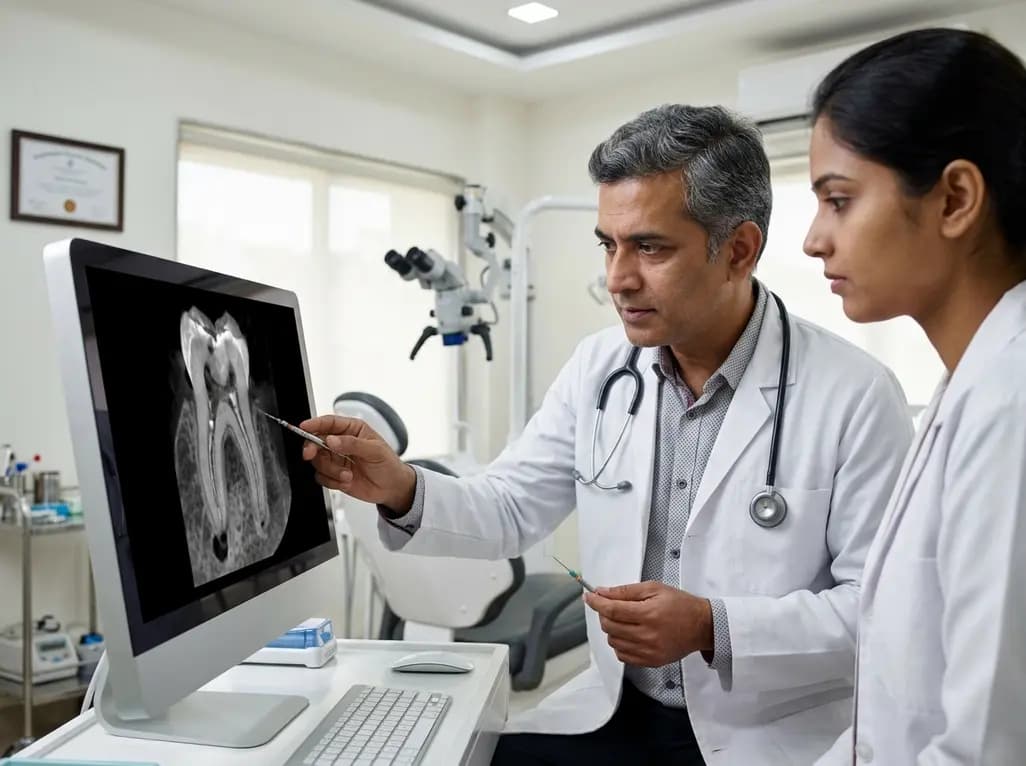
The dental profession is currently experiencing a rapid surge in technological advancements. However, Responsible Innovation in Endodontics must prioritize biological integrity over mere technical novelty. Clinicians must critically evaluate new methodologies to ensure they align with long-term patient safety. Furthermore, this review advocates for a stewardship-based approach to clinical outcomes. Consequently, this approach encourages practitioners to maintain a sharp focus on biological plausibility.
Moreover, educational frameworks are vital for fostering reflective practice among postgraduate students. Transitioning to evidence-based innovation requires a commitment to ethical awareness and societal expectations. Therefore, teaching these values ensures that practitioners do not adopt suboptimal innovations. Additionally, the delayed identification of unfavorable outcomes highlights the need for continuous assessment. In addition, aligning innovation with clinical reality maintains the credibility of the profession.
Furthermore, integrating these pedagogical principles into postgraduate training is essential. Since many failures in endodontic therapy only manifest years later, stewardship remains non-negotiable. Thus, practitioners must develop the skills to refine their methods based on long-term data. Finally, a focus on biological accountability will enhance the overall quality of patient care.
The goal is to ensure that all new clinical techniques and technologies are ethically sound, biologically plausible, and focused on long-term patient safety rather than short-term technical gains.
Biological accountability ensures that innovations do not compromise the natural healing capacity of the tissues, which is crucial for the long-term success of root canal treatments.
Disclaimer: This content is for informational and educational purposes only. It does not constitute medical advice or establish a doctor-patient relationship. Always seek the advice of a qualified healthcare provider regarding a medical condition. Refer to the latest local and national guidelines for clinical practice.
References
1. Turky M et al. Teaching Responsible Innovation in Endodontics: A Pedagogical Framework for Long-Term Clinical Success: A Narrative Review. Aust Endod J. 2026 Jun 12. doi: 10.1111/aej.70097. PMID: 42286443.
2. Turky M, Peters OA, Abbott PV. Beyond Novelty: What Makes Innovative Concepts in Endodontics Clinically Responsible? Int Endod J. 2026 Mar 7. doi: 10.1111/iej.70128.
3. Turky M, Dummer PMH. When Novelty Outpaces Evidence: Social Media as an Unregulated Force Propelling Innovation in Endodontics: A Narrative Review. Int Endod J. 2026 Mar 20. doi: 10.1111/iej.70150.

Read summarized clinical updates, watch expert medical content, and earn CME certifications right from your smartphone.
Open your smartphone camera to scan and install.





This narrative review introduces a pedagogical framework for responsible innovation in endodontics. It emphasizes biological accountability and the stewardship of long-term patient outcomes to ensure clinical success.
4 months ago

Novel diimide and hydrazone scaffolds, particularly compound #C4, synergistically reactivate latent HIV-1 when combined with JQ1 or PKC activators. Demonstrating donor-matched proviral transcription ex vivo and non-canonical signaling, these findings advance shock and kill strategies toward reservoir eradication.
Today

A comparative cohort study evaluates vNOTES vs TLH hysterectomy for benign conditions, demonstrating shorter operative duration, faster return to daily activities, and equivalent female sexual function scores without increased dyspareunia.
Today

Review how tailored exercise programs benefit frail older patients with heart failure. Explore pathophysiological mechanisms, individualized training prescriptions, and strategies to overcome adherence barriers in clinical practice.
Yesterday

This comparative study evaluates posterior labral tears with and without glenohumeral instability, highlighting distinct demographic patterns, MRI underestimation in stable shoulders, and successful arthroscopic repair outcomes.
Yesterday

A clinical study demonstrates that early intervention with tocilizumab, either as monotherapy or bridged with corticosteroids, achieves significant proptosis reduction and resolves active inflammation in treatment-naive thyroid eye disease.
Today
