

Loading, please wait...
Loading, please wait...

Stroke remains a principal cause of adult long-term disability worldwide, stripping survivors of both functional autonomy and interpersonal roles. While modern medical rehabilitation focuses heavily on physical motor restoration, clinicians frequently observe a troubling disconnect. Even after regaining physical mobility, many individuals remain isolated at home. Therefore, fostering resilience in stroke rehabilitation emerges as a pivotal mechanism to achieve meaningful community reintegration. Psychological resilience enables survivors to adapt positively to adversity and persist through recovery challenges. Unfortunately, conventional therapies largely overlook this modifiable psychological construct. Most traditional protocols prioritize repetitive physical exercise or broad psychological counseling without providing practical tools for community interaction. Additionally, conventional post-stroke programs rely on resource-heavy face-to-face sessions that present major transportation barriers. Consequently, patients who lack accessible support often retreat from community activities due to fear or persistent fatigue. A recent development and usability study addresses this unmet clinical challenge by introducing an accessible digital therapeutic platform. By deliberately targeting psychological resilience as the core driver for social participation, this innovative tool offers a scalable solution for survivors seeking to reclaim their societal roles.
To construct an effective intervention, researchers grounded their digital model in the validated Kumpfer resilience framework. This conceptual foundation systematically delineates five interconnected protective factors: cognitive, emotional, spiritual, behavioral, and physical. Rather than viewing resilience as a fixed personality trait, this framework conceptualizes resilience as a dynamic, modifiable process. Therefore, structured interventions can actively cultivate these protective attributes over time. During the intervention mapping process, researchers conducted an extensive needs assessment linking these factors directly to social participation. For example, cognitive restructuring teaches survivors to challenge maladaptive defeatist thoughts regarding disability. Simultaneously, emotional regulation techniques equip patients to handle social anxiety and frustration during interpersonal encounters. The spiritual component instills renewed purpose, hope, and optimism during recovery journeys. Furthermore, behavioral strategies provide concrete steps for problem solving and proactive socialization. Finally, physical protective factors reinforce regular home exercise adherence and fatigue management. By addressing these five distinct dimensions concurrently, the intervention establishes a comprehensive internal support system. Consequently, stroke survivors gain the multidimensional psychological fortitude necessary to navigate social barriers and re-engage with society.
A major challenge in neurorehabilitation involves translating theoretical knowledge into daily behavior. To overcome this hurdle, investigators designed a sequential two-module structure comprising didactic learning followed immediately by experiential gamified practice. The first component delivers seven weekly multimodal learning sessions. Each session lasts approximately sixty minutes and uses engaging narrative audio, illustrations, and clear educational guidance to explain specific resilience factors. Furthermore, researchers selected accessible mobile software via a WeChat mini-program to ensure low technical friction for older adults. Following each educational lesson, participants enter a gamified experiential module designed for practical application. Each game session lasts approximately twenty minutes and places the survivor into realistic community scenarios, such as navigating a supermarket. Within this simulated environment, users practice vital real-world tasks, including planning shopping lists, locating items, managing budgets, and communicating with clerks. Moreover, the virtual tasks require survivors to apply the emotional calming techniques and behavioral strategies learned during the preceding course. Thus, this sequential format allows patients to test coping mechanisms safely without fear of social failure, facilitating authentic behavioral transfer into everyday life.
Before conducting large randomized trials, researchers evaluated the usability and acceptability of this digital platform in stroke survivors. Investigators recruited fourteen patients from a tertiary rehabilitation hospital in Shanghai, China, to test the system rigorously. The participant cohort had a mean age of 65.4 years, and ischemic stroke accounted for nearly seventy-nine percent of diagnoses. Each participant completed five representative tasks covering both the educational curriculum and the gamified supermarket scenario. Notably, all fourteen participants executed every assigned digital task successfully without critical errors. Furthermore, the quantitative evaluation demonstrated strong overall satisfaction, yielding a mean System Usability Scale score of 73.6. Because a score exceeding 68 signifies above-average usability, these findings confirm that older adults can navigate the software effectively. Additionally, semistructured qualitative interviews identified three prominent themes: perceived ease of use, high engagement, and constructive suggestions for refinement. Participants highlighted that clear visual cues, straightforward audio narration, and realistic challenges made the intervention enjoyable and empowering. Many survivors reported that practicing daily dilemmas in the virtual store significantly boosted their confidence. Consequently, the sequential architecture proved both feasible and highly acceptable.
These promising usability results offer valuable insights for modern clinical neurology, geriatrics, and multidisciplinary stroke recovery teams. In routine clinical practice, neurorehabilitation teams frequently observe patients plateauing socially despite satisfactory motor recovery. Traditional outpatient models often fail to address the invisible psychological barriers that deter stroke survivors from leaving their homes. Therefore, integrating structured digital resilience interventions into standard rehabilitation pathways can bridge this therapeutic gap. Because digital platforms operate asynchronously on personal smartphones, they dramatically reduce the logistical burden on hospital staff and family caregivers. Furthermore, this scalable approach offers enormous potential for health systems in developing nations, including India, where specialized rehabilitation facilities remain concentrated in urban centers. Tele-rehabilitation and gamified modules allow community-dwelling survivors in remote regions to access structured psychological coaching. Clinicians can monitor patient progress remotely and adjust recovery milestones accordingly. Looking forward, investigators plan to validate the efficacy of this platform through randomized controlled trials assessing primary social participation metrics. Ultimately, shifting the therapeutic focus toward psychological resilience empowers stroke survivors to reclaim functional independence and reintegrate into community life.
Digital gamification allows stroke survivors to practice real-world interactions within a safe, simulated environment. For instance, navigating a digital supermarket shopping scenario requires cognitive planning, motor coordination, and emotional regulation. Consequently, repetitive practice reduces situational anxiety and builds functional confidence before patients face complex community settings. This controlled exposure directly bridges the gap between inpatient rehabilitation and autonomous community reintegration, ultimately improving real-world social participation and independent daily functioning.
The intervention targets five core protective factors derived from Kumpfer’s framework: cognitive, emotional, spiritual, behavioral, and physical domains. Cognitive factors foster positive reframing and goal setting, whereas emotional strategies enhance distress tolerance. Furthermore, spiritual elements cultivate hope and personal meaning during recovery. Behavioral modules reinforce problem-solving skills and adaptive coping actions. Finally, physical factors support exercise adherence and energy conservation. Together, these interrelated factors empower stroke survivors to navigate persistent post-stroke disabilities effectively.
Psychological resilience functions as an internal buffer against depression, anxiety, and post-stroke stigma. While physical recovery restores motor skills, resilience provides the psychological endurance required to venture into community spaces. Stroke survivors with higher resilience actively manage unexpected social challenges, seek assistance when needed, and maintain strong interpersonal relationships. Therefore, fostering psychological resilience directly promotes long-term social reintegration and substantially enhances overall quality of life following acute neurovascular events.
Disclaimer: This content is for informational and educational purposes only and does not constitute medical advice, diagnosis, or treatment. Healthcare professionals should rely on their clinical judgment and verify information with relevant medical literature and official guidelines. Patients must consult a qualified physician regarding any medical conditions. The authors and publishers assume no liability for actions taken based on this material. Refer to the latest local and national guidelines for clinical practice.
References

Read summarized clinical updates, watch expert medical content, and earn CME certifications right from your smartphone.
Open your smartphone camera to scan and install.





A newly developed digital intervention combining structured resilience education with gamified supermarket tasks demonstrates high usability and engagement, offering an innovative approach to improve social participation and community reintegration in stroke survivors.
Today
Standardizing continuous physiological waveforms in EHRs has long challenged clinical teams. The novel TIDE framework leverages HL7 FHIR R4 to decouple queryable clinical metadata from massive raw signal repositories, unlocking scalable telemetry exchange for bedside care and predictive research.
Today

A secondary analysis of the MOMS clinical trial reveals that infant sex does not influence neonatal opioid withdrawal syndrome severity in buprenorphine-exposed newborns. Maternal co-exposures and clinical factors drive outcomes, highlighting the need for objective assessment and supportive breastfeeding.
Today
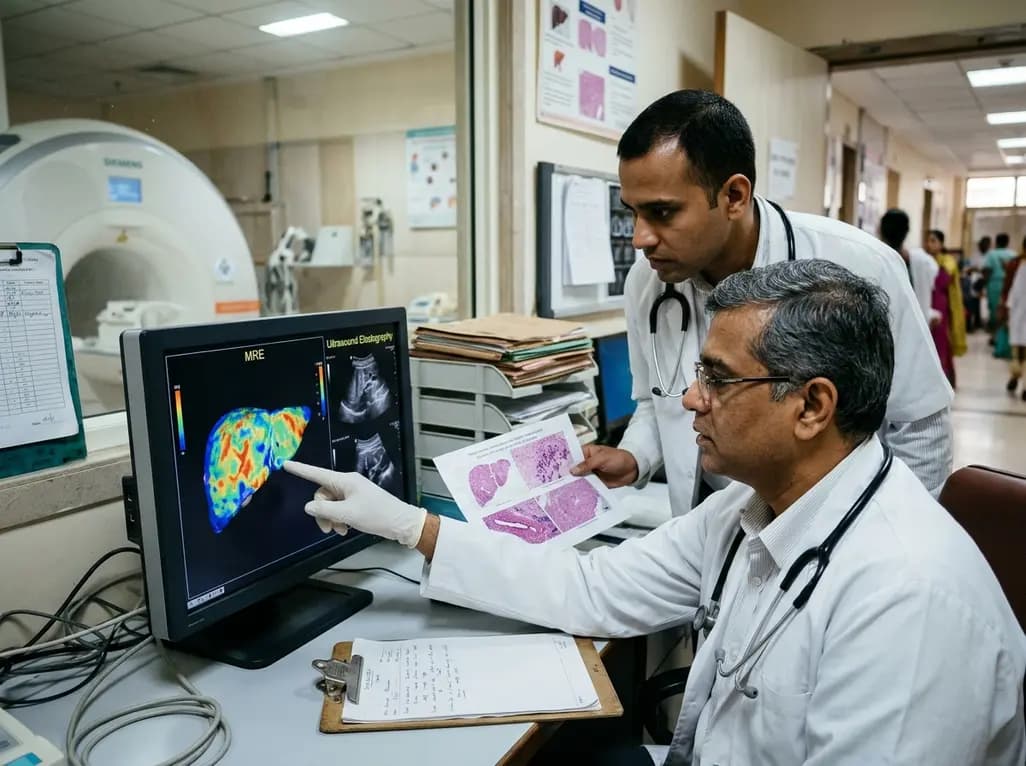
A comparative study reveals magnetic resonance elastography outperforms ultrasound elastography in assessing liver fibrosis in Fontan-associated liver disease, demonstrating stronger histological agreement and superior discrimination.
Today

A systematic review and meta-analysis highlights the substantial impact of plyometric jump training on jump performance, reactive strength, and landing kinematics in female team-sport athletes, providing evidence-based programming guidelines for sports medicine and orthopedics.
Today

A comprehensive review of the role of growth hormone in diabetic kidney disease and podocytopathy. Learn how elevated GH activates ZEB2, Notch, and TGF-beta1, driving podocyte loss and glomerulosclerosis, and explore novel targeted therapeutic approaches.
Today
