.webp&w=384&q=75)

Loading, please wait...
Loading, please wait...

Adolescent pregnancy often creates significant barriers to education, yet many young women demonstrate remarkable resilience in adolescent mothers by continuing their studies. A recent qualitative study conducted in the Hurungwe District of Zimbabwe explores how these school-going mothers navigate academic, social, and economic challenges. By understanding these coping mechanisms, healthcare providers and educators can better support maternal well-being and long-term educational attainment.
The research identified four primary strategies that enable young mothers to persevere. Firstly, personal motivation serves as a powerful internal driver. Many participants expressed a deep desire to secure a better future for their children, which fueled their academic persistence. Furthermore, supportive school environments are essential. Schools that offer flexible schedules and emotional support reduce the risk of dropout.
Additionally, assistance from non-governmental organisations (NGOs) provides a critical safety net. These groups often supply practical resources, such as stationery or financial aid, which alleviate economic pressure. Lastly, developing specific strategies to overcome social stigmatisation allows these mothers to maintain their focus on education. By fostering a sense of agency, they can resist negative societal labels and continue their personal growth.
To promote resilience in adolescent mothers, multi-faceted interventions are necessary. Institutional support must go beyond academic flexibility. It should include mental health services that address the unique stressors of adolescent parenting. Consequently, community-based programs that integrate family counseling and peer mentorship have shown significant promise. When the social ecology—comprising family, school, and community—aligns to support the mother, the likelihood of educational success increases substantially.
The Hurungwe study underscores that resilience is not just an individual trait but a result of supportive ecosystems. While the findings are specific to a small sample in Zimbabwe, the underlying principles of motivation, institutional support, and stigma reduction are universally relevant. Healthcare professionals in maternal and child health should advocate for these integrated support systems to ensure adolescent mothers can thrive both as parents and students.
It refers to the capacity of young mothers to adapt and succeed academically and personally despite the significant stress and adversity associated with early parenthood.
Providers can offer psychosocial screening, refer mothers to supportive community resources, and advocate for school-based health programs that accommodate their dual roles.
Key barriers include social stigma, lack of financial resources, inadequate childcare, and rigid school policies that do not account for parenting responsibilities.
Disclaimer: This content is for informational and educational purposes only. It does not constitute professional medical advice, diagnosis, or treatment. Always seek the advice of your physician or other qualified health provider with any questions you may have regarding a medical condition. Refer to the latest local and national guidelines for clinical practice.
References
Thondhlana G et al. Thriving despite adversities: resilience strategies of school-going mothers in Hurungwe, Zimbabwe. BMC Psychol. 2026 May 04. doi: 10.1186/s40359-026-04629-9. PMID: 42071255.
Watson LL, Vogel LR. Educational resiliency in teen mothers. Cogent Education. 2017;4(1):1276009. doi: 10.1080/2331186X.2016.1276009.
Muzingili T et al. Factors predicting the resilience of school re-integrated teenage mothers in Zimbabwe. Cogent Education. 2025;12(1). doi: 10.1080/2331186X.2025.2540592.
"
Read summarized clinical updates, watch expert medical content, and earn CME certifications right from your smartphone.
Open your smartphone camera to scan and install.





A study explores the resilience strategies of school-going mothers in Zimbabwe, highlighting personal motivation and supportive environments for academic su...
5 months ago
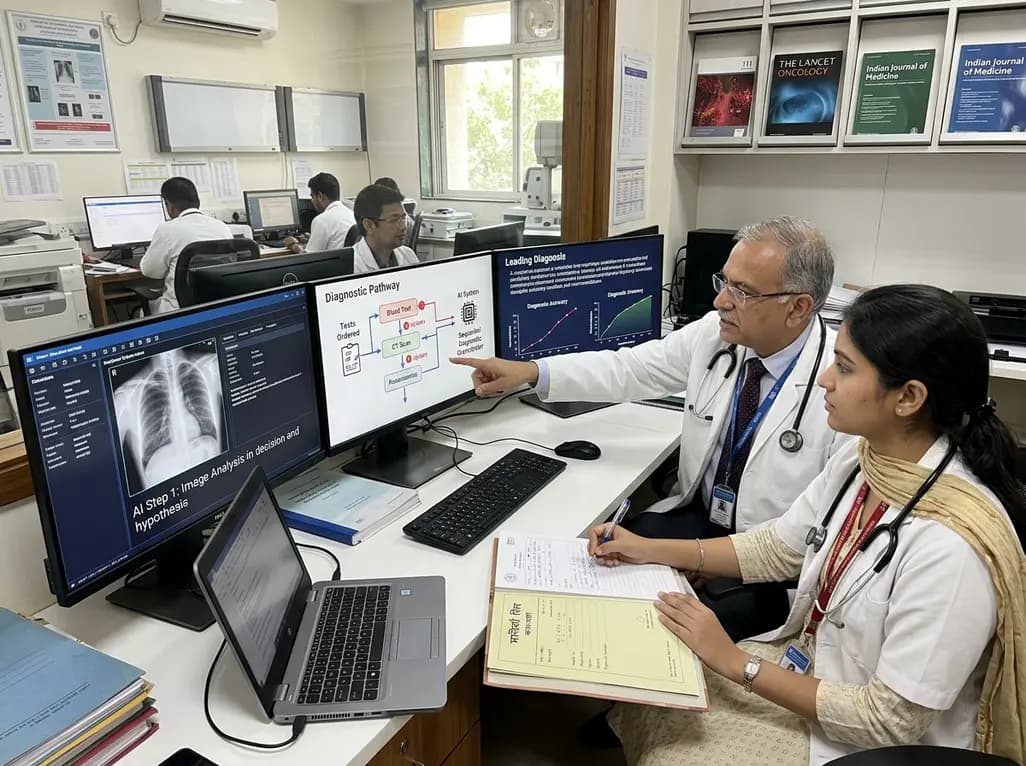
A breakthrough peer-reviewed study demonstrates that a sequential AI diagnosis system can mirror real-world clinical reasoning. By ordering stepwise tests and updating hypotheses dynamically, this multi-agent orchestrator achieved superior diagnostic accuracy while reducing investigative costs.
Today

A prenatal case highlights severe glutaric acidemia type II presenting as bilateral hyperechoic cystic kidneys at 18 weeks. Whole-exome sequencing revealed a novel homozygous ETFDH frameshift variant, demonstrating the power of rapid genetic testing in fetal renal anomalies.
Today

Review how tailored exercise programs benefit frail older patients with heart failure. Explore pathophysiological mechanisms, individualized training prescriptions, and strategies to overcome adherence barriers in clinical practice.
Yesterday

This comparative study evaluates posterior labral tears with and without glenohumeral instability, highlighting distinct demographic patterns, MRI underestimation in stable shoulders, and successful arthroscopic repair outcomes.
Yesterday

A clinical study demonstrates that early intervention with tocilizumab, either as monotherapy or bridged with corticosteroids, achieves significant proptosis reduction and resolves active inflammation in treatment-naive thyroid eye disease.
Yesterday
