.webp&w=384&q=75)

Loading, please wait...
Loading, please wait...

Neurosurgical care is shifting rapidly toward outpatient settings, making resident surgical training efficiency a critical topic for modern medical education. As ambulatory surgical centers (ASCs) become more common, programs must ensure that trainee involvement does not hinder operational flow. A recent comparative analysis investigated this dynamic by evaluating efficiency metrics in a dedicated neurosurgical ASC.
Researchers conducted a retrospective review of cases performed between late 2024 and early 2025. They matched resident-involved cases with nonresident cases across six different spinal procedure types. Furthermore, the team assessed surgical duration and room turnover time to determine if trainees caused delays.
The data revealed that resident participation did not significantly impact operative speed. For instance, the mean surgical time was 114 minutes for resident cases and 110 minutes for nonresident cases. Similarly, the room turnover time showed no meaningful difference, measuring 34 minutes versus 33 minutes, respectively. Therefore, the presence of a resident did not compromise the center's high-volume workflow.
Moreover, these results provide strong evidence that ASCs can support robust educational initiatives. While some surgeons worry about productivity losses, this study demonstrates that efficiency remains stable. Consequently, neurosurgical residency programs should feel confident in expanding their training curricula to include ambulatory environments. In contrast to hospital settings where delays are frequent, ASCs offer a streamlined model for mastering routine procedures.
No, recent comparative data shows that mean surgical times remain consistent. For instance, the difference between resident and nonresident cases was only four minutes, which is not statistically significant.
Research indicates that resident involvement has no significant impact on turnover times in ambulatory surgical centers. This allows facilities to maintain high-volume efficiency while providing valuable educational opportunities.
Disclaimer: This content is for informational and educational purposes only. It is not intended as medical advice or as a substitute for the advice of a qualified healthcare professional. The figures and data mentioned are based on specific study cohorts and may vary across different clinical settings. Refer to the latest local and national guidelines for clinical practice.
References
1. Hagstrom R et al. Impact of resident involvement on operative efficiency in an ambulatory neurosurgical center: a comparative analysis of spine surgery cases. Neurosurg Focus. 2026 Apr 01. doi: 10.3171/2026.1.FOCUS251087. PMID: 41921226.
2. Patel AA, Singh K. Ethics of minimally invasive spine surgery in an ambulatory surgery center setting. J Spine Surg. 2019 Jun;5(Suppl 1):S111-S114. doi: 10.21037/jss.2019.04.14.
3. Bydon M, Abt NB, De la Garza-Ramos R, et al. Impact of resident participation on morbidity and mortality in neurosurgical procedures: an analysis of 16,098 patients. J Neurosurg. 2015;122(4):955-961. doi: 10.3171/2014.11.JNS14890.

Read summarized clinical updates, watch expert medical content, and earn CME certifications right from your smartphone.
Open your smartphone camera to scan and install.





A comparative analysis confirms that resident participation in neurosurgical ambulatory surgery centers does not compromise operative efficiency....
6 months ago
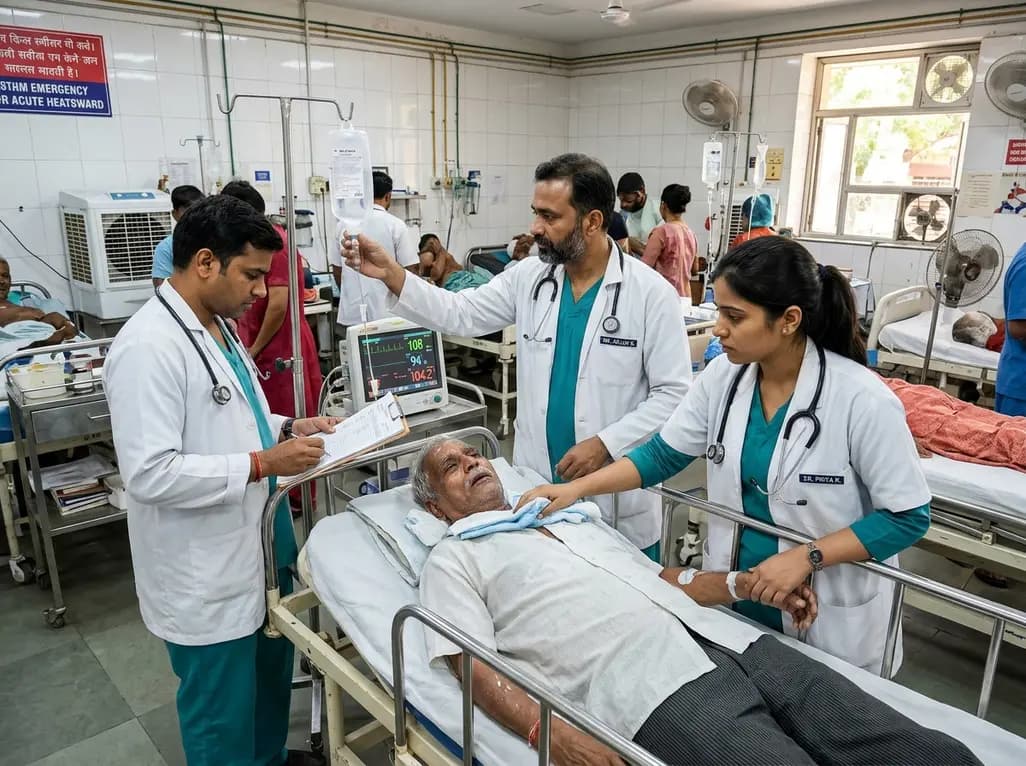
Recent epidemiological data reveals a dramatic surge in summer heat mortality driven by human-induced climate warming. This analysis explores the pathophysiological impacts on cardiac and renal systems, diagnostic dilemmas in death certification, and essential emergency cooling protocols for acute clinical care.
Today

Odisha has established India's first state-level clinical protocol specifically tailored for pregnant women with sickle cell disease. Developed with NHM and UNICEF, the framework provides structured antenatal screening, crisis mitigation, standardized referral pathways, and specialized interdisciplinary care.
Today

India is advancing preventive healthcare by integrating genomics, artificial intelligence, and quantum technologies. With the SANGAM programme sequencing one million Indian genomes, clinicians can unlock personalized therapies, detect cardiometabolic risks early, and curb the burden of diabetes and heart disease.
Today

A randomized controlled trial demonstrates that an eight-week dual-task training intervention significantly improves static and dynamic postural control over standard balance exercises in individuals with chronic ankle instability, addressing critical neurocognitive deficits during athletic and daily activities.
Today

A retrospective cohort study of 7,716 ICU patients from the MIMIC-IV database demonstrates that Gradient Boosting Decision Trees significantly outperform traditional SOFA scores in predicting in-hospital mortality among patients with sepsis and diabetes, with SHAP analysis providing clinical interpretability.
Today
