.webp&w=384&q=75)

Loading, please wait...
Loading, please wait...

Reproductive health significantly influences mental well-being, yet clinical practice often fails to bridge these two domains. Reproductive factors in psychotherapy, such as the menstrual cycle, menopause, and hormonal contraception, play a crucial role in shaping a patient's psychological landscape. Despite their clinical importance, recent evidence suggests that psychotherapists frequently overlook these elements during routine care. Consequently, this omission can lead to incomplete differential diagnoses and less effective treatment strategies.
A comprehensive survey involving 390 psychotherapists and 291 patients in Germany highlighted a concerning trend. Although therapists acknowledge the high relevance of reproductive events, they rarely assess them proactively. For instance, factors like pregnancy, fertility treatments, and postpartum transitions are often left for the patient to disclose. However, placing the burden of disclosure on the patient can result in missed opportunities for precise case conceptualization. Therefore, a proactive approach is essential for modern clinical practice.
The study found that most psychotherapists acquire their understanding of reproductive health through personal experience rather than formal clinical training. This reliance on personal background rather than standardized education creates a significant knowledge gap. Furthermore, the likelihood of a therapist assessing these factors increases only when they possess greater personal knowledge or perceived relevance. To overcome this, the medical community must develop tailored anamnestic instruments and incorporate reproductive psychiatry into core curricula.
Integrating these assessments does not just improve diagnosis; it enhances the therapeutic alliance. Patients often feel more understood when their biological transitions are validated as part of their mental health journey. Similarly, understanding the impact of hormonal fluctuations can help therapists differentiate between primary psychiatric disorders and reproductive-related mood changes. Ultimately, standardized tools will ensure that reproductive health is no longer a blind spot in routine care.
Many psychotherapists lack formal training in reproductive psychiatry. Additionally, there is often an implicit expectation that patients will bring up these issues themselves, which rarely happens in a structured clinical setting.
Clinicians should proactively ask about menstrual cycle regularity, menopausal status, use of hormonal contraceptives, history of pregnancy or birth, and any experiences with fertility treatments.
Menopause involves significant hormonal shifts that can exacerbate anxiety and depression. Addressing these biological changes allows for more accurate case conceptualization and potentially integrative treatment approaches.
Disclaimer: This content is for informational and educational purposes only and does not constitute medical advice. Always seek the advice of a qualified healthcare provider regarding any medical condition. Refer to the latest local and national guidelines for clinical practice.
References
1. Engel S et al. Reproductive health - a blind spot in psychotherapeutic treatment? Evidence of insufficient consideration of reproductive factors in routine care. Dialogues Clin Neurosci. 2026 Dec undefined. doi: 10.1080/19585969.2026.2653598. PMID: 42002828.
2. American Psychiatric Association. Reproductive Mental Health: A Clinical Framework. Psychiatric News. 2022.
3. National Institutes of Health. Acceptability of reproductive goals assessment in public mental health care. PMC. 2023.
"
Read summarized clinical updates, watch expert medical content, and earn CME certifications right from your smartphone.
Open your smartphone camera to scan and install.





A study highlights the lack of proactive assessment of reproductive factors in psychotherapy, urging the need for standardized clinical tools....
6 months ago
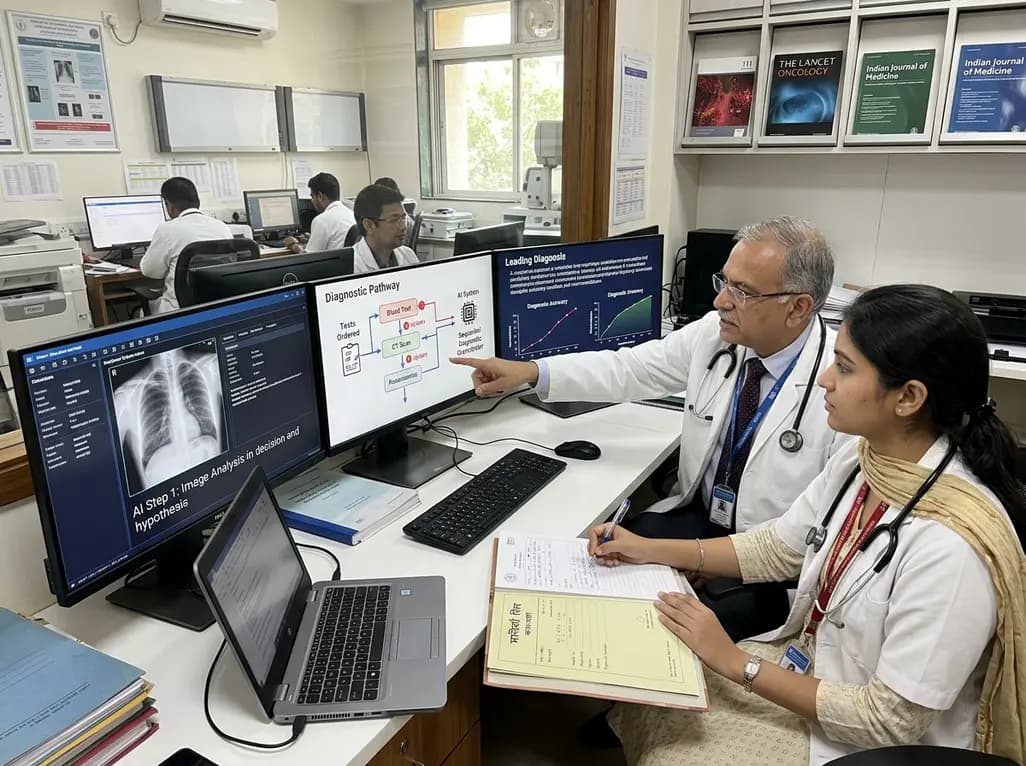
A breakthrough peer-reviewed study demonstrates that a sequential AI diagnosis system can mirror real-world clinical reasoning. By ordering stepwise tests and updating hypotheses dynamically, this multi-agent orchestrator achieved superior diagnostic accuracy while reducing investigative costs.
Today

A prenatal case highlights severe glutaric acidemia type II presenting as bilateral hyperechoic cystic kidneys at 18 weeks. Whole-exome sequencing revealed a novel homozygous ETFDH frameshift variant, demonstrating the power of rapid genetic testing in fetal renal anomalies.
Today

Review how tailored exercise programs benefit frail older patients with heart failure. Explore pathophysiological mechanisms, individualized training prescriptions, and strategies to overcome adherence barriers in clinical practice.
Yesterday

This comparative study evaluates posterior labral tears with and without glenohumeral instability, highlighting distinct demographic patterns, MRI underestimation in stable shoulders, and successful arthroscopic repair outcomes.
Yesterday

A clinical study demonstrates that early intervention with tocilizumab, either as monotherapy or bridged with corticosteroids, achieves significant proptosis reduction and resolves active inflammation in treatment-naive thyroid eye disease.
Yesterday
