.webp&w=384&q=75)

Loading, please wait...
Loading, please wait...
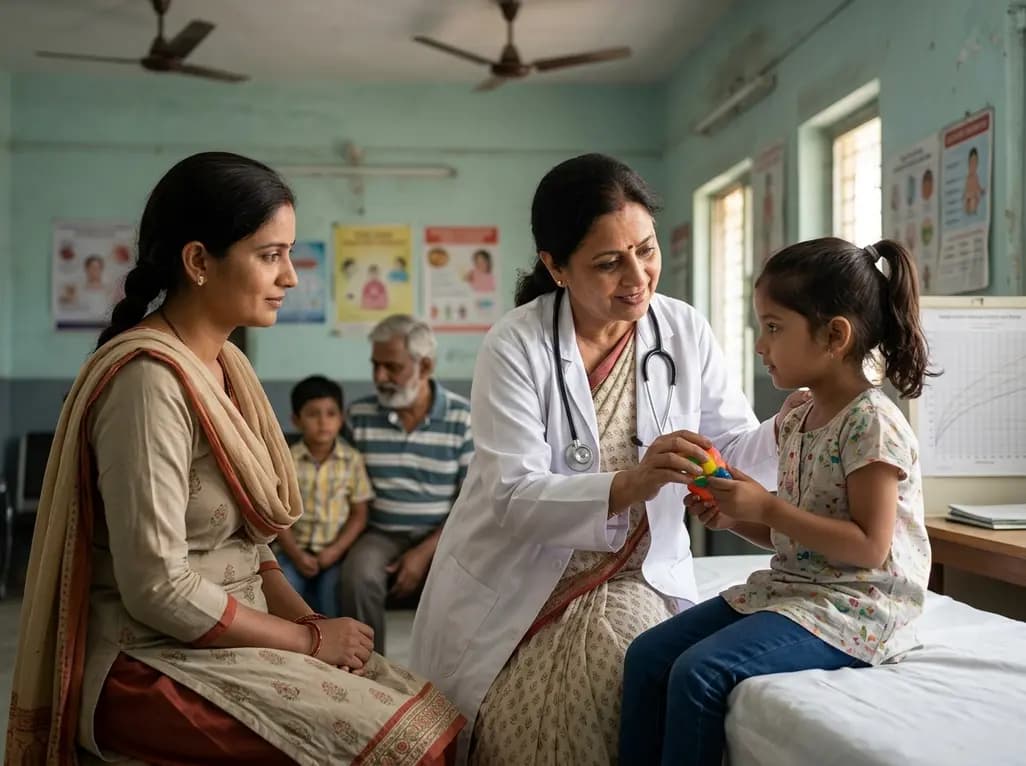
For decades, the field of developmental science has relied heavily on data derived from Western, Educated, Industrialized, Rich, and Democratic (WEIRD) populations. While these studies provided a foundational understanding of human growth, they often lacked the inclusivity required to represent the global majority. Consequently, there is an urgent need to move toward a more representative developmental science. This shift aims to recognize the vast diversity of human experiences and the unique socio-cultural factors that influence development. By expanding our lens beyond traditional models, we can better understand how children and adolescents thrive in different environments. The WISER framework—which stands for Worldview, Interactions, Social, Expand, and Relations—offers a structured approach to this inclusivity. It emphasizes that development is not just a biological process but an active engagement with the world. For medical professionals in India, adopting this representative perspective is crucial because our patient population is incredibly diverse. Understanding development in action allows for more personalized and effective clinical interventions.
The WISER framework serves as a roadmap for clinicians to navigate the complexities of human development through five core pillars. First, 'Worldview' acknowledges that every individual interprets their environment through a unique cultural and personal lens. Second, 'Interactions' focuses on the daily exchanges between a child and their primary caregivers, which serve as the building blocks of neural and emotional growth. Third, the 'Social' component looks at the broader community and societal structures that provide either support or stress. Fourth, 'Expand' encourages scientists and practitioners to broaden their data sets and clinical tools to include diverse demographics. Finally, 'Relations' emphasizes the centrality of human connections in shaping identity and resilience. Together, these elements form a holistic view of the child. Instead of viewing development as a linear progression of milestones, this framework treats it as a dynamic, relational system. Therefore, clinicians can move beyond check-list assessments and start considering the qualitative richness of a child's environment.
India is a land of profound socio-economic and cultural diversity, making the adoption of a representative developmental science particularly relevant for local practitioners. A child growing up in an urban metropolis like Mumbai experiences a vastly different developmental path compared to a child in a rural village in Bihar. Factors such as language, family structure, and local traditions play a significant role in how developmental milestones are met. Standardized Western tools may sometimes misinterpret these cultural variations as delays or abnormalities. For instance, the emphasis on independence in Western psychology may not align with the collective family values prevalent in many Indian households. By focusing on representative science, Indian pediatricians and psychiatrists can develop localized norms that reflect the reality of their patients. Furthermore, this approach helps in identifying specific stressors like social stratification or economic inequality that might impact developmental outcomes. Embracing this inclusivity ensures that medical care is not only evidence-based but also culturally sensitive and ethically sound.
Central to the new paradigm of developmental science is the idea that children are active participants in their own growth. This is often referred to as 'development in action.' Rather than being passive recipients of genetic instructions or environmental stimuli, children constantly interact with and shape their surroundings. Consequently, these actions are always embedded within a web of relations. These relationships—whether with parents, siblings, teachers, or peers—provide the necessary 'wiring instructions' for the developing brain. In the context of representative developmental science, we must analyze how different relational patterns across cultures influence cognitive and emotional trajectories. For example, the role of extended family in Indian child-rearing provides a unique relational buffer that may not be present in nuclear family models. Understanding these dynamics allows clinicians to leverage existing social strengths during therapy or intervention. When we prioritize relations and action, we move from a deficit-based model to a strengths-based model of human development.
The historical reliance on WEIRD data has created a 'representativeness gap' that can lead to diagnostic biases and ineffective treatment plans. To bridge this gap, the medical community must advocate for more diverse research and inclusive clinical practices. Representative developmental science challenges the 'one-size-fits-all' approach by highlighting that what is considered 'normal' can vary significantly across contexts. For a pediatrician, this might mean adjusting how they communicate with parents from different educational backgrounds. For a psychiatrist, it might involve acknowledging that symptoms of anxiety or depression may manifest differently in non-Western cultures. Nevertheless, the transition to a more representative model requires a conscious effort to decolonize our current medical curricula. We must integrate global perspectives and encourage local research that contributes to a broader understanding of the human condition. By doing so, we ensure that our clinical practice is grounded in a science that truly reflects the diversity of the patients we serve every day.
Implementing representative developmental science in a busy clinical setting requires practical, actionable strategies. First, clinicians should incorporate brief cultural assessments into their routine history-taking to understand the family's worldview. Second, instead of relying solely on standardized scores, observation of the 'child in action'—such as how they play or interact with their parents during the visit—can provide deep insights into their developmental health. Third, practitioners should stay updated on local research and guidelines that reflect the Indian demographic. Collaborative care is also essential; working alongside social workers and community health advocates can provide a more comprehensive view of the child's social environment. Furthermore, using the WISER framework as a mental checklist helps ensure that no dimension of the child's life is overlooked. By consistently applying these inclusive methods, clinicians can improve diagnostic accuracy and foster stronger therapeutic alliances. Ultimately, the goal is to provide every child with the opportunity to reach their full potential, regardless of their cultural or social starting point.
Representative developmental science refers to a research and clinical paradigm that seeks to include the full spectrum of human diversity. Unlike traditional models that heavily favored Western, urban populations, this approach prioritizes data from the global majority. It ensures that developmental theories and clinical benchmarks are applicable to individuals from diverse socio-economic, cultural, and geographic backgrounds. This inclusivity is vital for making medical practice more equitable and effective on a global scale.
The WISER framework assists pediatricians by providing a holistic lens through which to view a child's growth. By evaluating Worldview, Interactions, Social factors, Expansion of data, and Relations, clinicians can identify specific environmental drivers of a child's behavior. Instead of focusing only on biological milestones, it prompts the doctor to consider how the child’s social context and active engagement with their family shape their overall development, leading to more nuanced and accurate diagnoses.
In many cultures, including India, development is deeply relational rather than purely individualistic. Prioritizing relations allows doctors to understand the support systems and cultural values that act as buffers against developmental stress. While milestones are important for identifying delays, relations explain the 'why' behind a child's progress. By focusing on these connections, clinicians can design interventions that involve the whole family, which is often more effective in a collective society than focusing solely on the individual child.
Disclaimer: This content is for informational and educational purposes only. It does not constitute professional medical advice, diagnosis, or treatment. Always seek the advice of your physician or other qualified healthcare provider with any questions you may have regarding a medical condition. Refer to the latest local and national guidelines for clinical practice.
References
MacGillivray T et al. Let's get WISER (worldview, interactions, social, expand, relations): Recognizing the centrality of action and relations across the diversity of human development. Behav Brain Sci. 2026 Jul 03. doi: 10.1017/S0140525X25104196. PMID: 42396705.
Atzil S et al. Growing a social brain. Nat Hum Behav. 2018;2(9):624-636. doi:10.1038/s41562-018-0384-6.
Lerner RM. Relational Developmental Systems‐Based Theories and the Study of Children and Families. J Fam Theory Rev. 2015;7(2):83-104. doi:10.1111/jftr.12067.
"
Read summarized clinical updates, watch expert medical content, and earn CME certifications right from your smartphone.
Open your smartphone camera to scan and install.





This article explores the WISER framework's role in advancing representative developmental science, emphasizing action and relations to better serve diverse patient populations. By moving beyond WEIRD data, clinicians can adopt more inclusive and effective strategies for monitoring human development.
3 months ago
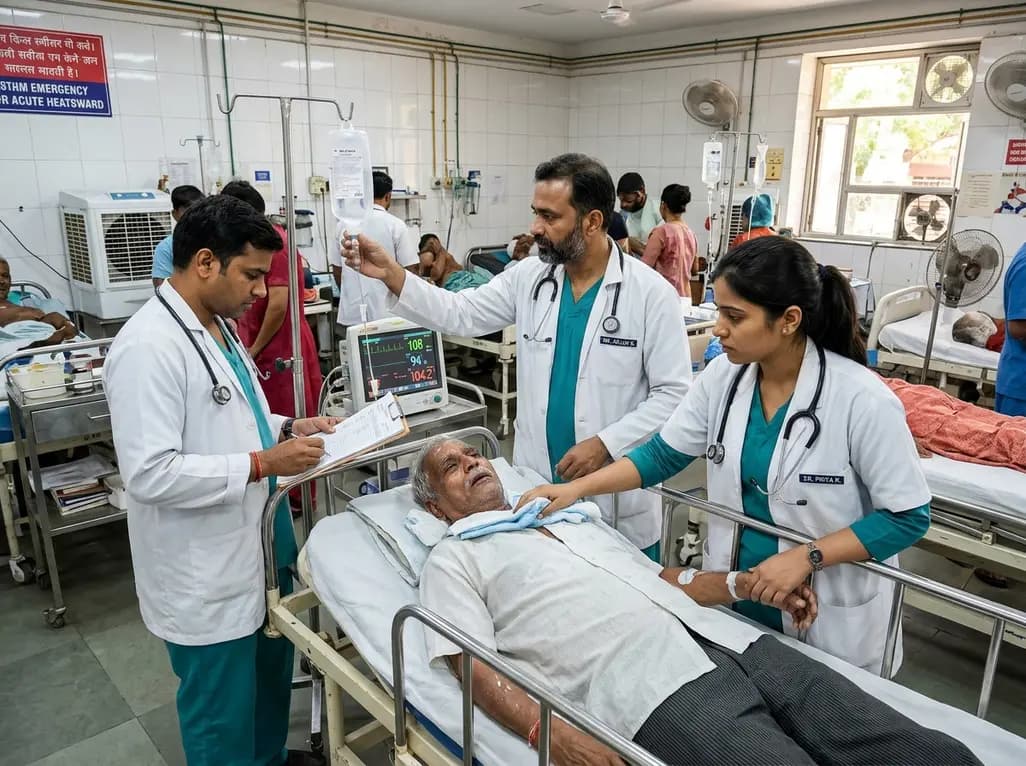
Recent epidemiological data reveals a dramatic surge in summer heat mortality driven by human-induced climate warming. This analysis explores the pathophysiological impacts on cardiac and renal systems, diagnostic dilemmas in death certification, and essential emergency cooling protocols for acute clinical care.
Today
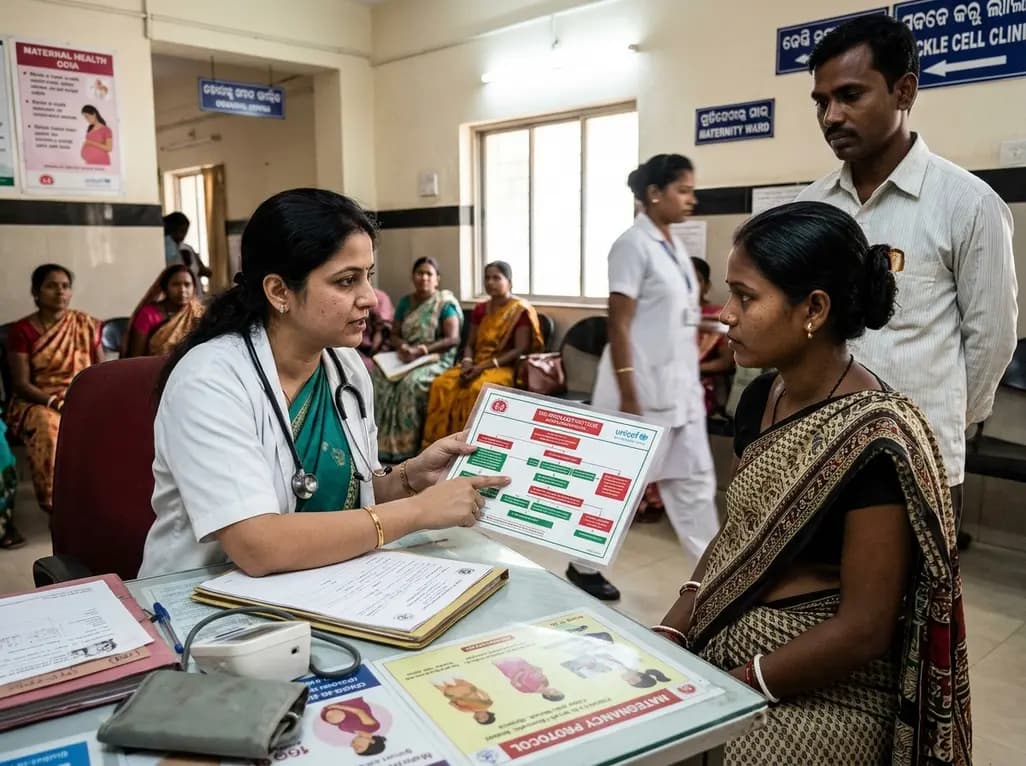
Odisha has established India's first state-level clinical protocol specifically tailored for pregnant women with sickle cell disease. Developed with NHM and UNICEF, the framework provides structured antenatal screening, crisis mitigation, standardized referral pathways, and specialized interdisciplinary care.
Today

India is advancing preventive healthcare by integrating genomics, artificial intelligence, and quantum technologies. With the SANGAM programme sequencing one million Indian genomes, clinicians can unlock personalized therapies, detect cardiometabolic risks early, and curb the burden of diabetes and heart disease.
Today

A randomized controlled trial demonstrates that an eight-week dual-task training intervention significantly improves static and dynamic postural control over standard balance exercises in individuals with chronic ankle instability, addressing critical neurocognitive deficits during athletic and daily activities.
Today

A retrospective cohort study of 7,716 ICU patients from the MIMIC-IV database demonstrates that Gradient Boosting Decision Trees significantly outperform traditional SOFA scores in predicting in-hospital mortality among patients with sepsis and diabetes, with SHAP analysis providing clinical interpretability.
Today
