.webp&w=384&q=75)

Loading, please wait...
Loading, please wait...

The management of challenging behavior in dementia remains one of the most significant hurdles in modern geriatric care today. As the global population ages, particularly in countries like India where the burden of neurodegenerative diseases is rising, the need for precise documentation of behavioral and psychological symptoms of dementia (BPSD) has never been more critical. Clinical practitioners rely heavily on nursing progress reports to adjust medications and tailor psychosocial interventions. However, documenting these occurrences in a standardized and actionable manner is fraught with difficulty. A recent qualitative study has shed light on the intricate factors that influence how nursing staff members report these behaviors. Specifically, the research explores the barriers to effective communication within Electronic Patient Records (EPR). By understanding these dynamics, healthcare providers can better support nursing teams and improve the quality of life for residents in specialized geriatric units. Transitioning from informal observation to structured clinical reporting requires a deep dive into the psychological and systemic barriers faced by frontline staff every day.
One of the primary themes identified in the research is the sense of ownership, or lack thereof, among nursing staff regarding the reporting process. When nurses feel a strong sense of responsibility for the resident's behavioral health, they are more likely to provide detailed and accurate reports. However, the study revealed that many staff members exhibit resistance toward acknowledging challenging behavior in dementia as a core part of their clinical duty. Furthermore, perceptions of responsibility vary significantly across different educational levels, ranging from basic care assistants to highly specialized geriatric nurses. Consequently, if a nurse views behavioral issues as a peripheral problem rather than a central nursing concern, the quality of the documentation suffers. This lack of ownership often stems from the overwhelming nature of the work environment. Therefore, fostering a culture where behavioral management is seen as an integral, shared responsibility is essential. Without this shift in mindset, progress reports may remain superficial, focusing only on physical tasks while neglecting the complex neuropsychiatric needs of the residents.
Effective management of challenging behavior in dementia requires seamless collaboration between nursing staff and psychologists. The study highlights significant concerns regarding the quality of the 'plan of approach' developed by psychological teams. Nursing staff often report uncertainty when reading these reports, feeling that the strategies provided do not always translate well into the practical, fast-paced environment of the ward. Additionally, there is frequently a gap between the observations made by nurses and the interventions suggested by clinicians. To bridge this gap, regular interprofessional meetings are necessary to ensure that everyone is aligned on the resident's care goals. Moreover, when nurses feel that their documentation is not being used to inform clinical decisions, they lose motivation to report accurately. Strengthening the feedback loop between the nursing team and the psychological department is a vital step toward improving the therapeutic environment. Specifically, psychologists should provide clear, actionable feedback on nursing reports to demonstrate their value in the clinical decision-making process.
Defining what actually constitutes challenging behavior in dementia is perhaps the most subjective part of the reporting process. The research underscores that different staff members often interpret the same behavior in wildly different ways. For instance, what one nurse might label as aggression, another might see as a normal reaction to environmental overstimulation. This subjectivity leads to a normalization of challenging behavior, where staff become desensitized to symptoms that should actually be documented and addressed. In addition, the terminology used in reports is often vague, making it difficult for physicians to track the progression of the disease or the efficacy of a treatment plan. To combat this, nursing homes must adopt standardized definitions and assessment tools. By providing staff with a common language, the facility can reduce ambiguity and ensure that significant changes in a resident’s behavior are captured promptly. Consistency in definition is the cornerstone of reliable longitudinal data in dementia care.
The transition to Electronic Patient Records has introduced new challenges, particularly regarding digital access by relatives. Nursing staff expressed significant apprehension about documenting challenging behavior in dementia when they know that family members might read the notes. This fear often leads to 'sanitized' reporting, where the severity of a situation is downplayed to avoid upsetting the family or facing potential conflict. Furthermore, the lack of advanced digital literacy among some staff members can make the reporting process feel cumbersome and time-consuming. Present-day challenges, such as staffing shortages and high turnover rates, only exacerbate these issues. Ethically, nurses find themselves in a difficult position, balancing the need for clinical transparency with the desire to maintain a positive relationship with the resident’s family. Addressing these digital and ethical barriers requires clear institutional policies on record access and comprehensive training on how to write professional, objective reports that accurately reflect the resident's status without causing unnecessary alarm to relatives.
To improve the reporting of challenging behavior in dementia, healthcare organizations must implement several structural changes. First, the integration of behavioral reporting as a mandatory part of the nursing process is crucial. This means providing staff with the time and resources needed to document behaviors immediately after they occur. Second, ongoing education regarding the ambiguous nature of dementia symptoms can help reduce the normalization of BPSD. Third, clinical leaders should facilitate regular interprofessional huddles where nurses, psychologists, and physicians can discuss specific cases and refine reporting techniques. Finally, leveraging technology to create user-friendly, template-based reporting systems can significantly reduce the cognitive load on nursing staff. By simplifying the interface, facilities can ensure that reporting is seen less as a chore and more as a vital clinical tool. Ultimately, improving the accuracy of these reports leads to better pharmacological and non-pharmacological management, ensuring that residents receive the most appropriate and humane care possible in their final years.
Challenging behavior in dementia encompasses a wide range of symptoms, including physical aggression, verbal outbursts, restlessness, and social withdrawal. These behaviors often stem from unmet needs, such as pain or fear, or the neurological progression of the disease itself. Because these symptoms can be highly disruptive, accurate and objective reporting by nursing staff is essential to help physicians identify triggers and develop effective management strategies for the resident.
Nurses face several barriers, including a lack of time, varying interpretations of what constitutes challenging behavior, and fears regarding how relatives might perceive the documentation. Additionally, if the nursing staff does not feel a sense of ownership over the behavioral care plan, they may prioritize physical tasks over detailed behavioral reporting. Improving digital literacy and providing clear, standardized reporting templates can help mitigate these common clinical challenges in nursing homes.
Interprofessional collaboration ensures that all members of the care team, including psychologists and physicians, are using the same language and goals. When nurses see that their reports directly influence the psychological plan of approach, they feel more valued and are more likely to provide detailed documentation. Regular communication helps resolve uncertainties in reading progress reports and ensures that behavioral interventions are practical, consistent, and well-understood by everyone involved in the resident's care.
Disclaimer: This content is for informational and educational purposes only. It is not intended as medical advice or a substitute for the recommendations of a qualified healthcare professional. Always consult with a specialist for the diagnosis and treatment of dementia-related symptoms. Refer to the latest local and national guidelines for clinical practice.
References
Raaijmakers A et al. Reporting challenging behaviour in nursing home residents with dementia: a qualitative study. Geriatr Nurs. 2026 Jul 13. doi: undefined. PMID: 42442027.
Prince M et al. The World Alzheimer Report 2015: The Global Impact of Dementia. Alzheimer's Disease International.
Volicer L. Management of Behavioral Symptoms of Dementia. Geriatrics & Aging Journal.

Read summarized clinical updates, watch expert medical content, and earn CME certifications right from your smartphone.
Open your smartphone camera to scan and install.





Reporting challenging behavior in dementia is a complex task for nursing staff. This study identifies key themes like ownership, defining behavior, and interprofessional gaps that hinder standardized documentation, providing a roadmap for better geriatric care and behavioral management.
3 months ago

Explore vital recurrent stroke predictors in lacunar stroke patients managed with intensive blood pressure lowering. This analysis examines trial findings from SPS3 to uncover residual vascular risks, metabolic factors, and targeted secondary prevention strategies for high-risk neurological patients.
Today
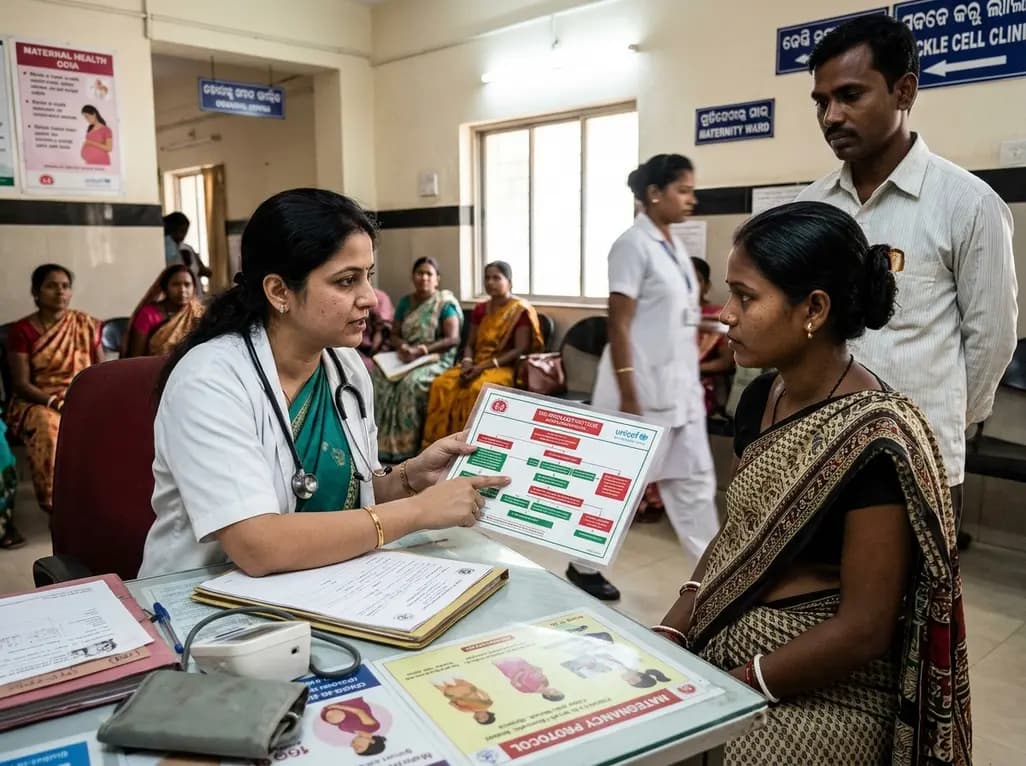
Odisha has established India's first state-level clinical protocol specifically tailored for pregnant women with sickle cell disease. Developed with NHM and UNICEF, the framework provides structured antenatal screening, crisis mitigation, standardized referral pathways, and specialized interdisciplinary care.
Today

The Directorate General of Health Services directs Indian states to halt the hazardous reuse and reprocessing of single-use medical devices. Discover regulatory implications under the Drugs and Cosmetics Act, critical infection risks, legal liabilities, and operational changes required across clinical specialties.
Today

Mitochondria-targeted nanoparticles self-assembled from EGCG and L-glutamic acid effectively restore mitochondrial homeostasis, suppress synovial inflammation, and attenuate chondrocyte senescence in osteoarthritis, offering a promising disease-modifying nanotherapy.
Today

India is advancing preventive healthcare by integrating genomics, artificial intelligence, and quantum technologies. With the SANGAM programme sequencing one million Indian genomes, clinicians can unlock personalized therapies, detect cardiometabolic risks early, and curb the burden of diabetes and heart disease.
Today
