.webp&w=384&q=75)

Loading, please wait...
Loading, please wait...
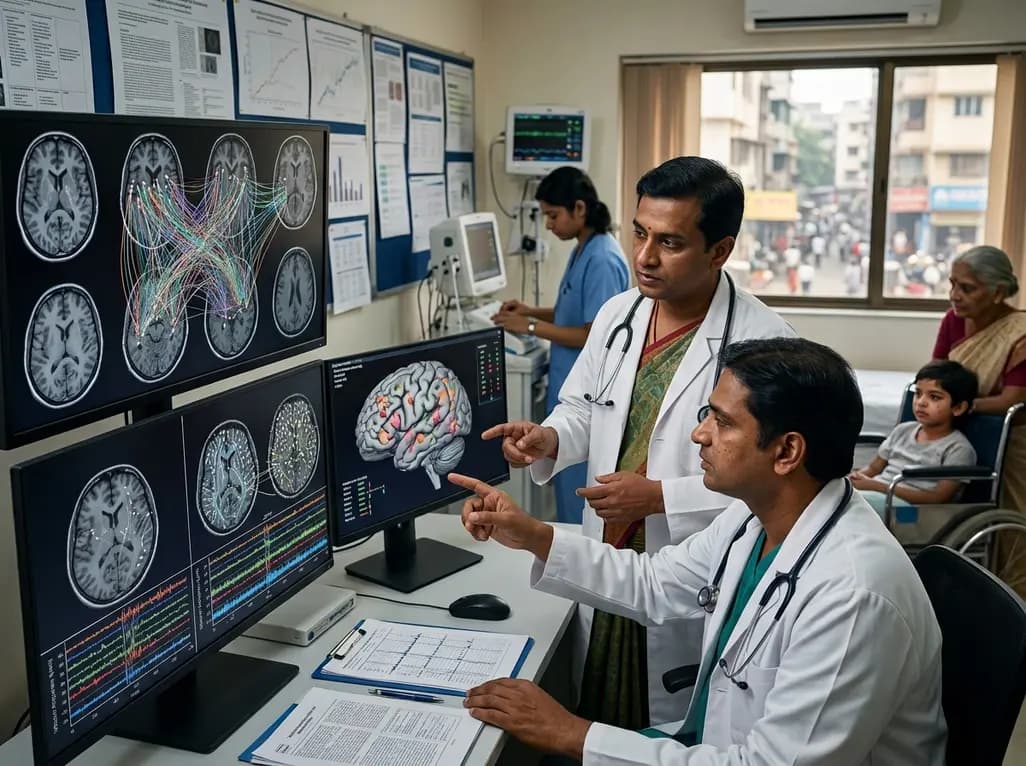
Tuberous sclerosis complex (TSC) represents a significant clinical challenge in pediatric neurology, primarily due to the high prevalence of drug-resistant epilepsy (DRE). This rare genetic disorder leads to the formation of multiple intracranial tubers, which often serve as the primary drivers of seizure activity. For many children, standard medical management fails, necessitating sophisticated surgical evaluations to achieve seizure freedom. Stereotactic electroencephalography (sEEG) has emerged as a vital tool for precisely localizing seizure onset zones in these complex cases. Specifically, clinicians must determine whether a single invasive evaluation is sufficient or if Repeat sEEG in TSC is required to map intricate epileptogenic networks. Understanding the utility of subsequent sEEG procedures is crucial for optimizing surgical interventions and improving long-term outcomes in pediatric patients with multifocal disease patterns.
The neuroanatomical landscape of Tuberous sclerosis complex is characterized by its inherent complexity and heterogeneity. Unlike other forms of focal epilepsy where a single lesion is typically responsible for seizures, TSC often presents with a multifocal network of cortical tubers and perituberal cortex. Consequently, identifying the specific tuber or network of tubers responsible for clinical seizures becomes a daunting task. Researchers have noted that the presence of multiple potential seizure foci often complicates Phase I evaluations, which include scalp video-EEG (vEEG) and magnetoencephalography (MEG). When these non-invasive tools yield discordant results, the clinical team faces a difficult decision regarding the extent of intracranial monitoring. Furthermore, the diffuse nature of these tubers means that even after a successful initial surgery, new or previously quiescent seizure networks may become active. Therefore, the ability to accurately sample multiple brain regions using depth electrodes is paramount to surgical success. While a single sEEG might suffice for some, many children require a more extensive approach to address the comprehensive seizure network effectively.
Identifying which pediatric patients will benefit from a single evaluation versus those requiring Repeat sEEG in TSC is a critical component of the presurgical workup. Recent retrospective data suggests that specific preoperative findings can help predict the need for multiple sEEG sessions. For instance, patients who demonstrate a single presumed seizure focus on Phase I video-EEG are significantly more likely to require only one sEEG procedure. In contrast, those with multifocal or poorly localized findings on non-invasive monitoring frequently necessitate additional invasive evaluations. Interestingly, the concordance between vEEG and MEG data also plays a major role in surgical planning. While single sEEG patients often show lower concordance rates in some cohorts, the overall predictive value of a unified ictal focus remains strong. Specifically, logistic regression models have shown that a single ictal focus on vEEG is a significant negative predictor for needing repeat monitoring. These findings highlight the importance of thorough non-invasive evaluation before proceeding to the operating room for electrode implantation.
The choice of surgical intervention in TSC patients often depends on the findings from sEEG monitoring and the perceived complexity of the epileptogenic zone. In clinical practice, patients who undergo only a single sEEG often have more localized seizure onset zones, making them ideal candidates for minimally invasive procedures such as laser interstitial thermal therapy (LITT) or laser ablation. On the other hand, patients requiring multiple sEEG evaluations typically present with more extensive seizure networks. These cases often necessitate formal resective surgery, such as tuberectomies or lobectomies, to ensure complete disconnection or removal of the offending tissue. Despite the increased complexity of the disease in the repeat sEEG group, the surgical outcomes remain remarkably positive. For example, favorable seizure outcomes, defined as Engel Class I or II, are achievable in both groups. While the single sEEG group may achieve slightly higher rates of seizure freedom initially, patients requiring multiple evaluations still experience significant clinical benefits. Consequently, the use of repeat monitoring should be viewed as a necessary step in treating the most challenging multifocal cases rather than a sign of treatment failure.
Long-term follow-up is essential to determine the true efficacy of epilepsy surgery in children with TSC. Pediatric patients often show high rates of seizure freedom at the one-year mark, with some studies reporting Engel I/II scores in over 90% of those who underwent a single sEEG. Even more importantly, patients who underwent multiple sEEG procedures showed substantial improvement over time, reaching nearly 80% favorable outcomes at their most recent follow-up. This trend suggests that even if initial evaluations and surgeries do not yield perfect results, a persistent and iterative approach can lead to success. Moreover, the data indicates that some patients may undergo additional treatment surgeries without the need for a repeat sEEG if the initial localization was sufficiently robust. Therefore, clinicians should maintain a high degree of optimism when managing TSC-associated epilepsy, as the combination of precise sEEG localization and tailored surgical resection can significantly alter the trajectory of the disease. Ultimately, the goal remains to minimize seizure burden and improve the neurodevelopmental outcomes for these children.
The management of drug-resistant epilepsy in Tuberous sclerosis complex is evolving toward more personalized and data-driven approaches. The utility of repeat stereotactic EEG evaluations underscores the necessity of recognizing TSC as a disease of networks rather than isolated tubers. As imaging technologies like MEG and high-resolution MRI continue to improve, the ability to target these networks will likely become more precise. However, the current evidence strongly supports the role of sEEG in clarifying ambiguous non-invasive data. For medical educators and practicing neurologists, the takeaway is clear: do not shy away from repeat evaluations if the clinical picture remains unclear. While multiple surgeries and invasive procedures are taxing for pediatric patients and their families, the high potential for achieving seizure freedom justifies the rigorous diagnostic path. Furthermore, the integration of laser ablation for smaller, localized foci offers a less invasive alternative for those with well-defined onset zones. By adopting a tiered approach to monitoring, surgical teams can offer the best possible chance for a seizure-free life to children suffering from this complex genetic condition.
Children with Tuberous Sclerosis Complex often have multiple tubers and complex seizure networks that make localization difficult. When initial non-invasive tests are inconclusive or when a patient experiences seizure recurrence after an initial surgery, a repeat sEEG is necessary. It allow clinicians to map additional areas of the brain or refine the understanding of the seizure network, ensuring that the next surgical intervention is as precise and effective as possible.
The primary predictors for requiring multiple sEEGs include multifocal findings on initial Phase I video-EEG and discordance between vEEG and magnetoencephalography (MEG) results. Patients who display a single, clear ictal focus during non-invasive monitoring are much more likely to succeed with a single sEEG session. Conversely, those with diffuse or multifocal electrical signatures often require repeat invasive monitoring to accurately capture all active seizure-producing regions within the brain.
Yes, significant success is possible even for patients requiring multiple sEEG procedures. While these cases are often more complex and involve multifocal epilepsy, studies show that nearly 80% of these patients can achieve Engel Class I or II outcomes (seizure freedom or significant reduction). This demonstrates that an iterative surgical approach, supported by repeat intracranial monitoring, is a viable and effective strategy for managing the most difficult cases of drug-resistant epilepsy in TSC.
Disclaimer: This content is for informational and educational purposes only and does not constitute medical advice, diagnosis, or treatment. Always seek the advice of a qualified healthcare provider with any questions you may have regarding a medical condition. Refer to the latest local and national guidelines for clinical practice.
References
Uchitel J et al. Utility of repeat stereotactic EEG in pediatric patients with tuberous sclerosis. Epilepsia Open. 2026 Jul 04. doi: 10.1002/epi4.70293. PMID: 42400368.
Larrew TW, et al. Comparison of outcomes after stereoelectroencephalography and subdural grid monitoring in pediatric tuberous sclerosis complex. Neurosurg Focus. 2022 Oct;53(4):E5. doi: 10.3171/2022.7.FOCUS22335.
Fallah A, et al. Predictors of Seizure Outcomes in Children with Tuberous Sclerosis Complex after Epilepsy Surgery. Neurosurgery. 2013 Nov;73(5):814-24. doi: 10.1227/NEU.0000000000000104.

Read summarized clinical updates, watch expert medical content, and earn CME certifications right from your smartphone.
Open your smartphone camera to scan and install.





A retrospective study evaluates the impact of single versus multiple stereotactic EEGs (sEEG) on seizure outcomes in pediatric tuberous sclerosis complex (TSC) patients with drug-resistant epilepsy, finding that repeat evaluations can lead to favorable Engel scores despite complex seizure networks.
3 months ago

Discover the crucial role of glymphatic dysfunction in stroke, where perivascular clearance failure and neuroinflammation exacerbate cerebral edema and post-stroke brain injury.
Today

A prenatal case highlights severe glutaric acidemia type II presenting as bilateral hyperechoic cystic kidneys at 18 weeks. Whole-exome sequencing revealed a novel homozygous ETFDH frameshift variant, demonstrating the power of rapid genetic testing in fetal renal anomalies.
Today

Review how tailored exercise programs benefit frail older patients with heart failure. Explore pathophysiological mechanisms, individualized training prescriptions, and strategies to overcome adherence barriers in clinical practice.
Yesterday

This comparative study evaluates posterior labral tears with and without glenohumeral instability, highlighting distinct demographic patterns, MRI underestimation in stable shoulders, and successful arthroscopic repair outcomes.
Yesterday

A clinical study demonstrates that early intervention with tocilizumab, either as monotherapy or bridged with corticosteroids, achieves significant proptosis reduction and resolves active inflammation in treatment-naive thyroid eye disease.
Yesterday
