.webp&w=384&q=75)

Loading, please wait...
Loading, please wait...

The Relationship Sabotage Scale validation study recently provided critical insights into how individuals undermine their own romantic success. Relationship self-sabotage involves self-defeating behaviors and attitudes that impede relationship maintenance. Consequently, mental health professionals require robust tools to measure these tendencies across different cultural contexts. However, most research previously focused on Western populations. Therefore, this new research evaluated the psychometric properties of the Relationship Sabotage Scale (RSS) among Chinese college students to fill this gap.
Notably, the study confirmed a three-factor structure for the 12-item scale. These factors include Defensiveness, Trust Difficulty, and Lack of Relationship Skills. Moreover, the scale demonstrated strong internal consistency with alpha values ranging from 0.79 to 0.95. Specifically, the researchers found that measurement invariance held across gender and family backgrounds. Furthermore, the results showed significant correlations with attachment styles. Specifically, higher sabotage scores linked to increased attachment avoidance and anxiety, whereas lower scores correlated with higher self-esteem and relationship satisfaction.
Clinicians in psychiatry and family medicine can utilize this tool to identify specific maladaptive patterns in patients experiencing chronic relationship distress. Thus, understanding whether a patient struggles more with defensiveness or trust allows for more targeted therapeutic interventions. Although the model fit was slightly marginal in one sample, the overall findings suggest the RSS is a reliable instrument for Chinese populations. In addition, the scale offers a structured way to discuss sensitive interpersonal issues during counseling sessions.
The scale identifies defensiveness, trust difficulty, and a lack of relationship skills as the primary drivers of self-sabotage in romantic contexts.
Research indicates that individuals with anxious or avoidant attachment styles are more likely to score higher on the Relationship Sabotage Scale.
Yes, the study confirmed measurement invariance across gender, suggesting the scale is equally valid for both men and women.
Disclaimer: This content is for informational and educational purposes only. It does not constitute medical advice or a professional diagnosis. Always seek the advice of your physician or another qualified health provider with any questions you may have regarding a medical or psychological condition. Refer to the latest local and national guidelines for clinical practice.
References
Feng W et al. The validation, reliability, and measurement invariance of the relationship sabotage scale in Chinese college students. BMC Psychol. 2026 Apr 24. doi: 10.1186/s40359-026-04546-x. PMID: 42032779.
Peel R, Caltabiano N. The relationship sabotage scale: An evaluation of factor analyses and constructive validity. BMC Psychology. 2021;9(1):146. doi: 10.1186/s40359-021-00644-0.
Maden Ö et al. Turkish Adaptation of Romantic Relationship Sabotage Scale: Validity and Reliability Study. Psychiatry and Clinical Psychopharmacology. 2023;33(1):48-57. doi: 10.5152/pcp.2023.22500.
"
Read summarized clinical updates, watch expert medical content, and earn CME certifications right from your smartphone.
Open your smartphone camera to scan and install.





A study validating the Relationship Sabotage Scale (RSS) in Chinese college students, highlighting its three-factor structure and links to attachment styles...
5 months ago

Recent epidemiological data reveals a dramatic surge in summer heat mortality driven by human-induced climate warming. This analysis explores the pathophysiological impacts on cardiac and renal systems, diagnostic dilemmas in death certification, and essential emergency cooling protocols for acute clinical care.
Today

Odisha has established India's first state-level clinical protocol specifically tailored for pregnant women with sickle cell disease. Developed with NHM and UNICEF, the framework provides structured antenatal screening, crisis mitigation, standardized referral pathways, and specialized interdisciplinary care.
Today

India is advancing preventive healthcare by integrating genomics, artificial intelligence, and quantum technologies. With the SANGAM programme sequencing one million Indian genomes, clinicians can unlock personalized therapies, detect cardiometabolic risks early, and curb the burden of diabetes and heart disease.
Today
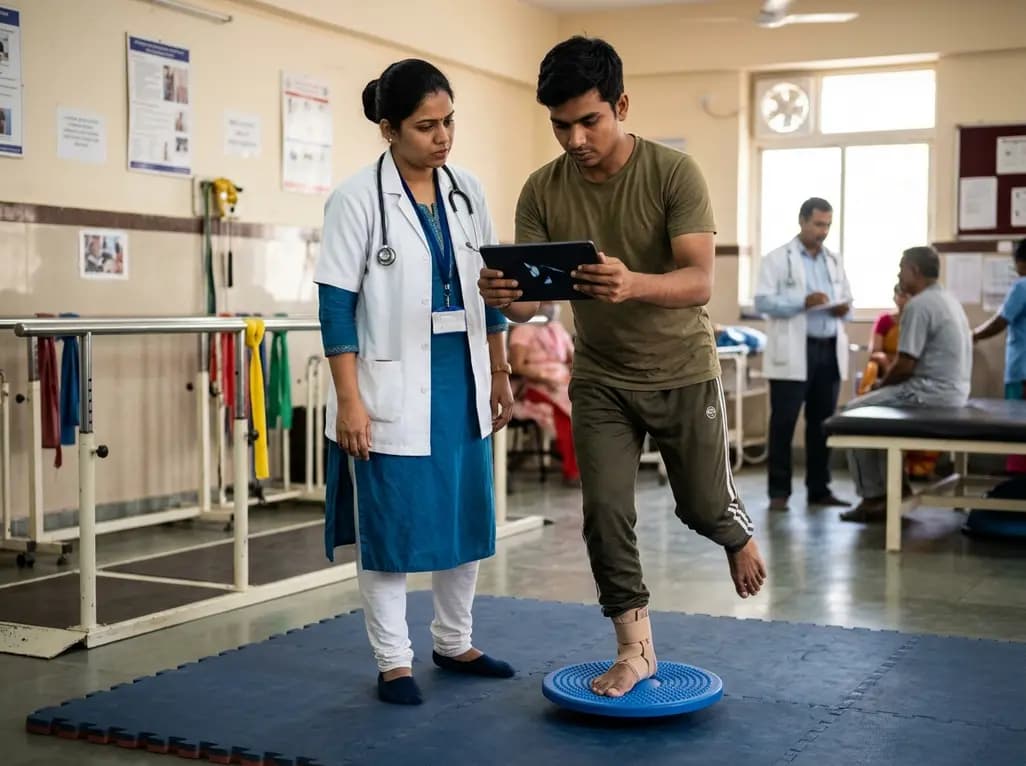
A randomized controlled trial demonstrates that an eight-week dual-task training intervention significantly improves static and dynamic postural control over standard balance exercises in individuals with chronic ankle instability, addressing critical neurocognitive deficits during athletic and daily activities.
Today

A retrospective cohort study of 7,716 ICU patients from the MIMIC-IV database demonstrates that Gradient Boosting Decision Trees significantly outperform traditional SOFA scores in predicting in-hospital mortality among patients with sepsis and diabetes, with SHAP analysis providing clinical interpretability.
Today
