.webp&w=384&q=75)

Loading, please wait...
Loading, please wait...

Targeted therapies have fundamentally revolutionized the management of metastatic gastrointestinal stromal tumors over the last two decades. Tyrosine kinase inhibitors provide remarkable disease control across successive therapeutic lines. However, these multikinase agents can occasionally trigger severe drug-induced liver injury. Clinicians rarely encounter catastrophic hepatic necrosis leading to fulminant decompensation during routine oncology practice. Recently, investigators documented the first recognized case of regorafenib-induced acute liver failure in a patient with metastatic ileal gastrointestinal stromal tumor requiring emergency salvage transplantation. This landmark clinical development underscores the urgent need to understand targeted therapy toxicity, aggressive intensive care interventions, and organ allocation principles in advanced solid tumors.
Regorafenib functions as an oral multikinase inhibitor targeting vascular endothelial growth factor receptors, platelet-derived growth factor receptors, and oncogenic KIT kinases. Consequently, the agent demonstrates robust antiangiogenic and antitumor efficacy against refractory stromal malignancies. Nevertheless, extensive hepatic metabolism exposes hepatocytes to substantial metabolic stress. Clinicians frequently encounter asymptomatic transaminase elevations in routine practice. In contrast, progression toward fulminant hepatocyte necrosis remains an exceedingly uncommon, lethal event. Emerging pharmacovigilance data indicate that toxic reactive metabolites cause mitochondrial disruption within hepatic parenchymal cells. Furthermore, regorafenib may severely compromise microvascular architecture and sinusoidal integrity. Impaired sinusoidal perfusion induces localized cellular hypoxia and massive centrilobular destruction. In addition, preexisting drug-induced liver injury from earlier therapies like imatinib may heighten individual susceptibility to downstream toxic insults. Therefore, treating teams must promptly recognize early clinical and biochemical aberrations before irreversible hepatic cytolysis ensues. When liver failure develops, medical interventions often fail to rescue deteriorating organ function without emergent surgical replacement.
In the reported index case, a 51-year-old patient presented with metastatic ileal gastrointestinal stromal tumor. The individual previously experienced transient hepatotoxicity while receiving imatinib. Subsequently, disease progression mandated second-line therapy with sunitinib, followed eventually by regorafenib initiation. Shortly after starting regorafenib therapy, the patient developed hyperacute jaundice, profound coagulopathy, and rapid neurocognitive deterioration. Diagnostic assessments ruled out viral hepatitis, ischemia, biliary obstruction, and autoimmune etiologies. Consequently, clinicians identified regorafenib as the causative trigger of fulminant hepatic collapse. Because standard medical stabilization failed to reverse the worsening hepatic coma, the transplant team listed the patient for urgent organ replacement. Emergency liver transplantation successfully restored metabolic homeostasis and eliminated life-threatening cerebral edema. Histopathological evaluation of the explanted liver confirmed massive confluent parenchymal necrosis and intense microvascular disruption. Importantly, medical literature reveals that only six prior cases received liver transplantation for tyrosine kinase inhibitor-induced acute liver failure. Remarkably, every previously reported patient had chronic myeloid leukemia rather than a solid abdominal malignancy. Hence, this intervention represents an unprecedented surgical milestone in solid tumor management.
Performing an emergency organ transplant for a patient with metastatic cancer introduces profound ethical and therapeutic complexities. Specifically, global donor shortages mandate careful evaluation of long-term post-transplant survival prospects. Systemic immunosuppression prevents graft rejection but can accelerate dormant microscopic tumor dissemination. In this milestone clinical case, the recipient subsequently developed peritoneal disease recurrence following surgical recovery. Therefore, the multidisciplinary team faced the difficult challenge of selecting an effective yet tolerable systemic antineoplastic agent. Because the patient had previously experienced severe hepatotoxicity with both imatinib and regorafenib, therapeutic choices remained extremely limited. Ultimately, oncologists selected sorafenib to target the recurrent peritoneal metastases. Surprisingly, careful dosing yielded partial tumor control that persisted three years after the transplant procedure. Furthermore, the patient maintained stable graft function without experiencing recurrent severe drug-induced liver injury. This favorable oncological outcome demonstrates that tailored tyrosine kinase inhibitor therapy remains feasible after organ transplantation. Nevertheless, clinicians must maintain rigorous surveillance protocols to balance immunosuppression, graft tolerance, and active oncological control.
Drug-induced liver injury represents a well-recognized class toxicity across diverse small-molecule tyrosine kinase inhibitors. For example, imatinib frequently causes mild transaminase elevations that resolve upon temporary drug cessation or dose reduction. However, multikinase inhibitors like regorafenib and sunitinib feature wider kinase-inhibition profiles and distinct metabolic clearance mechanisms. Consequently, these agents can trigger idiosyncratic immunoallergic reactions or direct intracellular metabolic injury. Most patients experience toxic liver events within the first eight weeks of treatment initiation. Thus, early clinical vigilance remains paramount during this vulnerable therapeutic window. In addition, cross-toxicity among sequential kinase inhibitors warrants close oncological scrutiny. A history of prior hepatotoxicity from first-line agents may signal intrinsic host vulnerability to altered drug catabolism. Similarly, genetic polymorphisms affecting cytochrome P450 enzymes and biliary transport proteins might predispose specific individuals to acute hepatic insult. Understanding these molecular mechanisms enables clinicians to anticipate adverse outcomes. Moreover, early detection prevents progression from asymptomatic enzyme elevation to life-threatening acute organ decompensation.
Preventing irreversible hepatic damage requires stringent surveillance and structured laboratory monitoring. Clinicians should baseline liver biochemistries, including transaminases, alkaline phosphatase, and total bilirubin, before initiating regorafenib therapy. Furthermore, guideline consensus recommends repeating liver function tests biweekly during the first two months of treatment. After this initial critical period, physicians should continue monthly assessments throughout the remaining treatment duration. Additionally, clinicians must educate oncology patients regarding early symptoms of hepatic decompensation, such as dark urine, jaundice, fatigue, and abdominal discomfort. If transaminases rise beyond five times the upper limit of normal, oncologists must immediately interrupt drug administration. Prompt discontinuation frequently allows spontaneous hepatocyte recovery and prevents fulminant hepatic collapse. In severe cases presenting with coagulopathy or encephalopathy, clinicians should transfer patients urgently to specialized transplant centers. Timely referral facilitates intensive supportive care and emergency transplant evaluation before multiorgan failure develops. Ultimately, aggressive early intervention protects patient survival and maximizes therapeutic safety in advanced solid cancer.
Patients experiencing acute liver failure typically present with progressive jaundice, dark-colored urine, profound fatigue, and persistent nausea. As hepatic dysfunction accelerates, individuals develop coagulopathy manifested by unexplained bruising or bleeding. Furthermore, acute hepatic encephalopathy causes confusion, cognitive slowing, asterixis, and progressive lethargy. Clinicians must immediately recognize these warning signs and obtain urgent liver function tests. Prompt drug cessation and rapid hospital admission are critical to prevent irreversible multiorgan collapse.
Managing post-transplant cancer recurrence requires close collaboration between oncologists and transplant hepatologists. Clinicians must select systemic agents that exhibit minimal overlapping hepatotoxicity and manageable interactions with immunosuppressants like tacrolimus. In this published setting, clinicians successfully initiated carefully titrated sorafenib for peritoneal metastasis. Furthermore, sequential monitoring of graft function, therapeutic drug levels, and oncological imaging allows practitioners to achieve partial disease control while preserving donor allograft integrity over long-term follow-up periods.
Oncologists must establish comprehensive baseline hepatic function tests before initiating regorafenib. Because severe hepatotoxicity typically arises early during therapy, guidelines recommend monitoring serum transaminases, alkaline phosphatase, and bilirubin every two weeks during the initial two months. Subsequently, clinicians should perform monthly evaluations throughout the remaining therapeutic course. Furthermore, any sudden biochemical elevation warrants immediate drug withholding, intensive clinical re-evaluation, and aggressive diagnostic workup to exclude progressive drug-induced liver injury.
Disclaimer: This content is for informational and educational purposes only and does not constitute medical advice. Consult qualified healthcare providers for medical conditions or treatment decisions. Refer to the latest local and national guidelines for clinical practice.
References
Tribolet A et al. Liver Transplantation for Acute Liver Failure Following Regorafenib Treatment for Metastatic Gastrointestinal Stromal Tumor: Case Report and Literature Review. Transplant Proc. 2026 Sep 15. doi: undefined. PMID: 42744740.
Demetri GD, Reichardt P, Kang YK, et al. Efficacy and safety of regorafenib for advanced gastrointestinal stromal tumours after failure of imatinib and sunitinib (GRID): an international, multicentre, randomised, placebo-controlled, phase 3 trial. Lancet. 2013;381(9863):295-302.
European Association for the Study of the Liver. EASL Clinical Practice Guidelines: Drug-induced liver injury. J Hepatol. 2019;70(6):1222-1261.

Read summarized clinical updates, watch expert medical content, and earn CME certifications right from your smartphone.
Open your smartphone camera to scan and install.





This report examines the first documented case of regorafenib-induced acute liver failure in metastatic GIST requiring emergency liver transplantation. It highlights clinical surveillance, drug-induced hepatotoxicity mechanisms, post-transplant systemic therapy, and graft outcomes in solid oncology.
Today
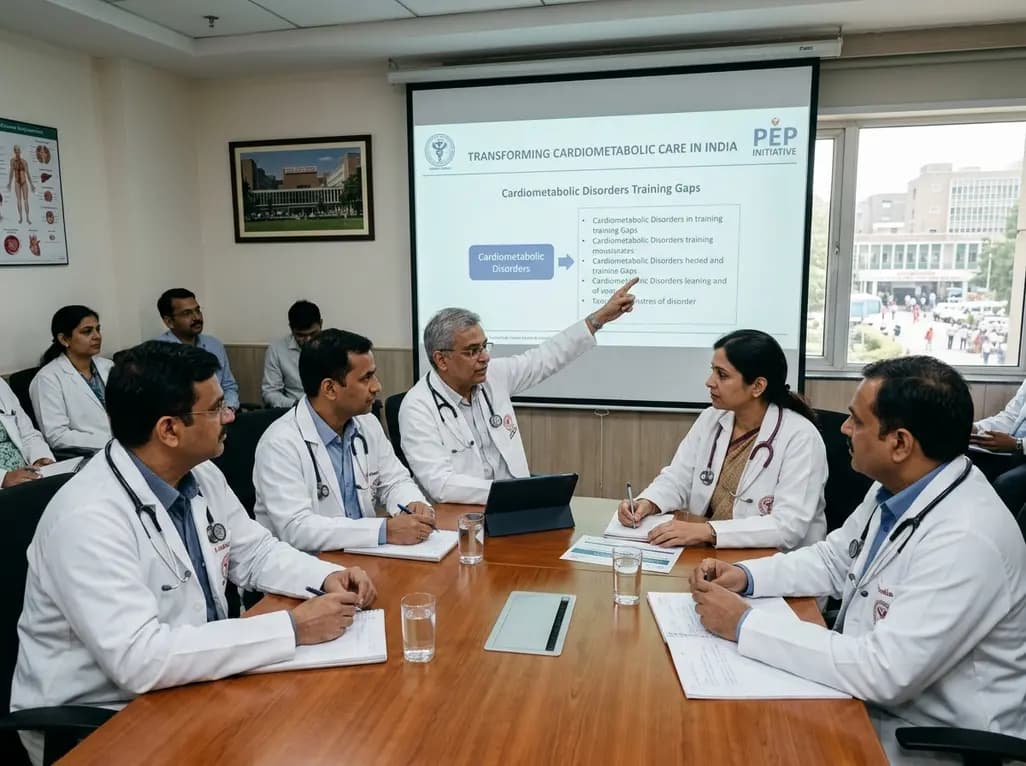
The All India Institute of Medical Sciences has convened national health experts, policymakers, and state nodal officers to transform medical training for cardiometabolic disorders. This collaborative effort under the PEP initiative addresses training gaps to elevate chronic disease care across Indian healthcare.
Today

A recent qualitative study examines how college students seek digital sexual health information under persistent uncertainty. Discover the concept of functional trust, the clinical hazards of search abandonment, and evidence-based approaches clinicians can adopt to guide youth toward verified reproductive healthcare.
Today

A randomized controlled trial demonstrates that curated FOAMed videos and podcasts produce superior gains in high-risk ECG interpretation and acute coronary syndrome clinical decision-making compared with print-based materials among interprofessional emergency care teams.
Today

A systematic review and meta-analysis of 21 RCTs reveals that platelet-rich plasma provides small but statistically superior pain relief and functional improvements compared to hyaluronic acid at 12 months in knee osteoarthritis, influenced by platelet concentration and leukocyte enrichment.
Today

A multicenter real-world prospective study in Taiwan demonstrates that liraglutide effectively reduces body weight and BMI standard deviation score in adolescents with obesity. The therapy shows a favorable safety profile with mild gastrointestinal adverse events and zero treatment discontinuations due to intolerance.
Today
