.webp&w=384&q=75)

Loading, please wait...
Loading, please wait...
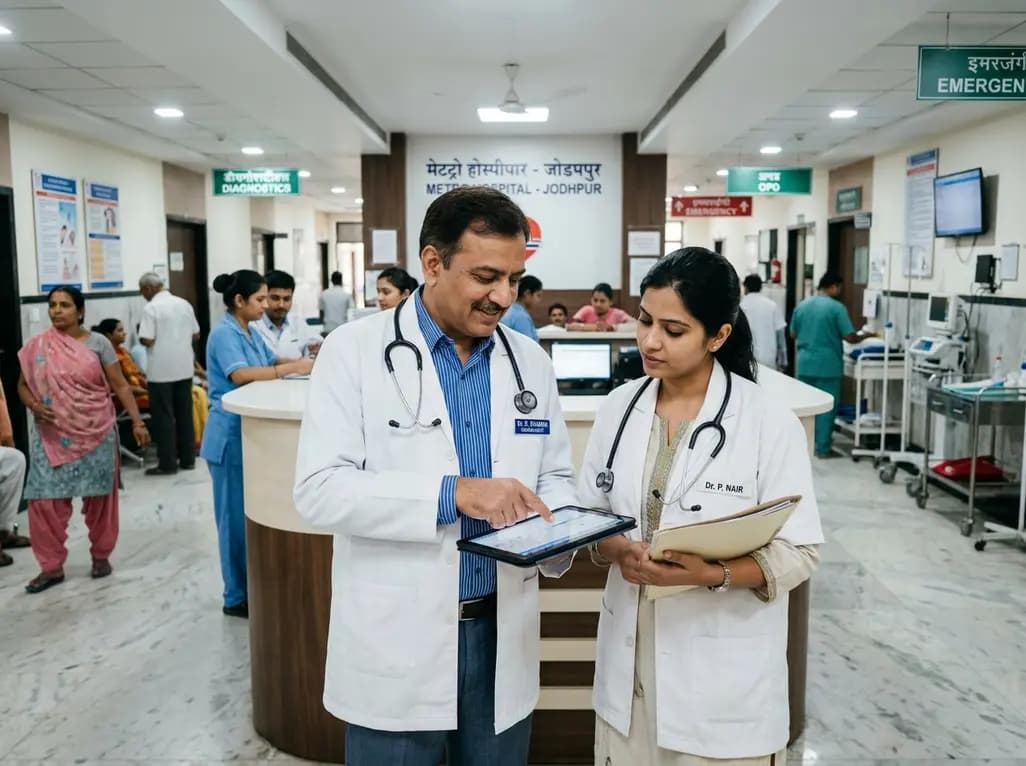
Indian healthcare is experiencing a profound structural migration from crowded metropolitan centers toward non-metro regions. Consequently, expanding regional healthcare hubs now attract unprecedented capital commitments from prominent institutional investors. Tier 2 and tier 3 cities present vibrant landscapes where rising household incomes and health insurance coverage converge. Therefore, organized hospital chains are aggressively deploying capital to deliver high-quality tertiary care directly to local populations.
Metropolitan healthcare ecosystems across India currently suffer from severe market saturation and inflated land acquisition costs. As a result, corporate hospital chains and private equity groups are shifting their focus toward regional healthcare hubs. Emerging healthcare hubs like Jaipur, Amritsar, Vadodara, and Coimbatore offer significantly lower operating overheads alongside expanding patient demand. Furthermore, hospital deal values in these non-metro markets exceeded 8,700 crore rupees between 2024 and 2026 alone. Private equity investors actively seek established regional platforms that possess strong clinical credibility and deep community connections.
In addition, expanding insurance adoption strongly accelerates this investment wave across secondary cities. Non-metro markets generated nearly 47 percent of total health and life insurance premiums during recent fiscal cycles. This dramatic insurance uptake steadily eliminates traditional dependence on out-of-pocket spending for major inpatient admissions. Consequently, regional hospitals report stable bed occupancy rates and predictable cash flow margins. Investors recognize that regional medical centers achieve operational profitability much faster than capital-heavy metropolitan greenfield hospitals. Therefore, leading hospital networks view regional expansion as their most sustainable long-term enterprise growth strategy.
While multispecialty hospitals draw substantial funding, single-specialty clinical platforms are experiencing even faster growth across non-metro regions. High-volume clinical disciplines such as oncology, nephrology, and reproductive medicine require smaller facility footprints and lower initial capital. For instance, institutional investments in mother-and-child services and assisted reproduction expanded nearly thirteen-fold by late 2026. Leading fertility networks like Nova IVF Fertility now open over seventy percent of their new centers in smaller cities.
Historically, patients residing in non-metro towns had to travel hundreds of kilometers to metropolitan hospitals for advanced therapies. This extensive medical travel caused severe financial disruption and emotional exhaustion for vulnerable families. Today, specialized hospital networks establish advanced daycare and surgical suites directly inside secondary urban centers. Moreover, these single-specialty chains maintain strict clinical protocols and standardized infection control measures across every satellite center. Regional clinicians gain regular access to state-of-the-art embryology laboratories, modern linear accelerators, and digital imaging suites. Consequently, patients receive timely, high-precision interventions close to their homes without traveling to crowded metropolitan facilities.
Independent physician-owned nursing homes and community hospitals have formed the traditional backbone of regional Indian healthcare. However, many founder clinicians currently encounter severe operational and generational succession challenges. Senior doctor-entrepreneurs frequently discover that their adult children pursue medical subspecialties abroad or prefer corporate employment. As a result, standalone hospital owners actively explore acquisition proposals or partnership arrangements with organized corporate healthcare chains.
Corporate networks offer established single-asset owners attractive financial valuations and long-term organizational continuity. Furthermore, institutional management relieves aging clinicians from non-clinical burdens such as regulatory compliance, supply chain logistics, and maintenance. Senior doctors can smoothly transition into clinical advisory positions or medical directorships. Consequently, they dedicate their time entirely to patient consultations and clinical governance while maintaining community prestige. In addition, incoming hospital platforms upgrade legacy facilities with advanced intensive care units, modular operating theaters, and computerized diagnostics. Thus, strategic corporate acquisitions resolve generational leadership voids while simultaneously elevating clinical safety across community hospitals. Moreover, consolidated hospital systems offer younger resident medical officers structured clinical training and attractive compensation packages. Therefore, secondary cities successfully retain skilled medical specialists who might otherwise migrate toward top-tier metropolitan centers.
Institutional investors strongly prefer healthcare platforms that implement disciplined cluster-based regional expansion strategies. Instead of establishing isolated hospitals across disconnected locations, operators build tight geographic clusters in neighboring tier 2 and tier 3 districts. For example, KKR recently completed a landmark 1.4-billion-dollar acquisition of Medicover Hospitals in India. Notably, Medicover operates a substantial network across regional hubs like Vizag, Nashik, Warangal, and Kurnool. Similarly, Max Healthcare recently secured a majority stake in Bhubaneswar-based Kalinga Hospital to anchor its eastern regional footprint.
Cluster arrangements create outstanding operational and administrative efficiencies across participating healthcare centers. Specifically, centralized procurement departments negotiate favorable volume pricing on high-value implants, pharmaceuticals, and biomedical instrumentation. Furthermore, network hospitals share super-specialist surgical talent across neighboring facilities through scheduled clinical rotations and robust tele-ICU systems. This collaborative staffing model accelerates patient volume ramp-up and boosts expensive equipment utilization rates. Consequently, individual hospital units achieve favorable operating margins much earlier in their lifecycles. Most importantly, regional clustering ensures that advanced surgical expertise reaches non-metro patient populations with exceptional clinical efficiency.
The rapid infusion of institutional funding into regional healthcare hubs fundamentally transforms everyday clinical workflows. Previously, primary care physicians and general surgeons had to transfer complex critical care patients to crowded metropolitan tertiary hospitals. Unfortunately, long ambulance transfers often precipitated acute clinical deterioration and imposed crushing travel expenses on patient families. Today, modernized regional hospitals house complete diagnostic imaging centers, catheterization laboratories, and dedicated intensive care units.
Consequently, neighborhood physicians collaborate closely with board-certified subspecialists right within their local communities. Integrated electronic health records and diagnostic tele-radiology networks facilitate swift communication between general practitioners and hospital teams. Moreover, healthcare utilization continues to climb across self-paying patients and beneficiaries of government health insurance schemes like Ayushman Bharat. Therefore, regional healthcare networks reinforce domestic referral pipelines and strengthen regional epidemiological surveillance. In addition, expanded regional hospitals organize regular continuous medical education seminars and clinical workshops for neighborhood practitioners. Ultimately, these collaborative educational initiatives encourage standardized treatment pathways and elevate clinical care quality across secondary cities.
Q1: Why are investors prioritizing regional healthcare hubs over major metros?
Investors prioritize regional healthcare hubs because metropolitan markets suffer from severe commercial saturation, elevated real estate costs, and intense competition. In contrast, tier 2 and tier 3 cities offer lower capital overheads alongside large, underserved patient populations with rising disposable incomes. Furthermore, surging health insurance adoption in secondary districts ensures dependable patient footfalls and consistent inpatient hospital bed occupancy rates.
Q2: How does corporate consolidation resolve succession issues for doctor-owners?
Many senior doctor-founders face succession hurdles when their adult children pursue alternate medical careers abroad or prefer corporate employment. Partnering with or selling to corporate hospital platforms provides these clinician-founders with lucrative exit valuations and organizational stability. In addition, incoming hospital operators assume demanding administrative tasks, legal compliance, and procurement responsibilities. Therefore, founding physicians can focus entirely on patient care without daily business stress.
Q3: What clinical benefits do single-specialty healthcare platforms bring to non-metro communities?
Single-specialty hospital platforms introduce focused clinical expertise in fields like fertility, oncology, and ophthalmology using standardized, evidence-based care protocols. By establishing advanced regional facilities, these healthcare networks eliminate the need for patients to travel to distant metropolitan cities. Furthermore, they equip local doctors with advanced surgical instrumentation, high-precision laboratory diagnostics, and regular continuing medical education. Consequently, local patient communities receive timely, specialized interventions.
Disclaimer: This content is for informational and educational purposes only. It does not constitute medical advice or replace professional judgment. Refer to the latest local and national guidelines for clinical practice.
References

Read summarized clinical updates, watch expert medical content, and earn CME certifications right from your smartphone.
Open your smartphone camera to scan and install.





Private equity firms and hospital chains are rapidly shifting capital toward regional healthcare hubs in tier 2 and tier 3 Indian cities. Driven by insurance penetration, lower operational costs, and single-specialty demand, this expansion is transforming clinical infrastructure and physician practice across India.
last month

Review how tailored exercise programs benefit frail older patients with heart failure. Explore pathophysiological mechanisms, individualized training prescriptions, and strategies to overcome adherence barriers in clinical practice.
Today

Leucine Rich Bio has introduced South Asia's first comprehensive vaginal microbiome test, BugSpeaks. By profiling microbial dysbiosis, pathogens, and antimicrobial resistance, this next-generation diagnostic platform provides clinicians with deeper insights into recurrent infections, fertility, and reproductive health.
Today

In high-risk pulmonary embolism complicated by severe anemia and active uterine bleeding, systemic thrombolysis is contraindicated. Large-bore aspiration thrombectomy provides rapid hemodynamic rescue without fibrinolysis, supported by inferior vena cava filter placement and multidisciplinary critical care.
Today

This comparative study evaluates posterior labral tears with and without glenohumeral instability, highlighting distinct demographic patterns, MRI underestimation in stable shoulders, and successful arthroscopic repair outcomes.
Today

A clinical study demonstrates that early intervention with tocilizumab, either as monotherapy or bridged with corticosteroids, achieves significant proptosis reduction and resolves active inflammation in treatment-naive thyroid eye disease.
Today
