

Loading, please wait...
Loading, please wait...

Mental health disorders represent an increasing fraction of the global disease burden, particularly across rapidly aging societies. In primary care and psychiatric practice, late life depression poses substantial challenges to physical recovery, independence, and overall quality of life. Recent longitudinal evidence demonstrates that geographic residence, socioeconomic context, and gender fundamentally determine how many healthy years older adults enjoy free from psychiatric distress.
Global demographic shifts highlight the necessity of measuring life quality alongside simple survival metrics. When clinicians evaluate aging populations, estimating depression-free life expectancy provides actionable prognostic insight. Depression is not a benign facet of senescence; instead, it accelerates cognitive deterioration and exacerbates cardiovascular pathology. A comprehensive longitudinal investigation analyzed 2,263 community-dwelling adults aged 60 and older over a five-year surveillance period. Researchers tracked changes in depressive symptomatology using rigorous multistate mathematical modeling. The researchers evaluated transitions between active depressive episodes, symptom remission, and all-cause mortality. Consequently, this analytical approach mapped how environmental context and underlying systemic diseases reshape health expectancies. The findings confirm that total life expectancy often diverges sharply from disability-free longevity. Thus, clinicians must recognize that living longer does not automatically ensure emotional well-being in later life.
Geographic environment significantly influences mental health outcomes among geriatric populations. In the longitudinal panel, investigators observed meaningful variations in depressive symptom-free years across distinct macro-zones. Older men residing in peripheral northern and southern territories maintained more depression-free years than peers inhabiting dense metropolitan centers. In contrast, metropolitan hubs frequently present heightened environmental stressors, intense sensory stimulation, and fractured social cohesion. Furthermore, air pollution and restricted green space in dense cities impair neurovascular health. Conversely, remote non-metropolitan districts often sustain tighter communal networks and supportive intergenerational ties. However, rural settings may introduce difficulties regarding specialized psychiatric access and primary healthcare availability. Therefore, health systems must avoid centralized, one-size-fits-all strategies. Instead, public health authorities should tailor resource allocations to address specific regional vulnerabilities and structural deficits across diverse territories.
Gender disparities represent one of the most striking findings in modern psychiatric epidemiology. Across every geographic region examined, older women were projected to spend twice as many years with depressive symptoms as their male counterparts. Although biological females frequently demonstrate greater total life expectancy, they encounter a disproportionate burden of affective morbidity. Biological mechanisms, such as endocrine fluctuations and differential stress reactivity, contribute to this elevated vulnerability. Nevertheless, cumulative socioeconomic disparities play an equally prominent role. Throughout their lifetimes, women often balance intense domestic caregiving responsibilities with lower access to formal economic pensions. Furthermore, older women experience higher rates of widowhood, domestic isolation, and unmanaged chronic pain syndromes. Consequently, extended survival often coincides with protracted emotional suffering. Addressing this inequality requires gender-sensitive psychiatric protocols that specifically support aging women.
Chronic non-communicable diseases interact synergistically with psychiatric disorders, accelerating physical decline. When investigators integrated chronic multimorbidity into multistate models, healthy life expectancy dropped precipitously across all cohorts. On average, the onset of multiple physical illnesses reduced depression-free life expectancy by 4.0 years for older men. For older women, this reduction reached an alarming 5.7 years. Conditions like diabetes, osteoarthritis, hypertension, and cardiovascular disorders foster persistent low-grade systemic neuroinflammation. Moreover, chronic physical impairment restricts personal mobility, undermines self-efficacy, and fosters feelings of dependency. In response, psychological distress deepens, which further hinders adherence to medical regimens. Hence, clinicians cannot effectively treat geriatric depression in isolation from chronic medical illness. Similarly, managing chronic physical disorders without assessing affective symptoms leads to poorer clinical outcomes.
These epidemiologic insights carry profound implications for frontline healthcare providers, particularly in family medicine and geriatrics. First, clinicians should implement standardized geriatric depression screening instruments during routine visits for hypertension, diabetes, or arthritis. Early detection enables timely pharmacological optimization and referral for evidence-based psychotherapeutic support. Second, multidisciplinary care models must incorporate social workers, community nurses, and physical therapists into chronic disease pathways. By strengthening physical rehabilitation and community engagement, clinicians can actively preserve functional autonomy. Furthermore, policymakers must prioritize mental health resource redistribution toward historically marginalized and economically vulnerable populations. Ultimately, integrating proactive behavioral health screening with territorial disease management preserves cognitive vitality, promotes healthy longevity, and upholds patient dignity.
Multimorbidity accelerates psychological distress and functional decline in older adults. Chronic non-communicable diseases induce systemic inflammation and impair daily autonomy. Consequently, physical comorbidities substantially reduce depression-free longevity. In longitudinal analyses, chronic medical conditions reduce symptom-free survival by approximately four years in older men and nearly six years in older women.
Older women face biological vulnerabilities, longer overall life expectancy, and persistent socioeconomic inequities. Throughout life, cumulative caregiver burdens, reduced financial security, and unequal healthcare access amplify mental health hazards. Therefore, even though women often survive longer than men, they endure more years living with chronic depressive symptomatology and associated physical limitations.
Clinicians should implement structured geriatric depression screening tools during routine chronic disease follow-ups. In addition, practitioners must assess social determinants of health, functional independence, and living environments. Proactive primary care evaluations enable early detection, prompt psychosocial interventions, and appropriate pharmacological management, ultimately preserving functional independence and improving late-life emotional well-being.
Disclaimer: This content is for informational and educational purposes only. It is not intended to provide medical advice or to be a substitute for professional medical assessment, diagnosis, or treatment. Patients must always seek the advice of their physician or other qualified healthcare provider regarding a medical condition. Physicians and other healthcare professionals must exercise their own independent clinical judgment and should not rely solely on this information to make clinical decisions or assist them in medical evaluation. Refer to the latest local and national guidelines for clinical practice.
References

Read summarized clinical updates, watch expert medical content, and earn CME certifications right from your smartphone.
Open your smartphone camera to scan and install.





A longitudinal study reveals marked territorial and gender disparities in depression-free life expectancy among older adults. Women endure twice as many years with depressive symptoms as men, and chronic multimorbidity significantly erodes depression-free longevity across diverse geographic regions.
Today

A real-world panel study reveals that an automated diet management app significantly improves BMI, blood pressure, and lipid profiles in employees. Frequent meal self-monitoring yielded distinct sex- and age-specific cardiometabolic benefits, highlighting the clinical potential of digital lifestyle interventions.
Today

A nationwide survey reveals substantial knowledge gaps among general practitioners regarding fetal pathology and autopsy. Enhanced training and interdisciplinary communication are vital to guide stillbirth evaluation, clarify autopsy consent, and improve preconception counseling for bereaved parents.
Today
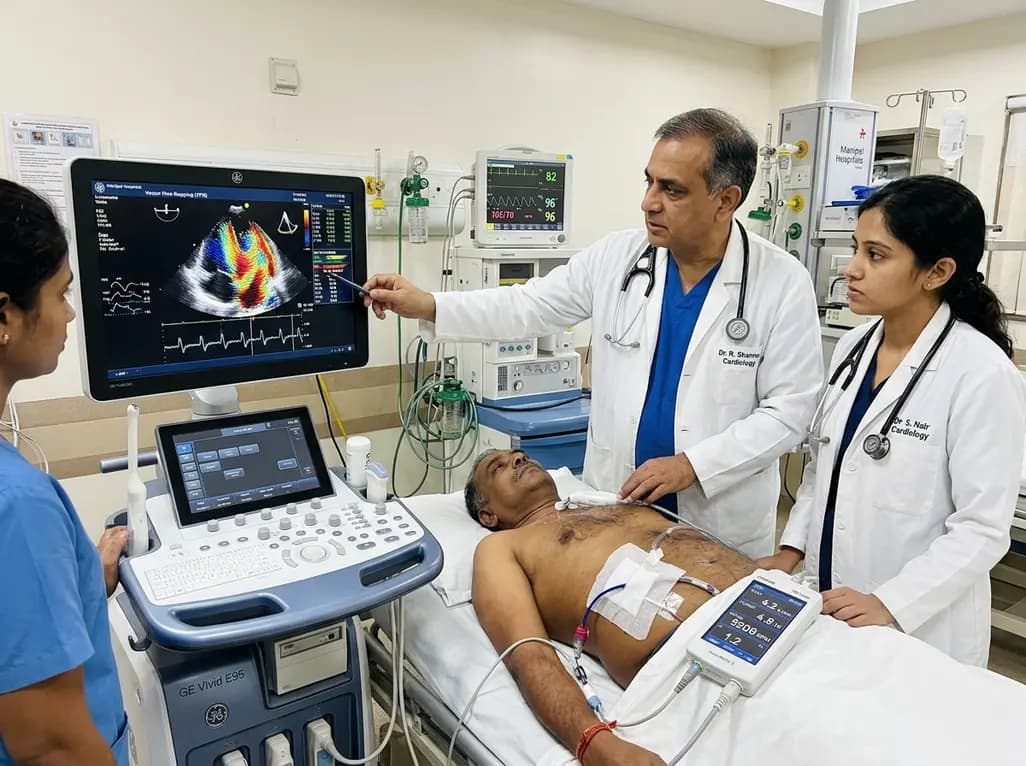
A pilot study shows that transesophageal echocardiography with vector flow mapping measures intraventricular energy loss in HeartMate 3 LVAD recipients. Energy loss significantly correlates with controller-displayed pump flow, offering clinicians deeper insights into ventricular unloading and intracardiac fluid mechanics.
Today

A comparative study demonstrates that simple and complex labral tears achieve comparable functional outcomes and low recurrence rates following arthroscopic stabilization for anterior shoulder instability, despite differing clinical presentations and dislocation histories.
Today

A validation study evaluates the consumer-grade InBody Dial H30 bioelectrical impedance device against a 3-compartment criterion in recreationally active adults, revealing a slight overestimation in body fat percentage and underestimation in fat-free mass alongside notable individual limits of agreement.
Today
