.webp&w=384&q=75)

Loading, please wait...
Loading, please wait...

During endocrine and head and neck surgical procedures, surgeons prioritize vocal cord preservation above all else. However, iatrogenic recurrent laryngeal nerve injury remains a dreaded complication that causes postoperative hoarseness, dysphagia, and debilitating airway compromise. Many operative teams routinely utilize cold irrigation fluids, chilled packs, or cryo-hemostatic maneuvers around the surgical bed to control capillary bleeding. Clinicians frequently assume that hypothermia provides local neuroprotection against secondary ischemia and surgical inflammation. Nevertheless, rigorous experimental evidence regarding thermal safety limits has remained surprisingly scarce in head and neck literature. A landmark porcine model study now reveals that near-freezing exposures do not protect neural pathways. Instead, temperatures below 3°C trigger rapid neuroelectrophysiological failure and severe functional deficits.
Historically, surgical teams considered hypothermia a benign or even protective intervention during complex cervical dissections. Consequently, operators often apply cold solutions to clear the field or mitigate thermal spread from energy-based devices. However, severe hypothermic stress profoundly disrupts peripheral axonal biology. When tissue temperatures plunge below normal physiologic ranges, the recurrent laryngeal nerve undergoes marked bioelectric suppression. Specifically, extreme cold inhibits adenosine triphosphate synthesis in axonal mitochondria, which halts the normal function of sodium-potassium ATPase pumps. Therefore, the resting membrane potential depolarizes rapidly, impairing both saltatory conduction and signal propagation along myelinated fibers. Furthermore, cold temperatures alter axoplasmic viscosity and induce microvascular vasoconstriction in the surrounding vasa nervorum. This local ischemia compounds cellular injury and destabilizes the endoneurial microenvironment. While room temperature fluid produces negligible shifts in neural transmission, temperatures approaching freezing produce structural microfilament disruption and prolonged conduction failure. Thus, surgeons must understand that severe hypothermia acts as an active stressor rather than a passive shield. Recognizing these pathological mechanisms provides a critical foundation for reassessing intraoperative safety practices during open and minimally invasive neck surgeries.
Continuous intraoperative neuromonitoring provides immediate electrophysiological feedback during surgical manipulation of vulnerable neck structures. In the recent porcine evaluation, investigators placed 16 recurrent laryngeal nerves under real-time continuous surveillance while testing specific thermal exposures. The protocol evaluated four distinct environmental conditions, including room temperature water, cold water, ice water, and direct ice block contact. Each exposure lasted exactly one minute, followed by twenty minutes of continuous electromyographic observation. Notably, irrigating with room temperature water and cold water produced either no change or minor, self-limiting electromyographic fluctuations. In contrast, exposure to ice water generated moderate to severe amplitude drops and pronounced latency prolongations. Although some nerves partially recovered after ice water exposure, several sustained persistent signal attenuation throughout the monitoring cycle. Most critically, direct ice block exposure provoked immediate, catastrophic electrophysiological collapse. Several nerves suffered a complete loss of signal within seconds of contact. Moreover, these severely frozen nerves exhibited incomplete electromyographic recovery during the extended post-exposure monitoring period. These quantifiable continuous monitoring metrics establish that neural conduction velocity and signal amplitude deteriorate precipitously as temperatures decline toward freezing.
For decades, clinical dogma promoted hypothermia as an effective strategy to suppress metabolic demand and prevent ischemic necrosis. Therefore, many surgical specialists instinctively favored iced solutions when managing acute bleeding or heat dissipation near critical motor nerves. However, this study directly refutes the concept of hypothermic neuroprotection in the delicate recurrent laryngeal nerve. While controlled moderate cooling may preserve central nervous tissue in cardiac arrest protocols, peripheral motor fibers respond poorly to acute freeze-thaw cycles. In fact, cold exposure below 3°C initiates rapid intra-axonal crystallization and mechanical shearing of lipid bilayer membranes. Furthermore, continuous electrophysiologic tracking confirms that sub-3°C insults cause acute conduction block without requiring physical traction or mechanical transection. Consequently, clinicians must recognize that near-freezing temperatures constitute an independent, direct etiology of neural trauma. When surgeons blindly introduce ice slush or chilled irrigation into the tracheoesophageal groove, they inadvertently subject vulnerable fibers to crippling thermal stress. Thus, rather than shielding axons from operative trauma, freezing media introduce a secondary vector for severe iatrogenic vocal fold dysfunction.
These experimental discoveries carry profound clinical implications for thyroidectomy, parathyroidectomy, and complex esophageal reconstructions. In routine practice, operating room staff frequently deliver iced saline to the surgical field for irrigation or hemostatic compression. Consequently, surgical teams may expose the delicate nerve to sub-freezing fluids without realizing the underlying hazard. Surgeons should immediately establish clear operating room guidelines that restrict the temperature of all intraoperative irrigation solutions. Specifically, surgical scrub teams should ensure that irrigation fluids remain at room temperature or gentle body temperature. Additionally, surgeons must exercise extreme caution when applying cold hemostatic sponges near the tracheoesophageal groove or Berry’s ligament. Because continuous neuromonitoring demonstrates marked amplitude drops within sixty seconds of cold exposure, even transient contact can precipitate neuropraxia. In addition, surgical educators must integrate thermal safety thresholds into surgical residency training and operative checklists. By standardizing temperature control protocols, surgical teams can eliminate preventable cold-induced injuries and significantly improve postoperative voice outcomes. Clinicians must actively guard the nerve against severe cold just as carefully as they protect it from mechanical traction and electrocautery burn.
Modern endocrine surgery relies heavily on standardized neuromonitoring algorithms to detect real-time nerve stress and prevent bilateral vocal fold paralysis. When using continuous neuromonitoring systems, clinicians monitor electromyographic amplitude and latency to detect early signs of impending nerve distress. A combined amplitude decrease exceeding 50% and latency prolongation exceeding 10% defines an adverse electrophysiological event. Importantly, the experimental data show that ice water and ice block applications readily trigger these exact criteria. Therefore, if continuous monitoring signals deteriorate after fluid irrigation, the surgeon must immediately consider thermal shock as a primary differential cause. In such scenarios, the operative team should promptly irrigate the field with warm isotonic saline to restore normal tissue temperature. Furthermore, surgeons should avoid initiating contralateral neck dissection if the first recurrent laryngeal nerve fails to recover its electrophysiologic amplitude. Continuous monitoring allows teams to alter surgical strategy dynamically, such as staging thyroidectomy procedures to avert tracheostomy. Adopting these neuroelectrophysiological safety thresholds ensures that surgical teams respond rapidly to thermal insults, thereby safeguarding long-term vocal cord mobility and respiratory function.
Research confirms that exposing the recurrent laryngeal nerve to temperatures below 3°C induces significant, acute electrophysiological dysfunction. While room temperature and cool water cause only minor, transient changes, ice water and ice blocks provoke substantial amplitude reduction and latency prolongation. Furthermore, direct ice contact can lead to an immediate complete loss of signal, with persistent deficits remaining even after prolonged rewarming.
Continuous intraoperative neuromonitoring assesses nerve integrity by delivering uninterrupted stimulation through the vagus nerve and tracking laryngeal electromyographic waveforms. When cold solutions or thermal tools injure the nerve, monitoring systems detect an immediate decline in amplitude and an increase in signal latency. Consequently, these real-time waveform changes alert the surgeon to impending conduction failure before permanent structural nerve damage occurs.
Surgeons frequently use cold irrigation to clear blood or dissipate heat, assuming hypothermia provides local neuroprotection. However, near-freezing liquids cause severe vasoconstriction in the vasa nervorum and disrupt axonal adenosine triphosphate production. This disruption halts sodium-potassium pump function, precipitating acute conduction block. Therefore, using ice water near an exposed recurrent laryngeal nerve significantly elevates the risk of postoperative vocal cord paralysis.
Disclaimer: This content is for informational and educational purposes only and should not be taken as professional medical advice. It is designed to assist healthcare professionals with clinical updates and scientific knowledge. Refer to the latest local and national guidelines for clinical practice.
References
Huang TY et al. Cold Exposure to the Recurrent Laryngeal Nerve: A Porcine Continuous Intraoperative Neuromonitoring Model Study. Head Neck. 2026 Sep 24. doi: 10.1002/hed.70489. PMID: 42786128.
Awawda R, Merchavy S, Abd Elhadi U, Safia A. Prevalence and determinants of recurrent laryngeal nerve injury after thyroidectomy: a Systematic Review and meta-analysis. Front Endocrinol (Lausanne). 2026 Apr 29;17:1764332.
Allen E, Minutello K, Jozsa F, Murcek BW. Anatomy, Head and Neck, Larynx Recurrent Laryngeal Nerve. StatPearls [Internet]. Treasure Island (FL): StatPearls Publishing; 2026 Jan.

Read summarized clinical updates, watch expert medical content, and earn CME certifications right from your smartphone.
Open your smartphone camera to scan and install.





A porcine continuous neuromonitoring study demonstrates that cold exposure below 3°C causes severe recurrent laryngeal nerve dysfunction and loss of signal, challenging the assumption of hypothermic neuroprotection during head and neck surgery.
Today
A quality-improvement study reveals how hospital pharmacy leadership improves medication safety at home. By eliminating concentrated electrolytes, standardizing kits, and auditing drug labeling, the model successfully aligned home acute care with international patient safety standards.
Today
A recent case-control study identified key protein changes in peritoneal fluid-derived small extracellular vesicles, highlighting candidates like S100-A10 and ALDOA as potential biomarkers to overcome diagnostic delays in endometriosis.
Today

Managing refractory hypoxemia after cardiothoracic surgery becomes perilous when prolonged air leak limits positive-pressure ventilation. This case-based review details how high-flow nasal cannula, paired with awake rehabilitation, enabled successful extubation and avoided invasive re-intubation.
Today

Idiopathic axillary web syndrome (IAWS) is a rare cause of shoulder pain and mobility restriction characterized by palpable axillary cording without prior surgery or trauma. Early diagnosis, nonsteroidal anti-inflammatory therapy, and physical rehabilitation lead to complete resolution of symptoms.
Today
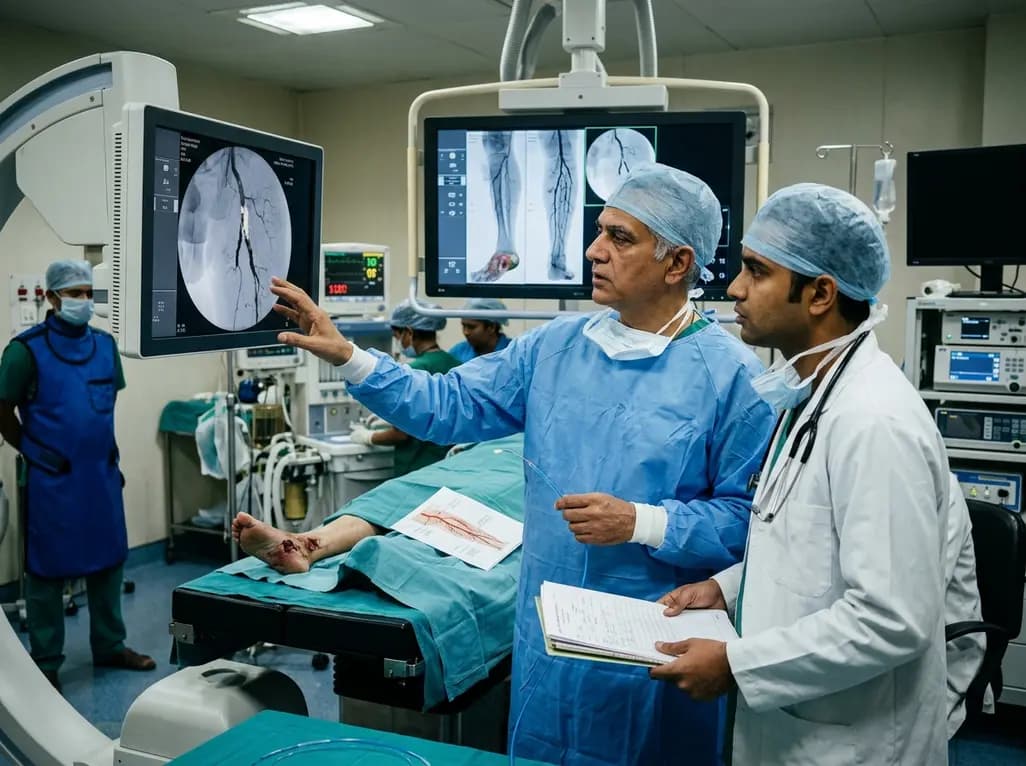
SWEDEPAD-1 trial insights show paclitaxel-coated devices do not improve long-term limb salvage in patients with chronic limb-threatening ischemia and tissue loss. While one-year reinterventions decreased, the devices were linked to a higher risk of major amputation at three months.
Today
