.webp&w=384&q=75)

Loading, please wait...
Loading, please wait...

Endometriosis affects millions of reproductive-age women globally, yet patients frequently face diagnostic delays of seven to ten years. Presently, definitive diagnosis still relies on invasive surgical laparoscopy. Consequently, reproductive specialists urgently seek validated, non-invasive endometriosis biomarkers to expedite clinical evaluation. A pioneering case-control study analyzed small extracellular vesicles in peritoneal fluid to discover disease-specific protein patterns. By profiling vesicular cargo across menstrual phases and disease stages, researchers identified key candidates that could transform diagnostic workflows.
Laparoscopic visualization with histological verification remains the primary diagnostic standard for pelvic endometriosis. However, this surgical requirement creates immense hurdles for timely clinical management. Many patients experience disabling dysmenorrhea, pelvic pain, and infertility for years before receiving definitive intervention. Therefore, developing reliable endometriosis biomarkers has become a paramount goal for gynecologists worldwide. Although investigators have evaluated various circulating microRNAs and inflammatory cytokines, none have provided sufficient standalone clinical accuracy. Furthermore, peritoneal fluid directly bathes ectopic endometrial lesions and pelvic organs. Consequently, this dynamic biological fluid provides an unmatched view into the local inflammatory microenvironment. Within this peritoneal space, cells continuously release small extracellular vesicles that package enzymes and signaling proteins. Because parent cells selectively sort these molecules during disease progression, vesicle cargo mirrors local pathology with high fidelity. Thus, studying peritoneal vesicles provides an exceptional opportunity to uncover robust diagnostic signatures.
To characterize vesicular cargo accurately, researchers designed a rigorous case-control study involving 63 women aged 18 to 49 years. Specifically, the academic team collected peritoneal fluid during laparoscopy, stratifying participants into disease-free controls and surgically confirmed endometriosis cohorts. Furthermore, they classified disease severity into stages I-II and III-IV while documenting proliferative, secretory, and menstrual cycle phases. The investigators then enriched small extracellular vesicles from peritoneal samples using size exclusion chromatography. Notably, this gentle separation technique maintains vesicle structural integrity while removing unbound background plasma proteins. Subsequently, the researchers confirmed vesicle identity through nanoparticle tracking analysis, immunoblotting for canonical markers, and mass spectrometry. Nanoparticle tracking demonstrated vesicle diameters characteristic of small exosomes and microvesicles. Additionally, immunoblotting confirmed characteristic vesicle membrane proteins, validating sample purity. Finally, the team deployed the advanced FragPipe computational pipeline to identify complex peptide signatures. Consequently, this multi-platform approach ensured unbiased, reproducible proteomic profiling across distinct clinical subgroups.
The proteomic analysis revealed profound differences between the vesicular cargo of endometriosis patients and healthy controls. Interestingly, overall vesicle concentrations varied widely among individuals regardless of menstrual phase or disease stage. Nevertheless, quantitative proteomics identified four specific proteins with statistically significant differential expression across the study cohort. Most notably, protein S100-A10 demonstrated a striking 2.54-fold elevation in endometriosis samples compared to controls. This significant upregulation suggests that endometriotic lesions actively release vesicles enriched with this mediator. In contrast, three essential proteins exhibited marked decreases in women with endometriosis. Specifically, fructose-bisphosphate aldolase A showed a 3.12-fold increase in control vesicles relative to disease samples. Similarly, heat shock protein 90-alpha displayed a 2.14-fold elevation in control specimens. Furthermore, collagen alpha-1 chain demonstrated a 1.83-fold elevation among healthy controls. Thus, the simultaneous elevation of S100-A10 and depletion of structural and metabolic proteins forms a distinct molecular profile. Because this signature remained stable across varying hormonal phases, it provides a dependable diagnostic framework.
The specific proteins identified in peritoneal vesicles provide deep insight into the biology of pelvic endometriosis. In particular, protein S100-A10 binds to annexin A2 on cell membranes, forming a complex that stimulates plasmin generation. Consequently, this enhanced proteolytic activity degrades extracellular matrix barriers, promoting ectopic endometrial cell invasion and vascular remodeling. Furthermore, elevated S100-A10 drives localized inflammatory signaling, attracting macrophages and exacerbating pelvic pain. Conversely, the reduction of metabolic and structural proteins indicates severe microenvironmental disruption. Specifically, down-regulated fructose-bisphosphate aldolase A reflects altered glucose metabolism within the peritoneal niche. As a result, ectopic stromal cells may adapt through metabolic shifts to survive chronic hypoxic stress. In addition, decreased heat shock protein 90-alpha suggests impaired cellular stress responses and altered protein folding. Finally, lower levels of collagen alpha-1 chain reflect compromised extracellular matrix maintenance. Together, these molecular perturbations indicate that extracellular vesicles actively participate in lesion implantation, local inflammation, and structural remodeling. Thus, vesicles act as critical functional drivers of endometriosis progression.
Although peritoneal fluid provides exceptional biological insight, collecting it still requires invasive laparoscopic access. Therefore, the ultimate translational objective centers on detecting these vesicular markers in peripheral biofluids like blood or urine. Because extracellular vesicles readily cross anatomical barriers, proteins like S100-A10 may circulate systemically. Moreover, researchers are actively investigating menstrual fluid vesicles as an accessible non-invasive source of endometrial tissue markers. If clinical trials confirm correlated expression across peripheral samples, a multi-protein panel could enable early diagnosis in routine outpatient clinics. Furthermore, accurate vesicular profiling could assist gynecologists in personalizing medical treatments. For example, identifying specific molecular subtypes may predict patient responsiveness to hormonal therapy or indicate surgical necessity. Clinicians could also track vesicle signatures over time to monitor postoperative recurrence before symptoms re-emerge. However, broader clinical application requires large multi-center cohorts to establish robust reference ranges. In summary, extracellular vesicle proteomics offers an exciting pathway toward overcoming diagnostic delays, empowering clinicians with objective non-invasive tools.
Small extracellular vesicles possess a protective lipid bilayer that prevents enzymatic degradation of their internal cargo in biological fluids. Moreover, parent cells selectively package proteins, lipids, and nucleic acids into these vesicles during active disease states. Consequently, vesicular cargo directly mirrors the functional status of ectopic endometriotic implants. These stable biological nanovesicles circulate widely, offering clinicians exceptionally reliable targets for developing reproducible, non-invasive diagnostic tests across diverse patient populations.
Protein S100-A10 interacts directly with annexin A2 on cell surfaces to promote plasminogen activation into plasmin. Subsequently, this enzymatic reaction drives extracellular matrix breakdown, allowing ectopic endometrial tissue to invade peritoneal surfaces and establish vascular networks. Furthermore, elevated S100-A10 levels amplify inflammatory cytokine release and recruit pelvic macrophages. Consequently, this enriched vesicular protein actively sustains chronic pelvic inflammation, facilitates lesion growth, and promotes pain pathway sensitization in women with endometriosis.
Currently, these vesicular protein targets remain experimental candidates requiring rigorous validation before entry into daily clinical practice. Although the case-control data demonstrate statistically significant differences, clinicians cannot yet order these assays in routine hospital laboratories. Furthermore, researchers must first evaluate these biomarkers in larger multicentre cohorts and correlate peritoneal levels with blood or urine samples. Until regulatory agencies approve validated commercial testing kits, surgical laparoscopy and specialized imaging remain standard diagnostic modalities.
Disclaimer: This content is for informational and educational purposes only and does not constitute professional medical advice, diagnosis, or treatment. It is intended to keep clinicians informed about recent advances and literature in modern medicine. Always seek the advice of an expert healthcare professional regarding any medical concerns or questions you may have. The views expressed herein do not necessarily represent those of any official health organisation or clinical institution. Refer to the latest local and national guidelines for clinical practice.
References

Read summarized clinical updates, watch expert medical content, and earn CME certifications right from your smartphone.
Open your smartphone camera to scan and install.





A recent case-control study identified key protein changes in peritoneal fluid-derived small extracellular vesicles, highlighting candidates like S100-A10 and ALDOA as potential biomarkers to overcome diagnostic delays in endometriosis.
Today
A quality-improvement study reveals how hospital pharmacy leadership improves medication safety at home. By eliminating concentrated electrolytes, standardizing kits, and auditing drug labeling, the model successfully aligned home acute care with international patient safety standards.
Today

Managing refractory hypoxemia after cardiothoracic surgery becomes perilous when prolonged air leak limits positive-pressure ventilation. This case-based review details how high-flow nasal cannula, paired with awake rehabilitation, enabled successful extubation and avoided invasive re-intubation.
Today

Idiopathic axillary web syndrome (IAWS) is a rare cause of shoulder pain and mobility restriction characterized by palpable axillary cording without prior surgery or trauma. Early diagnosis, nonsteroidal anti-inflammatory therapy, and physical rehabilitation lead to complete resolution of symptoms.
Today
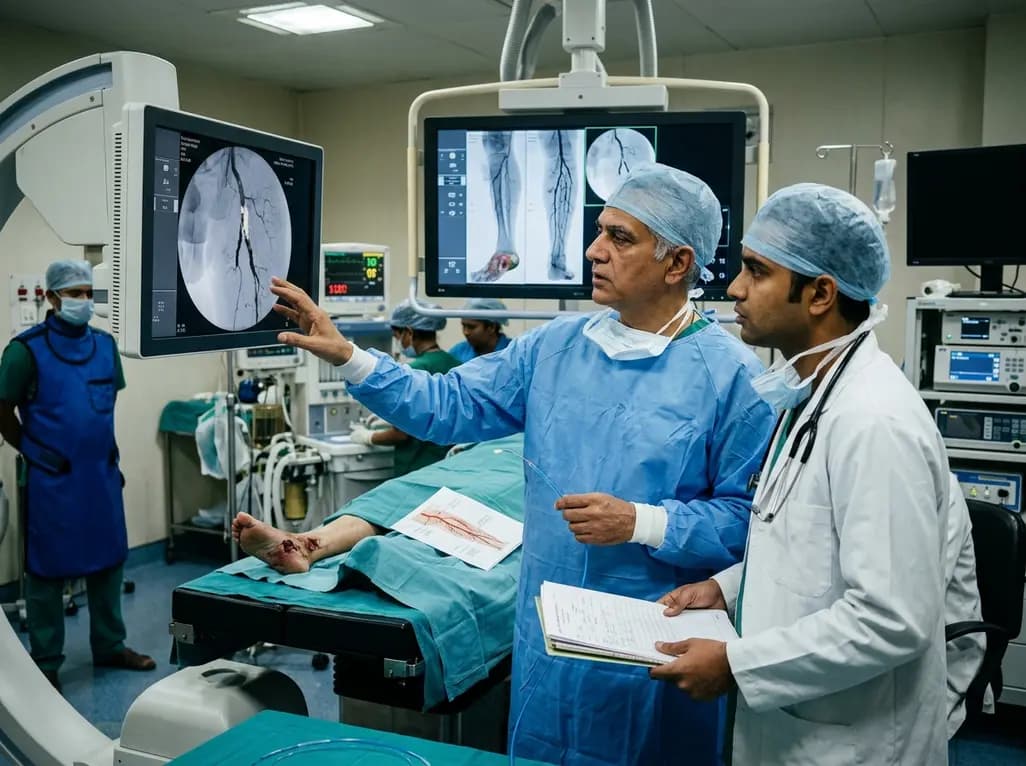
SWEDEPAD-1 trial insights show paclitaxel-coated devices do not improve long-term limb salvage in patients with chronic limb-threatening ischemia and tissue loss. While one-year reinterventions decreased, the devices were linked to a higher risk of major amputation at three months.
Today
