.webp&w=384&q=75)

Loading, please wait...
Loading, please wait...

Researchers recently investigated the value of External Comparator Cohort (ECC) studies using Real-World Data in Oncology. These studies offer a more reliable way to estimate treatment differences than traditional single-arm trials (SAT). Specifically, the researchers evaluated how healthcare professionals and regulators perceive evidence when establishing overall survival (OS) benefits in advanced cancers.
The results showed that high-quality ECC studies significantly outperform SATs in perceived strength of evidence. For instance, an ECC study demonstrating a 3-month OS improvement had nearly 15 times higher odds of receiving a higher evidence rating than an SAT. However, randomized controlled trials (RCTs) still remain the gold standard, with odds ratios for evidence strength exceeding 300. Notably, healthcare professionals from organizations like ESMO and EHA view real-world evidence much more favorably than regulatory assessors do.
Furthermore, the quality of the data source plays a critical role in these assessments. High-quality RWD allows for better handling of selection bias and data heterogeneity. Consequently, these designs are becoming essential when ethical or practical constraints prevent traditional randomization. Clinicians must weigh the observed survival benefit against the risk of symptomatic toxicity when interpreting these findings.
An SAT evaluates a drug without a control group, making it difficult to determine the true treatment effect. In contrast, an ECC uses real-world data from patients treated with standard care to provide a comparative context for the experimental therapy.
Clinicians often value the practical insights and representative populations found in RWD. Regulatory agencies, however, remain more cautious due to potential selection bias and the lack of prospective randomization inherent in non-randomized designs.
Disclaimer: This content is for informational and educational purposes only. It is not intended to be a substitute for professional medical advice, diagnosis, or treatment. Always seek the advice of your physician or other qualified health provider with any questions you may have regarding a medical condition. Refer to the latest local and national guidelines for clinical practice.
References

Read summarized clinical updates, watch expert medical content, and earn CME certifications right from your smartphone.
Open your smartphone camera to scan and install.





A study evaluates the perceived strength of evidence for External Comparator Cohorts using Real-World Data versus single-arm trials in oncology research....
8 months ago
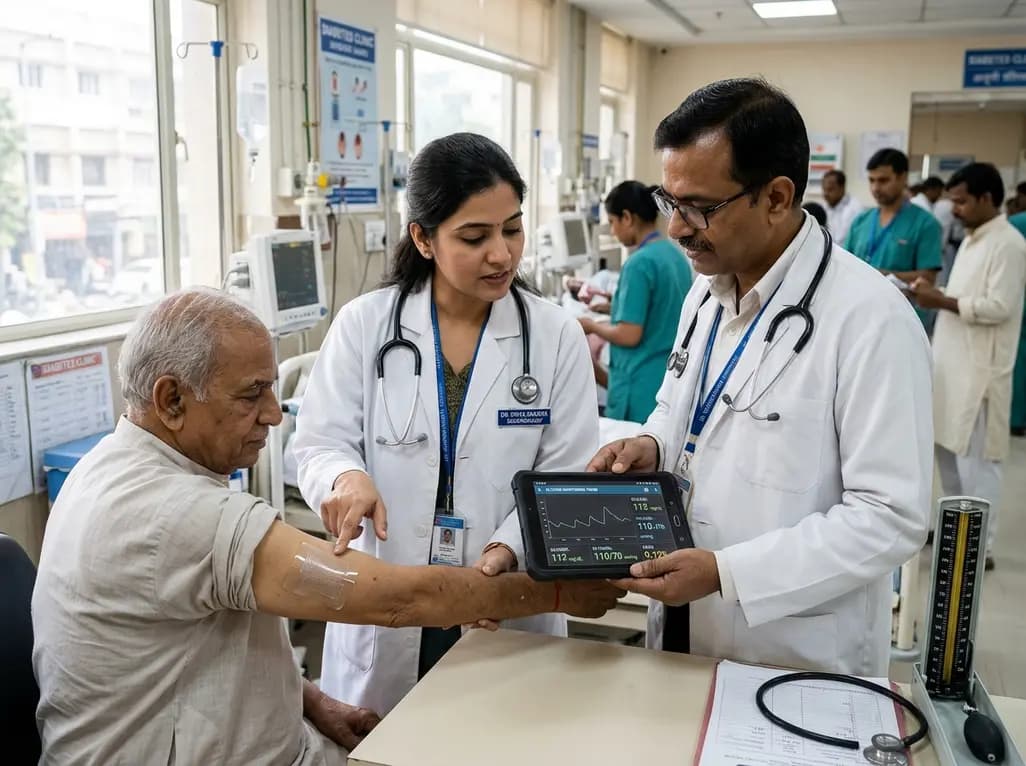
A breakthrough ultrathin multimodal sensor decouples physical hemodynamic monitoring from disposable electrochemical calibration, achieving long-term wearable glucose prediction with 81.36% accuracy and a 9.12% MARD. This offers a robust, drift-free solution for outpatient metabolic surveillance.
Today

A clinical review of menopause and neurology highlights the neurobiological impacts of midlife hormonal shifts on cognition, epilepsy, migraine, multiple sclerosis, and stroke, emphasizing safe hormone therapy prescribing.
Today

Co-administering antiseizure medications and DOACs frequently causes pharmacokinetic interactions, subtherapeutic drug levels, and thromboembolic failures. This review highlights enzyme induction risks, unpredictable outcomes with levetiracetam, and the vital role of therapeutic drug monitoring.
Today

A comparative review of tension band wiring and intramedullary screw fixation in thumb metacarpophalangeal arthrodesis, evaluating union rates, hardware complications, and clinical outcomes.
Today

Following regulatory scrutiny from FSSAI regarding promotional representations and lean muscle preservation claims, Dr. Reddy's Laboratories and Nestlé Health Science are currently reviewing the branding and marketing strategy for their joint nutritional supplement Celevida GLP+.
Today
