.webp&w=384&q=75)

Loading, please wait...
Loading, please wait...

Artificial intelligence holds tremendous promise for modern healthcare by enhancing diagnostic precision and alleviating clinician burnout. However, successful AI-based CDSS implementation across real-world clinical workflows remains surprisingly uncommon. While researchers continuously publish novel predictive algorithms, translating these digital tools into daily bedside practice presents substantial operational challenges. Healthcare organizations frequently struggle to move predictive models beyond experimental validation into routine clinical care. Therefore, understanding the practical determinants that dictate adoption is vital for clinicians, medical directors, and healthcare leaders seeking to deploy algorithmic tools effectively.
Recent scoping review data evaluated real-world deployments to map the exact determinants influencing clinical adoption. Researchers systematically screened over ten thousand scientific publications across major databases, including MEDLINE, Embase, and the Cochrane Library. Surprisingly, only thirteen studies met rigorous real-world implementation criteria, with nine studies explicitly detailing concrete determinants. Most investigations were multicenter projects conducted within the United States, predominantly concentrating on machine learning models deployed in emergency medicine and intensive care units. Consequently, acute care environments represent the primary testing ground for real-time algorithmic tools today. Furthermore, the review categorized twenty-eight unique determinants using the Consolidated Framework for Implementation Research, identifying sixteen distinct barriers alongside twelve specific facilitators. These insights demonstrate that acute care teams frequently encounter severe operational friction during digital transitions. Clinicians working in high-pressure environments require rapid, dependable recommendations. Thus, any friction within the software interface or electronic health records severely impedes sustained technology adoption.
Technological constraints within the innovation domain represent significant impediments to routine algorithmic integration. Specifically, limited algorithm interpretability, often termed the black-box phenomenon, creates substantial hesitation among attending physicians and bedside nurses. When clinical decision support systems offer risk scores without clear clinical rationale, clinicians cannot easily verify recommendations against pathophysiological principles. Consequently, practitioners experience diagnostic uncertainty and ethical concerns regarding professional liability. In addition, severe data management challenges and poor historical data quality frequently undermine algorithmic dependability. Electronic health records often contain unstructured clinical notes, missing physiological variables, and delayed laboratory entries. Because machine learning models require clean data inputs to generate accurate risk assessments, missing data produces erratic alerts. Moreover, frequent false alarms contribute directly to cognitive overload and alert fatigue among busy clinical staff. When healthcare professionals face continuous non-actionable notifications, they rapidly ignore system alerts. Therefore, technical developers must prioritize algorithmic explainability, seamless integration, and resilient data processing pipelines.
Beyond technical limitations, organizational factors within the inner hospital setting heavily influence technology adoption across clinical departments. A prominent barrier involves the profound misalignment between automated decision workflows and established bedside clinical routines. For instance, if an automated clinical warning requires physicians to navigate away from standard documentation screens, uptake declines sharply. Furthermore, researchers frequently observe insufficient clinician motivation and operational capability when healthcare institutions introduce digital tools without comprehensive onboarding. When frontline clinicians feel overwhelmed by heavy patient volumes, mandatory technology adoption generates resistance rather than clinical enthusiasm. Institutional culture also plays a defining role in digital transformation. Health systems that lack robust technical infrastructure, dedicated IT personnel, or proactive departmental leadership struggle to sustain user engagement over extended periods. Additionally, ambiguous institutional policies regarding algorithmic accountability exacerbate clinician anxiety. Consequently, healthcare organizations must cultivate transparent communication, establish clear governance protocols, and align automated systems directly with routine clinical workflows.
Conversely, the scoping review illuminated twelve powerful facilitators that drive successful technology integration, predominantly mapped to the implementation process domain. First and foremost, early and continuous assessment of end-user needs ensures that digital tools address authentic clinical priorities. Engaging frontline physicians, triage nurses, and clinical pharmacists during early design phases fosters strong psychological ownership and practical usability. In addition, active stakeholder engagement throughout the entire deployment lifecycle accelerates institutional buy-in and organizational readiness. Furthermore, peer endorsement serves as an exceptionally potent catalyst for cultural change across clinical departments. When respected senior consultants and clinical champions actively advocate for decision support systems, peer practitioners adopt the technology with substantially greater confidence. Moreover, the availability of robust clinical evidence demonstrating tangible patient benefits significantly bolsters clinician trust. Health systems also achieve superior results when they implement structured onboarding programs, establish responsive technical support desks, and maintain iterative feedback channels for algorithmic refinement.
Although artificial intelligence continues to advance rapidly, a glaring evidence gap remains regarding formal implementation science in healthcare informatics. The scoping review revealed that while thousands of published studies explore algorithmic development and retrospective validations, very few investigations evaluate actual operational deployments in live clinical environments. Healthcare organizations frequently implement digital tools without systematically documenting the specific behavioral, organizational, and contextual factors governing long-term utilization. Consequently, clinical informatics teams often repeat preventable implementation mistakes across hospital networks. To overcome this systemic shortfall, future digital health initiatives must embed standardized frameworks, such as the Consolidated Framework for Implementation Research, directly into project inception. Conducting pragmatic clinical trials and publishing real-world implementation evaluations will provide invaluable roadmaps for global healthcare institutions. Ultimately, advancing patient care through artificial intelligence demands equal attention to algorithmic precision and human-centered implementation strategies. By rigorously evaluating socio-technical interactions, healthcare leaders can ensure that automated decision systems achieve sustainable clinical success.
Implementation science frameworks, such as the Consolidated Framework for Implementation Research, systematically categorize operational barriers and facilitators across clinical environments. By evaluating contextual domains including innovation design, organizational culture, individual readiness, and execution processes, these frameworks help clinical leaders understand why digital innovations succeed or fail. Applying structured models ensures health systems address complex socio-technical challenges effectively, leading to sustained technological adoption, improved workflow integration, and optimized patient outcomes.
Limited interpretability prevents clinicians from understanding the underlying clinical logic driving automated alerts. When predictive algorithms function as opaque black boxes, healthcare providers cannot verify diagnostic suggestions against pathophysiological knowledge and patient presentations. This lack of transparency sparks medical liability fears, diagnostic skepticism, and clinical hesitation. Providing explainable outputs, transparent risk factor weightings, and actionable rationales is essential for building clinician trust and ensuring safe, confident bedside decision-making.
Healthcare institutions can reduce alert fatigue by establishing high algorithmic precision thresholds and refining alert triggers to eliminate non-actionable notifications. Engaging frontline clinicians during development ensures notifications appear at opportune moments within routine electronic health record workflows. Furthermore, periodic auditing of alert acceptance rates, customizable notification filters, and continuous algorithmic retraining help health systems maintain actionable, context-aware decision support that actively minimizes cognitive burden while preserving patient safety.
Disclaimer: This content is for informational and educational purposes only and does not constitute medical advice or formal guidance. Healthcare professionals must exercise independent clinical judgment and verify all diagnostic and therapeutic protocols independently. Refer to the latest local and national guidelines for clinical practice.
References

Read summarized clinical updates, watch expert medical content, and earn CME certifications right from your smartphone.
Open your smartphone camera to scan and install.





A scoping review identifies key barriers and facilitators influencing real-world AI-based CDSS implementation in critical care and emergency medicine, highlighting workflow integration and clinician engagement.
last month

A secondary analysis of an HIV cure-related trial in South Africa highlights the acceptability and safety of serial excisional lymph node and gut biopsies among young women. Clear communication, empathetic care, and altruistic motives helped mitigate initial apprehension and sustain longitudinal trial engagement.
Today

A nationwide study covering 3.7 million Swedish births reveals that prenatal exposure to TORCH pathogens significantly elevates long-term risks of intellectual disability and autism. Healthcare providers must recognize clinical indicators, promote prenatal prevention, and track early pediatric neurodevelopment.
Today
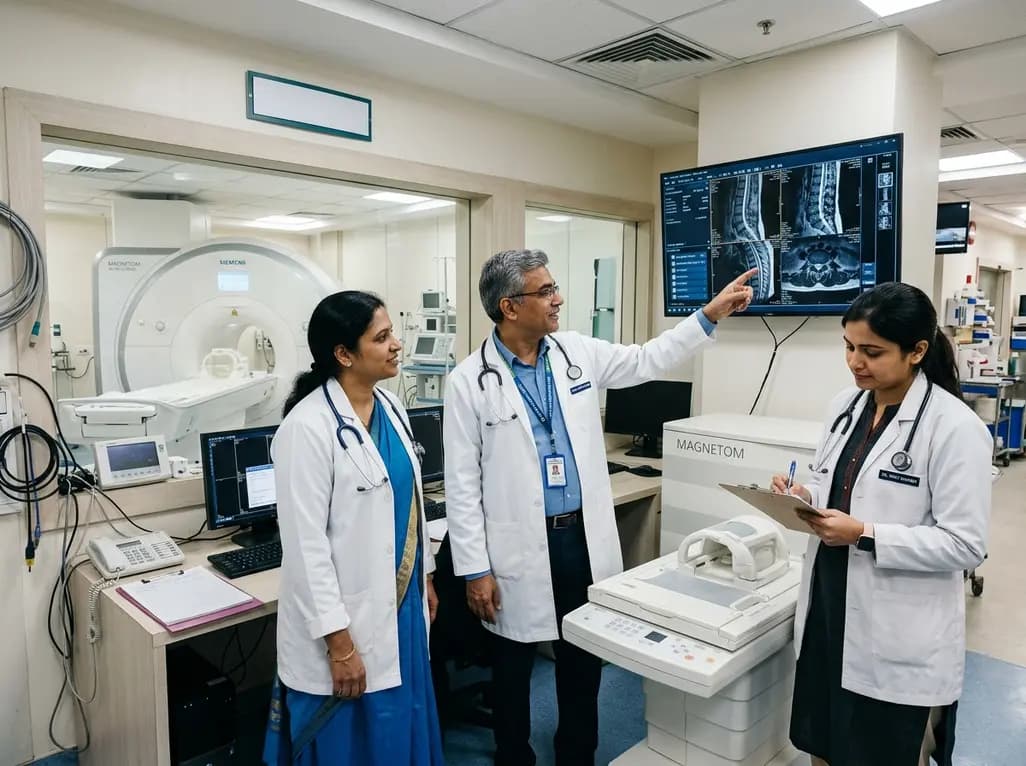
Under India's PLI initiative, domestic production of 57 critical medical devices has commenced, including MRI and CT scanners, cath labs, and heart valves. Global partnerships and local investments are expanding high-end technology, curbing import reliance, and strengthening clinical accessibility nationwide.
Today

A longitudinal study reveals that patients undergoing staged bilateral hip arthroscopy experience progressive contralateral labral deterioration during surgical intervals. However, structural degradation does not compromise 2-year postoperative clinical outcomes or patient-reported satisfaction scores.
Today

New immunological research reveals how PTPN22 forms a delayed inhibitory signaling complex to restrain T cell activation, explaining how the autoimmune-linked R620W variant disrupts feedback control and promotes persistent inflammation in conditions like rheumatoid arthritis and type 1 diabetes.
Today
