.webp&w=384&q=75)

Loading, please wait...
Loading, please wait...

Bipolar disorder often presents a diagnostic challenge because initial symptoms frequently mirror major depressive disorder. Consequently, many patients receive inappropriate antidepressant monotherapy, which can trigger manic switch or rapid cycling. To address this clinical problem, recent research has focused on Rapid Mood Screener validation in diverse healthcare environments. Screening tools must demonstrate strong psychometric performance when adapted across different languages and cultural contexts. Early identification of bipolar spectrum illness remains crucial for initiating mood stabilizers and avoiding adverse outcomes. Therefore, validating concise self-report instruments provides clinicians with practical workflow solutions during brief patient encounters. Reliable screening instruments help bridge the diagnostic gap between primary care presentation and specialized psychiatric evaluation. Furthermore, brief instruments reduce respondent burden while maintaining sufficient sensitivity to flag individuals requiring comprehensive diagnostic interviews. Clinicians in outpatient clinics urgently need validated, time-efficient tools that seamlessly integrate into busy medical workflows.
Rigorous translation methodology ensures that psychometric instruments preserve construct validity in new linguistic environments. Specifically, researchers conducted a forward-backward translation process to adapt the six-item tool into Thai. Cultural adaptation panel discussions refined item phrasing to reflect local idiom and clinical presentation nuances. Consequently, the translated version underwent pilot testing among psychiatric outpatients to establish readability. The study cohort comprised adults presenting to a tertiary psychiatric clinic with established diagnoses of major depressive disorder or bipolar disorder. Furthermore, investigators included patients with both bipolar I disorder and bipolar II disorder to evaluate performance across the mood spectrum. Standardized diagnostic interviews provided the gold standard clinical baseline for verifying baseline affective diagnoses. The research team recorded demographic factors and clinical characteristics across participant groups. In addition, self-report questionnaires were completed independently prior to formal psychiatric consultations. This systematic framework created a culturally adapted instrument ready for psychometric evaluation.
Psychometric analyses confirmed that the translated instrument maintained solid internal consistency and test-retest reliability over time. Cronbach's alpha and McDonald's omega values demonstrated acceptable internal reliability for a brief six-item screening instrument. Furthermore, receiver operating characteristic curve analysis revealed robust discriminative ability, yielding an area under the curve of 0.805 for detecting bipolar spectrum conditions. Optimal decision thresholds derived from Youden's index identified a score cutoff of four or higher as ideal for case identification. At this optimal cutoff, the screening tool achieved a sensitivity of 64.5 percent and specificity of 78.9 percent. Notably, these operating characteristics matched the performance of longer established diagnostic screening questionnaires evaluated in the study population. Test-retest correlation coefficients confirmed that patient responses remained stable across repeat administrations. Consequently, clinicians can trust the tool's consistency when screening individuals presenting with active depressive symptoms.
Traditional bipolar screening questionnaires contain lengthy symptom checklists and complex scoring rules that hinder routine clinical adoption. In contrast, this six-item instrument requires only two to three minutes for complete patient self-administration. Furthermore, the binary response options simplify scoring for busy providers during routine outpatient appointments. Comparative statistical evaluations demonstrated that the brief screener performed comparably to longer legacy instruments like the Mood Disorder Questionnaire. However, the shorter format significantly reduces cognitive fatigue for depressed patients completing pre-consultation documentation. As a result, clinical staff report higher completion rates and smoother workflow integration in outpatient settings. In addition, the brief tool focuses directly on high-yield clinical markers that distinguish bipolar mood swings from unipolar depression. Clinicians can review scores instantly and decide whether further diagnostic exploration using structured interviews is warranted. Consequently, adopting pragmatic instruments removes operational barriers to widespread bipolar screening.
Misinterpreting bipolar depression as unipolar major depressive disorder contributes significantly to poor long-term psychiatric prognosis. Delayed diagnosis leads to persistent mood instability, repeated hospitalizations, and elevated suicide risk among vulnerable individuals. Therefore, integrating valid screening tools into primary care and outpatient psychiatric triage represents an essential quality improvement strategy. A positive screen on the six-item instrument flags patients who require thorough diagnostic evaluations before starting antidepressant therapy. Consequently, clinicians can avoid prescribing monotherapy antidepressants that risk provoking hypomanic or manic destabilization. In addition, early detection enables timely initiation of evidence-based mood stabilizing agents or atypical antipsychotics. Workflow integration allows medical staff to distribute the questionnaire in waiting rooms without disturbing clinical schedules. Furthermore, routine screening facilitates proactive discussions regarding historical mood swings and family psychiatric history. As a result, treatment planning becomes more precise and safety-focused.
While these psychometric findings are highly encouraging, further research must evaluate the instrument across broader clinical environments. Existing validation data derive primarily from specialized tertiary psychiatric clinics, which may possess higher baseline prevalence of bipolar illness. Consequently, future studies should investigate tool performance in community healthcare centers and primary care clinics. Furthermore, researchers must assess end-user satisfaction among both patients and healthcare providers implementing the tool daily. Long-term health economic studies are also required to quantify cost-effectiveness and reductions in diagnostic delay. In addition, prospective trials should determine whether systematic screening directly improves functional outcomes and quality of life for diagnosed patients. Evaluating tool performance across diverse age groups represents another vital research priority. Nevertheless, current evidence strongly supports adopting the validated tool as a reliable case-finding instrument. Expanding access to standardized screening will ultimately transform care delivery.
An optimal cutoff score of 4 or higher indicates a positive screen for bipolar disorder. This score provides an optimal balance between sensitivity and specificity, effectively flagging patients who require a comprehensive clinical psychiatric evaluation before treatment initiation.
The RMS offers a significantly shorter, six-item binary format that takes only two to three minutes to complete. It demonstrates comparable discriminative accuracy to the Mood Disorder Questionnaire while offering superior administrative practicality and reduced patient burden in busy outpatient clinics.
No, a positive screening score does not constitute a formal diagnosis. Screening tools identify individuals at higher risk who require subsequent in-depth evaluation using structured clinical diagnostic interviews like the Mini International Neuropsychiatric Interview conducted by trained psychiatric professionals.
Disclaimer: This content is for informational and educational purposes only and does not constitute medical advice, diagnosis, or treatment. Always seek the advice of a qualified healthcare provider with any questions regarding a medical condition. Refer to the latest local and national guidelines for clinical practice.
References
Som-On C et al. Reliability and validity of the Thai version of the Rapid Mood Screener (RMS-T). PLoS One. 2026. doi: 10.1371/journal.pone.0355733. PMID: 42560987.
McIntyre RS, Patel MD, Masand PS, et al. The Rapid Mood Screener (RMS): a novel and pragmatic brief self-report screening tool for bipolar I disorder. Curr Med Res Opin. 2021;37(1):135-144.

Read summarized clinical updates, watch expert medical content, and earn CME certifications right from your smartphone.
Open your smartphone camera to scan and install.





A study evaluated the Thai version of the Rapid Mood Screener (RMS-T) in adults with bipolar disorder and MDD. RMS-T demonstrated acceptable internal consistency, strong test-retest reliability, and good discriminative ability (AUC = 0.805) at a cutoff of >= 4, providing a practical tool for clinical practice.
last month
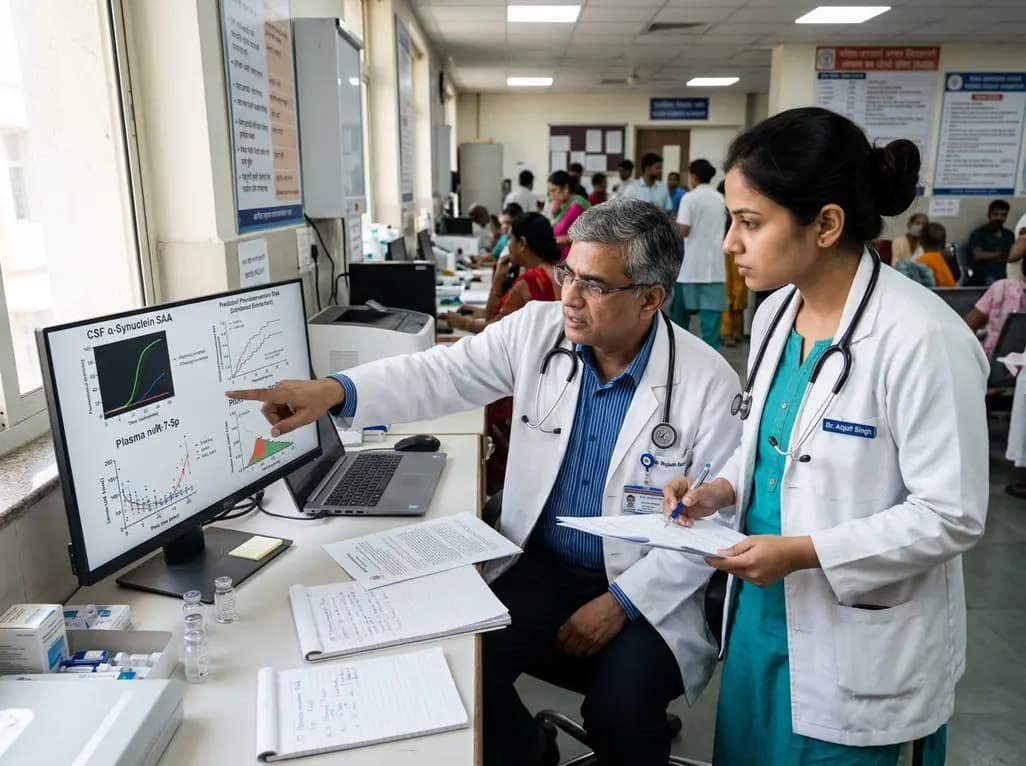
A new PPMI cohort study demonstrates that combining blood microRNA-7-5p with CSF alpha-synuclein seed amplification assay significantly improves the prediction of Parkinson's disease phenoconversion, offering clinicians and researchers a powerful tool for patient risk stratification and clinical trial enrichment.
Today

A large retrospective study evaluates the screening accuracy, positive predictive value, and test failure rates of noninvasive prenatal testing (NIPT) in assisted reproductive technology (ART) pregnancies compared to spontaneous conceptions, highlighting key considerations for pretest counseling.
Today
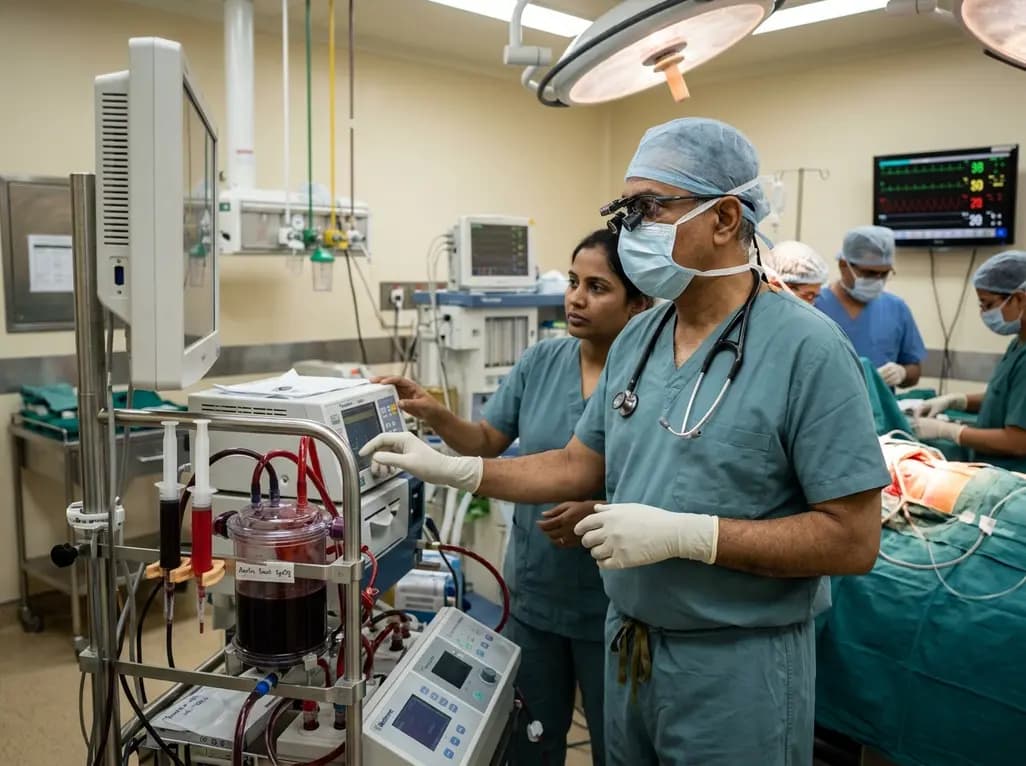
Differential oxygenation during peripheral TA-NRP can cause undetected coronary hypoxemia due to arch vessel clamping. A novel circuit with continuous aortic root monitoring detects desaturation early, facilitating left ventricular unloading and preventing allograft dysfunction and unnecessary heart discard.
Today

A randomized controlled trial compared ultrasound-guided intra-articular injections of PRP, hydrolyzed type I collagen, and hyaluronic acid in knee osteoarthritis. All therapies demonstrated significant improvements in WOMAC and pain scores at six months, supporting hydrolyzed collagen as a viable biological option.
Today

A scoping review evaluates 116 studies on AI in women's reproductive health, finding that 83.6% carry high risk of bias. While ensemble models show promise, disparities and lack of validation hinder LMIC deployment.
Today
