.webp&w=384&q=75)

Loading, please wait...
Loading, please wait...

Managing degenerative joint disease presents substantial therapeutic dilemmas for clinicians aiming to preserve joint mobility and delay arthroplasty. Consequently, physicians frequently employ knee osteoarthritis intra-articular injections to alleviate persistent symptoms when oral analgesics fail or produce intolerable side effects. While hyaluronic acid remains a historic mainstay, novel therapeutic agents such as platelet-rich plasma and hydrolyzed type I collagen have garnered widespread interest. Clinicians require rigorous head-to-head evidence to discern whether these emerging regenerative modalities offer superior durability and symptomatic relief.
Symptomatic gonarthrosis diminishes functional independence and severely erodes health-related quality of life across aging demographics worldwide. Therefore, targeted joint preservation strategies have increasingly replaced generalized pharmacological management in contemporary orthopedic practice. Viscosupplementation with hyaluronic acid originally revolutionized conservative care by restoring rheological cushioning within the synovial cavity. However, hyaluronic acid primarily provides mechanical lubrication rather than addressing underlying biological breakdown. In response, translational researchers introduced autologous platelet-rich plasma to supply concentrated supra-physiological levels of growth factors. Additionally, investigators synthesized injectable hydrolyzed type I collagen to support extracellular matrix regeneration directly within degenerating cartilage matrices. Despite strong theoretical benefits for each biologic modality, direct comparative evidence has remained sparse. Consequently, treating specialists struggle to select the optimal injectable candidate for moderate degenerative disease. To resolve these ambiguities, recent clinical trials have investigated whether specialized biomaterials deliver superior outcomes compared to standard biological and viscoelastic preparations. Understanding these clinical nuances allows orthopedic practitioners to tailor therapy to individual pathology and baseline disease severity.
To compare these three intra-articular modalities rigorously, investigators designed a prospective, randomized, assessor-blinded and statistician-blinded clinical trial. Specifically, the researchers recruited 135 adult patients diagnosed with Kellgren-Lawrence grade 2 to 3 knee osteoarthritis. The investigators then randomized participants equally into three distinct therapeutic cohorts using strict allocation protocols. The first group received autologous platelet-rich plasma prepared through standardized centrifugation protocols. Meanwhile, the second group received intra-articular injections of hydrolyzed type I collagen, and the third group received high-molecular-weight hyaluronic acid. All patients underwent three successive injections administered precisely two weeks apart under real-time ultrasound guidance. Ultrasound visualization ensured exact needle positioning within the suprapatellar recess, thereby eliminating extra-articular injection failure. Furthermore, the trial established the change in total WOMAC score at six months as the primary endpoint. Secondary outcomes comprehensively tracked the Visual Analogue Scale for pain, individual WOMAC subscales, and the Lequesne Index. Ultimately, 126 patients completed the full six-month protocol, providing high statistical power for rigorous comparative analysis.
At the primary six-month endpoint, the completed trial revealed significant therapeutic benefits across all three intervention groups. Specifically, patients in every cohort demonstrated statistically significant reductions in total WOMAC scores compared to baseline measurements. Moreover, all three regimens produced marked improvements in joint stiffness, daily physical function, and subjective pain on the Visual Analogue Scale. Similarly, evaluation via the Lequesne Index documented substantial functional restoration across the entire study population. Nevertheless, notable differences emerged regarding the durability and trajectory of symptomatic relief among the formulations. Platelet-rich plasma demonstrated robust sustained efficacy, confirming its ability to suppress local catabolic activity over extended intervals. Hydrolyzed type I collagen performed admirably, showing comparable improvements in functional scores and pain reduction throughout the evaluation window. In contrast, hyaluronic acid achieved rapid early relief, yet several functional parameters tapered slightly toward the six-month mark. Importantly, none of the cohorts reported significant adverse events or serious joint infections following ultrasound-guided infiltration. Consequently, the trial validates hydrolyzed collagen as an effective, safe alternative to established therapies.
The distinct clinical trajectories observed among these injectable therapies reflect their disparate biomolecular mechanisms of action. Hyaluronic acid acts primarily as a viscous shock absorber and boundary lubricant within degraded synovial fluid. Additionally, it exerts modest anti-inflammatory properties by downregulating specific pro-inflammatory cytokines and synovial metalloproteinases. In contrast, platelet-rich plasma operates through dynamic cellular signaling cascades driven by concentrated alpha-granules. These platelets release transformative growth factors, including platelet-derived growth factor and transforming growth factor-beta, which modulate synovial inflammation. Furthermore, these autologous signaling proteins stimulate endogenous chondrocyte metabolism and inhibit interleukin-1-driven cartilage degeneration. On the other hand, hydrolyzed type I collagen introduces purified structural peptides directly into the microenvironment of the articular cartilage. These bioactive collagen fragments stimulate human chondrocytes to synthesize native type II collagen and aggrecan de novo. Furthermore, hydrolyzed collagen peptides reinforce the structural integrity of the damaged extracellular matrix, providing mechanical scaffolding for cellular repair. Therefore, while viscosupplementation temporarily improves fluid mechanics, biological therapies stimulate endogenous regenerative cascades.
In clinical settings across India, selecting the ideal intra-articular therapy requires balancing clinical efficacy, convenience, and financial expenditure. Platelet-rich plasma offers strong disease-modifying potential and excellent durability without foreign protein risks. However, preparing autologous blood concentrates demands dedicated centrifugation equipment, standardized laboratory kits, and meticulous sterile handling during procurement. In addition, patient factors such as baseline platelet count, metabolic comorbidities, and concurrent medications can influence autologous concentrate quality. Conversely, hydrolyzed type I collagen presents an off-the-shelf biological therapy that guarantees standardized concentration and eliminates blood harvesting. As a result, hydrolyzed collagen significantly shortens clinic procedure times while providing biological tissue-supportive properties comparable to autologous concentrates. Viscosupplementation with hyaluronic acid remains highly accessible across primary and secondary healthcare centers throughout urban and rural India. Nonetheless, given the rapid resurgence of symptoms after viscosupplementation, biological therapies offer superior sustained value in working-age individuals. Indian clinicians should also consistently incorporate ultrasound guidance during joint injections to guarantee exact intra-articular delivery.
Hydrolyzed type I collagen provides comparable six-month symptomatic improvement and functional restoration relative to autologous platelet-rich plasma in moderate knee osteoarthritis. While platelet-rich plasma relies on autologous growth factors to suppress joint inflammation, hydrolyzed collagen delivers standardized structural peptides that directly support extracellular matrix synthesis. Furthermore, hydrolyzed collagen eliminates the preparatory blood centrifugation required for platelet-rich plasma, offering clinicians a reliable, standardized off-the-shelf alternative with equivalent clinical safety.
Ultrasound guidance provides real-time visualization of anatomical structures, confirming accurate needle advancement into the intra-articular synovial space. Blind anatomical landmark techniques exhibit extra-articular misplacement rates of up to twenty percent, particularly in obese patients or deformed joints. Consequently, ultrasound guidance ensures that precious biologic products, such as platelet-rich plasma or hydrolyzed collagen, reach the target tissue directly, thereby maximizing clinical efficacy and minimizing localized soft-tissue discomfort.
Patients suffering from mild-to-moderate knee osteoarthritis, classified as Kellgren-Lawrence grades 2 or 3, derive the greatest therapeutic benefit from biological intra-articular injections. These individuals retain sufficient residual hyaline cartilage to respond favorably to regenerative biochemical stimulation and matrix-supporting peptides. Conversely, patients presenting with end-stage bone-on-bone arthritis typically experience negligible structural repair and transient symptomatic relief, making surgical total joint arthroplasty the most definitive intervention for advanced joint degeneration.
Disclaimer: This content is for informational and educational purposes only... Refer to the latest local and national guidelines for clinical practice.
References

Read summarized clinical updates, watch expert medical content, and earn CME certifications right from your smartphone.
Open your smartphone camera to scan and install.





A randomized controlled trial compared ultrasound-guided intra-articular injections of PRP, hydrolyzed type I collagen, and hyaluronic acid in knee osteoarthritis. All therapies demonstrated significant improvements in WOMAC and pain scores at six months, supporting hydrolyzed collagen as a viable biological option.
Today
A new PPMI cohort study demonstrates that combining blood microRNA-7-5p with CSF alpha-synuclein seed amplification assay significantly improves the prediction of Parkinson's disease phenoconversion, offering clinicians and researchers a powerful tool for patient risk stratification and clinical trial enrichment.
Today
A large retrospective study evaluates the screening accuracy, positive predictive value, and test failure rates of noninvasive prenatal testing (NIPT) in assisted reproductive technology (ART) pregnancies compared to spontaneous conceptions, highlighting key considerations for pretest counseling.
Today
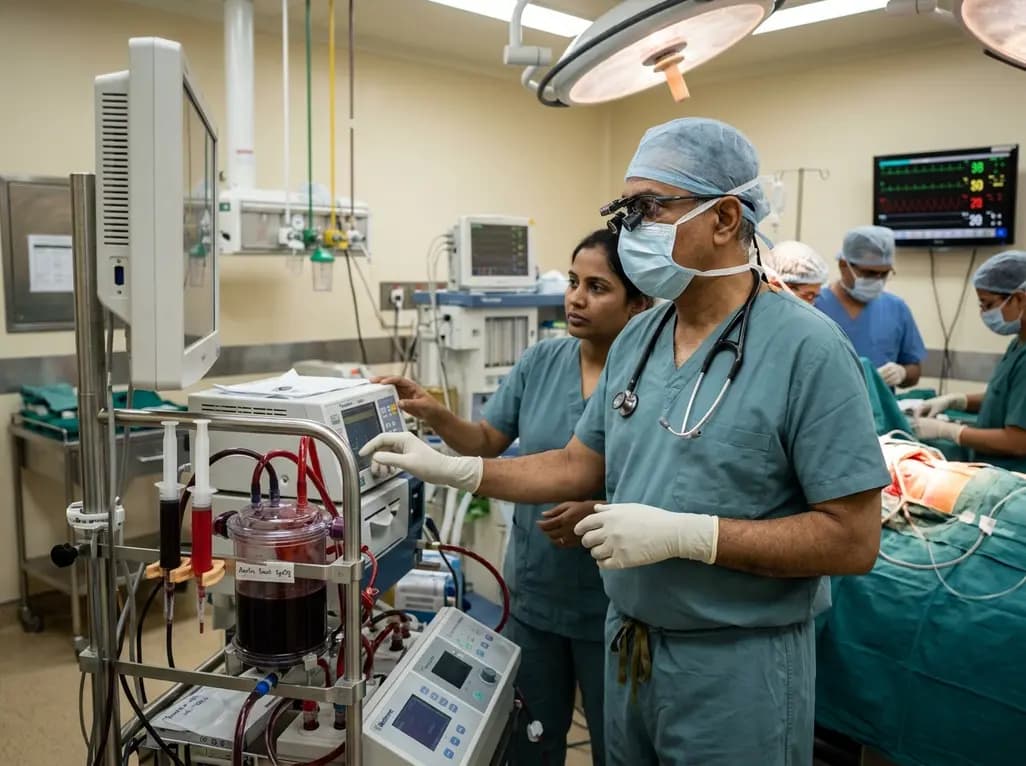
Differential oxygenation during peripheral TA-NRP can cause undetected coronary hypoxemia due to arch vessel clamping. A novel circuit with continuous aortic root monitoring detects desaturation early, facilitating left ventricular unloading and preventing allograft dysfunction and unnecessary heart discard.
Today

A scoping review evaluates 116 studies on AI in women's reproductive health, finding that 83.6% carry high risk of bias. While ensemble models show promise, disparities and lack of validation hinder LMIC deployment.
Today
