.webp&w=384&q=75)

Loading, please wait...
Loading, please wait...

Identifying reliable markers for Parkinson's disease phenoconversion remains an urgent priority in neurodegenerative disease research. Clinicians recognize that motor symptoms represent a relatively late stage in Parkinson's pathology. Decades of gradual dopaminergic neuron degeneration typically precede the classic diagnostic signs of bradykinesia, rigidity, and resting tremor. Consequently, investigators focus intently on prodromal cohorts, such as individuals with isolated REM sleep behavior disorder or idiopathic hyposmia. Emerging data from the Parkinson's Progression Markers Initiative demonstrate that molecular diagnostics can identify individuals approaching clinical thresholds. Specifically, quantifying blood microRNA-7-5p levels and cerebrospinal fluid alpha-synuclein seed amplification assay positivity offers strong prognostic insight. When neurologists monitor these indicators, they can estimate conversion timelines far more reliably than using clinical examinations alone. Furthermore, predicting this transition enables earlier proactive medical planning. As targeted neuroprotective therapies enter modern development, identifying high-risk individuals before widespread neurodegeneration occurs becomes paramount. Therefore, validated molecular biomarkers will fundamentally transform how clinicians track prodromal progression.
MicroRNAs serve as critical non-coding post-transcriptional regulators of gene expression across central nervous tissues. Among these molecules, microRNA-7-5p directly modulates the translation of alpha-synuclein transcripts within human neurons. Preclinical investigations demonstrate that microRNA-7 downregulates alpha-synuclein expression and suppresses neuroinflammatory cascades, such as the NLRP3 inflammasome pathway. However, circulating levels of microRNA-7-5p alter noticeably during active neurodegenerative states. In longitudinal human datasets, elevated baseline log concentrations of blood microRNA-7-5p correlate strongly with an accelerated trajectory toward manifest motor parkinsonism. In fact, Cox proportional hazards regression reveals that each unit increase in log microRNA-7-5p confers a 1.57-fold higher risk of clinical phenoconversion. This biological signal suggests that elevated peripheral microRNA levels reflect compensatory regulatory failure or active clearance mechanisms during severe systemic cellular stress. In contrast, while neuron-derived extracellular vesicle alpha-synuclein remains an intriguing analyte, baseline levels show limited independent prognostic power after adjusting for patient age. Thus, circulating microRNA-7-5p provides unique, non-invasive pathological insight into underlying synucleinopathic tension.
The alpha-synuclein seed amplification assay represents an exceptional diagnostic breakthrough in contemporary movement disorder neurology. This assay detects ultra-trace amounts of misfolded, pathogenic alpha-synuclein aggregates within cerebrospinal fluid by monitoring seeded fibril aggregation kinetics. Clinical studies consistently demonstrate that qualitative seed amplification assay positivity discriminates prodromal synucleinopathy patients from healthy controls with remarkable specificity. Moreover, kinetic parameters, including time-to-threshold and fluorescence maximum, correlate with biological disease severity. Nevertheless, seed amplification assays alone do not always pinpoint the exact timeline for impending motor conversion. Because aggregated seeds can persist in cerebrospinal fluid for many years before overt motor impairment manifests, clinicians require dynamic peripheral markers to gauge proximity to phenoconversion. By pairing seed amplification assay positivity with dynamic blood microRNA-7-5p quantification, researchers establish a robust multimodal prognostic platform. This synergistic approach links qualitative neuropathological staging with quantitative peripheral molecular dynamics. Consequently, clinicians gain a refined understanding of disease activity that static biochemical tests cannot provide alone.
Recent investigations using Parkinson's Progression Markers Initiative data evaluated prodromal individuals to identify key predictors of motor onset. Researchers tracked participants prospectively and defined phenoconversion using standardized Hoehn and Yahr motor staging criteria. The investigators subsequently conducted log-rank analyses to establish optimal biological cutpoints for risk stratification. In multivariable Cox models adjusted for age and biological sex, microRNA-7-5p emerged as a potent independent predictor of motor progression. Specifically, higher log concentrations demonstrated a statistically significant association with disease onset (p = 0.003). Meanwhile, the analysis revealed that neuron-derived extracellular vesicle alpha-synuclein did not independently predict conversion when investigators controlled for chronological age. Importantly, individuals who exhibited both positive cerebrospinal fluid seed amplification assays and high microRNA-7-5p concentrations experienced the highest rate of motor phenoconversion. These empirical findings underscore the necessity of evaluating combinatorial biomarker profiles rather than relying on isolated lab parameters. Therefore, multimodal testing models establish a superior paradigm for forecasting clinical neurological outcomes.
Developing disease-modifying therapies for Parkinson's disease has historically faced considerable translational hurdles in clinical trials. Most past therapeutic trials enrolled participants after motor diagnosis, when substantial nigrostriatal dopamine loss had already occurred. Administering neuroprotective interventions during this late phase frequently fails to yield substantial functional recovery. Conversely, conducting clinical prevention trials during the prodromal phase presents unique logistical challenges, because conversion rates across heterogeneous cohorts remain low. If investigators cannot reliably predict who will develop motor disease within short timeframes, sample size requirements and study durations become impractical. Combining microRNA-7-5p and seed amplification assays resolves this critical problem through effective cohort enrichment. Trial sponsors can now selectively recruit prodromal individuals displaying rapid conversion signatures. Consequently, investigators can run shorter, smaller, and more statistically powerful intervention studies. Ultimately, biomarker-driven trial design accelerates the clinical development of targeted neuroprotective agents for patients worldwide.
The validation of combined biofluid assays paves the way for sophisticated clinical risk scores in specialized memory and movement clinics. In the future, clinicians will likely integrate biofluid measurements with digital motor sensors, skin biopsies, and advanced metabolic neuroimaging. For instance, combining peripheral microRNA signatures with dopamine transporter single-photon emission computed tomography significantly sharpens prognostic accuracy. Furthermore, ongoing laboratory innovations aim to detect microRNA-7-5p and pathological synuclein directly within minimally invasive skin or blood samples, potentially reducing reliance on lumbar punctures. However, clinicians must also navigate ethical considerations regarding biomarker disclosure. Providing asymptomatic patients with precise prognostic timelines requires thoughtful pre-test counseling and supportive clinical infrastructures. As research groups establish international quality controls and standardized reference ranges for microRNA assays, these tools will gradually transition from academic cohorts into routine neurodegenerative workups. Therefore, ongoing clinical validation studies will establish indispensable benchmarks for preventative neurology across diverse populations.
Parkinson's disease phenoconversion describes the clinical transition from an asymptomatic or prodromal stage into fully manifest motor Parkinson's disease. During this transition, patients progress from isolated non-motor symptoms, such as REM sleep behavior disorder or olfactory loss, to fulfilling diagnostic criteria characterized by bradykinesia, rigidity, and resting tremor. Neurologists typically track and confirm this milestone using standardized neurological rating metrics, such as Hoehn and Yahr staging.
MicroRNA-7-5p plays an essential physiological role in neuroprotection by binding to the 3' untranslated region of alpha-synuclein messenger RNA, thereby suppressing its translation. In addition, experimental models show that this microRNA attenuates neuroinflammatory pathways, including the NLRP3 inflammasome. When cellular homeostasis fails during early neurodegeneration, peripheral blood levels of microRNA-7-5p alter significantly, serving as a sensitive biological indicator of impending motor conversion.
Combining cerebrospinal fluid seed amplification assays with blood microRNA-7-5p measurements overcomes the limitations of single-marker evaluations. The seed amplification assay confirms the qualitative presence of pathological synuclein aggregates with exceptional diagnostic specificity. Meanwhile, circulating microRNA-7-5p levels provide dynamic quantitative data regarding disease activity. Together, these complementary biomarkers accurately predict which prodromal individuals face the highest immediate risk of clinical phenoconversion.
Disclaimer: This content is for informational and educational purposes only... Refer to the latest local and national guidelines for clinical practice.
References
Zadegan S et al. microRNA-7-5p and α-Synuclein SAA Predict Parkinson's Disease Phenoconversion. Ann Clin Transl Neurol. 2026 Sep 25. doi: 10.1002/acn3.70539. PMID: 42791197.
Siderowf A, Concha-Marambio L, Lafontant DE, et al. Assessment of heterogeneity among participants in the Parkinson's Progression Markers Initiative cohort using α-synuclein seed amplification: a cross-sectional study. Lancet Neurol. 2023;22(5):407-417.
Gao VY, Borsche M, Delamontagne R, et al. Retrospective longitudinal analysis of blood microRNA-7-5p as a possible progression biomarker in people with Parkinson's disease. Front Neurosci. 2026;20:1784013.

Read summarized clinical updates, watch expert medical content, and earn CME certifications right from your smartphone.
Open your smartphone camera to scan and install.





A new PPMI cohort study demonstrates that combining blood microRNA-7-5p with CSF alpha-synuclein seed amplification assay significantly improves the prediction of Parkinson's disease phenoconversion, offering clinicians and researchers a powerful tool for patient risk stratification and clinical trial enrichment.
Today
A large retrospective study evaluates the screening accuracy, positive predictive value, and test failure rates of noninvasive prenatal testing (NIPT) in assisted reproductive technology (ART) pregnancies compared to spontaneous conceptions, highlighting key considerations for pretest counseling.
Today
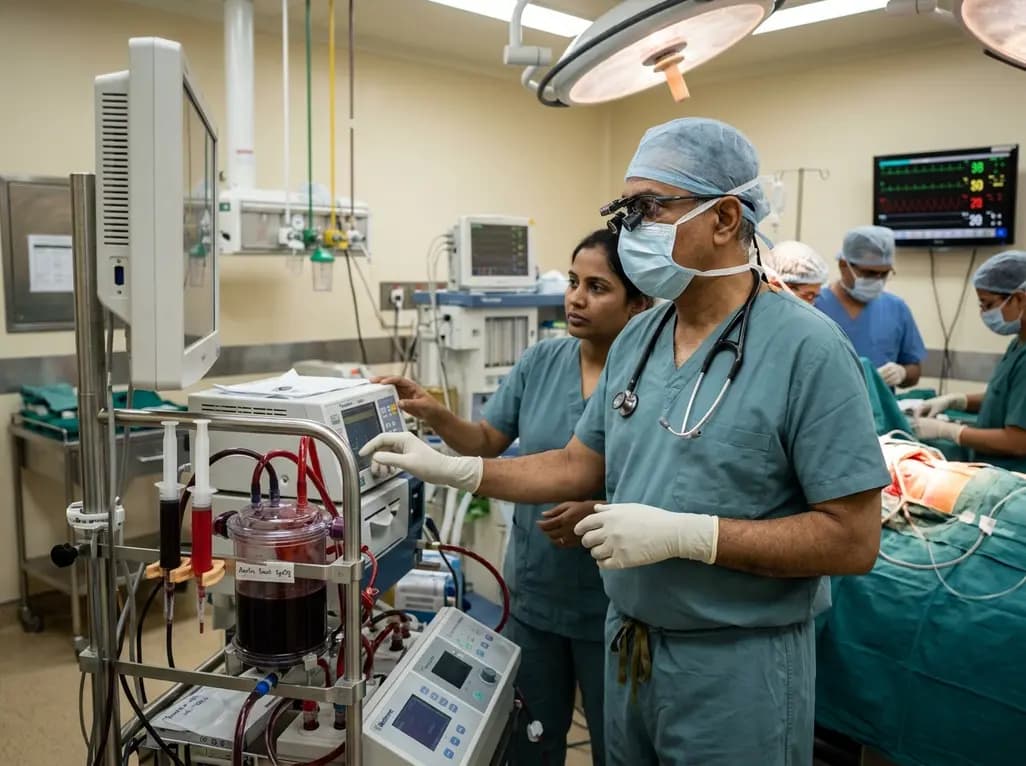
Differential oxygenation during peripheral TA-NRP can cause undetected coronary hypoxemia due to arch vessel clamping. A novel circuit with continuous aortic root monitoring detects desaturation early, facilitating left ventricular unloading and preventing allograft dysfunction and unnecessary heart discard.
Today
A randomized controlled trial compared ultrasound-guided intra-articular injections of PRP, hydrolyzed type I collagen, and hyaluronic acid in knee osteoarthritis. All therapies demonstrated significant improvements in WOMAC and pain scores at six months, supporting hydrolyzed collagen as a viable biological option.
Today

A scoping review evaluates 116 studies on AI in women's reproductive health, finding that 83.6% carry high risk of bias. While ensemble models show promise, disparities and lack of validation hinder LMIC deployment.
Today
