.webp&w=384&q=75)

Loading, please wait...
Loading, please wait...

Managing medication-refractory tremor presents an enduring therapeutic challenge in functional neurosurgery and clinical neurology. Historically, stereotactic radiofrequency thalamotomy served as the definitive surgical standard before deep brain stimulation gained global dominance. Although deep brain stimulation provides reversible and programmable neuromodulation, it requires permanent hardware implantation, repeated battery exchanges, and frequent programming adjustments. Consequently, radiofrequency thalamotomy remains an indispensable, hardware-free ablative intervention for carefully selected patients. This thermal procedure suits elderly individuals and high-risk surgical candidates who cannot tolerate prolonged operations under general anaesthesia. Furthermore, modern tractography allows neurosurgeons to examine dentorubrothalamic tract anatomy, directly linking lesion geometry with enduring tremor relief.
Severe tremor syndromes, including advanced essential tremor and Parkinson's disease, significantly restrict patient autonomy and basic daily motor activities. Pharmacotherapy remains the frontline treatment, but many individuals develop severe drug resistance or intolerable medication side effects over time. In these disabling circumstances, surgical intervention offers the only realistic path toward restoring limb control. While deep brain stimulation remains popular, it introduces substantial foreign-body risks, including device infection, lead displacement, skin erosion, and expensive battery replacements.
In contrast, radiofrequency thalamotomy creates a discrete thermal lesion within the ventral intermediate nucleus without requiring foreign implants. Neurosurgeons execute this intervention under local anaesthesia with continuous clinical monitoring, providing immediate real-time feedback during target lesioning. Therefore, frail patients, elderly candidates, and individuals with severe cardiopulmonary morbidities benefit greatly from this efficient procedure. Additionally, surgeons effectively utilize this approach when deep brain stimulation fails or when patients cannot access specialized device programming centres. By eliminating ongoing maintenance visits, the technique provides enduring therapeutic autonomy.
A long-term clinical study from Oxford functional neurosurgery assessed consecutive patients undergoing unilateral radiofrequency thalamotomy for severe, medically refractory tremor. The evaluated cohort included patients with essential tremor and tremor-dominant Parkinson's disease. Clinicians selected thermal ablation over stimulation due to serious systemic comorbidities, previous neuromodulation failures, advanced patient age, or distinct personal preference. The surgical team monitored these patients across an extensive median follow-up period of 39 months, spanning up to 126 months in certain individuals.
Remarkably, over seventy percent of patients achieved robust and sustained tremor reduction throughout long-term assessment. Objective Bain and Findlay tremor rating scores dropped substantially from a baseline average of 16.1 down to 8.5 postoperatively. This reduction demonstrated profound statistical significance and delivered transformative functional relief for treated hands. Furthermore, standardized subjective metrics, including the Clinical Global Impression of Severity and Patient's Global Impression of Change, confirmed meaningful recovery. Although two patients experienced tremor recurrence after six months, the vast majority maintained durable symptom suppression without requiring hardware maintenance or adjustments.
Tremor pathophysiology involves abnormal oscillatory bursting throughout the cerebello-thalamo-cortical motor circuit. Specifically, the dentorubrothalamic tract acts as the vital conduit conveying pathological rhythms from cerebellar nuclei toward the ventrolateral thalamus. The Oxford investigators utilized advanced postoperative diffusion tractography to evaluate how spatial lesion parameters influence long-term clinical outcomes.
Crucially, the imaging analysis revealed a direct anatomical correlation between lesion topology and durable symptom control. Patients with long-lasting tremor suppression exhibited a significantly wider distance of residual dentorubrothalamic tract fibres from the thermal lesion margin. Conversely, narrower clearance between residual fibres and the ablative lesion correlated with symptomatic recurrence. This finding indicates that subtotal tract interruption permits neural remodelling, which eventually re-establishes tremor rhythmicity across surviving pathways. Consequently, these structural insights demonstrate that successful thalamotomy requires comprehensive destruction across the primary tract crossroads. Incorporating patient-specific tractography into stereotactic surgical planning allows neurosurgeons to map individual pathway trajectories, select optimal coordinates, and confirm complete tract disruption.
Stereotactic thalamic lesioning demands meticulous thermal calibration to control tremor effectively while avoiding persistent neurological deficits. In the Oxford cohort, procedural adverse events occurred in half of the treated patients immediately after ablation. Common postoperative complications included mild gait ataxia, temporary balance unsteadiness, transient dysarthria, and minor sensory paresthesias. Importantly, the majority of these acute neurological symptoms stemmed from surrounding perilesional cytotoxic oedema rather than irreversible neural damage.
As postoperative swelling receded over several weeks, three patients achieved complete symptom resolution, and three other individuals demonstrated partial resolution with minimal residual deficits. Only one patient experienced persistent adverse effects during long-term observation. Therefore, radiofrequency lesioning possesses a manageable safety profile when performed with careful physiological confirmation. Applying intraoperative electrical stimulation before creating permanent thermal lesions protects adjacent internal capsule motor fibres and sensory pathways. Clinicians must advise prospective candidates that temporary postoperative gait disturbance occurs frequently, but functional compensation typically restores stability over time.
Today, clinicians select from multiple interventional strategies for refractory tremor, including deep brain stimulation, focused ultrasound, stereotactic radiosurgery, and radiofrequency ablation. Deep brain stimulation remains the primary choice for bilateral tremor control because bilateral thalamic lesioning carries unacceptable risks of dysarthria and dysphagia. However, stimulation therapies involve persistent hardware complications, high financial costs, and periodic surgical revisions for battery replacement.
In contrast, radiofrequency ablation provides a definitive, single-session, hardware-free solution for unilateral tremor. While magnetic resonance-guided focused ultrasound offers incisionless treatment, it requires high skull density ratios and exceptionally expensive infrastructure unavailable in most community facilities. Similarly, stereotactic radiosurgery avoids open incisions but generates delayed therapeutic responses over months without intraoperative verification. Therefore, stereotactic radiofrequency thalamotomy preserves an indispensable place in modern movement disorder management. It allows immediate intraoperative clinical assessment during test heating, utilizes widely available stereotactic frames, and eliminates lifelong maintenance burdens for vulnerable patient populations.
Radiofrequency thalamotomy primarily benefits patients with disabling, medication-refractory unilateral tremor from essential tremor or Parkinson's disease. It is especially suitable for elderly patients, those with high surgical risks from medical comorbidities, individuals unable to attend frequent neurostimulator programming visits, and patients who experienced hardware failure or infection following deep brain stimulation.
The dentorubrothalamic tract represents the primary white matter pathway transmitting pathological tremor oscillations from the cerebellum to the thalamocortical network. Interrupting this tract disrupts the central tremor rhythm. Recent tractography studies show that maintaining a wider distance of residual fibres from the lesion margin correlates with long-term tremor suppression and prevents recurrence.
The most frequent postoperative adverse effects include transient gait ataxia, balance unsteadiness, mild dysarthria, and localized paresthesias. These symptoms typically stem from acute perilesional oedema rather than permanent brain injury. In most patients, these complications resolve completely or partially within weeks to months following surgery as local swelling recedes.
Disclaimer: This content is for informational and educational purposes only... Refer to the latest local and national guidelines for clinical practice.
References
Shaikh AA et al. Radiofrequency thalamotomy for tremor outcomes correlate with dentorubrothalamic tract distance. Br J Neurosurg. 2026 Apr. doi: 10.1080/02688697.2025.2481874. PMID: 40135379.
Wirth T et al. Clinical outcomes after MRI connectivity-guided radiofrequency thalamotomy for tremor. J Neurosurg. 2024;140(4):1148-1154. doi: 10.3171/2023.7.JNS222744.
Dallapiazza RF et al. Outcomes from stereotactic surgery for essential tremor. J Neurol Neurosurg Psychiatry. 2019;90(4):474-482. doi: 10.1136/jnnp-2018-318240.

Read summarized clinical updates, watch expert medical content, and earn CME certifications right from your smartphone.
Open your smartphone camera to scan and install.





A long-term Oxford study evaluates radiofrequency thalamotomy for refractory tremor in essential tremor and Parkinson's disease, showing durable tremor suppression that correlates with residual dentorubrothalamic tract fibre distance.
Today

A North Texas pilot study reveals that combining virtual physician consultations with in-person house calls safely manages adult pneumonia. By utilizing CRB-65 severity scores, clinicians effectively triaged patients, providing home-based recovery while directing higher-risk individuals to emergency care.
Today

A quasi-experimental study demonstrates that culturally tailored educational interventions significantly boost HPV knowledge and vaccination intentions. These findings provide actionable strategies for healthcare providers in India to overcome vaccine hesitancy and advance cervical cancer prevention.
Today

A comprehensive meta-analysis evaluates the association between Body Mass Index and outcomes following abdominal aortic aneurysm repair. Discover how overweight and obesity correlate with lower mortality while underweight status confers heightened risk, challenging conventional preoperative risk stratification.
Today

The SOLARIO trial shows that a short course (≤7 days) of systemic antibiotic therapy is noninferior to long courses (≥4 weeks) in orthopedic infections treated with local antibiotic carriers, with significantly fewer adverse events.
Today
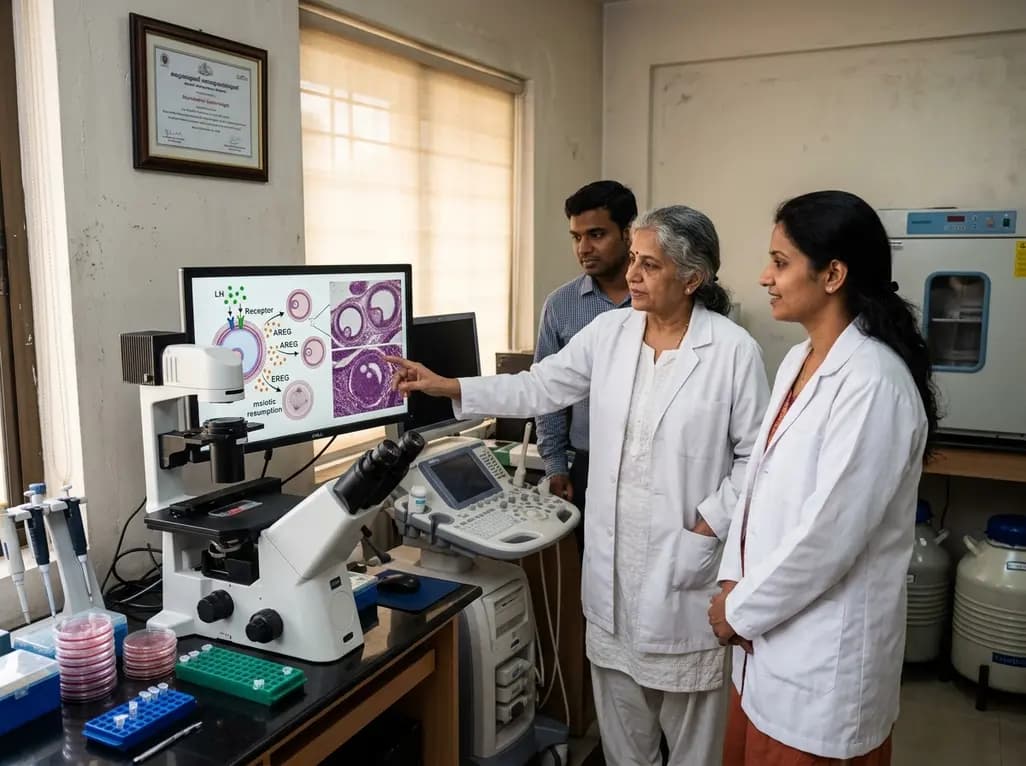
New research reveals that preovulatory follicles communicate via LH-induced paracrine signaling. Diffusible EGF ligands epiregulin and amphiregulin coordinate oocyte meiotic resumption across neighboring follicles, challenging traditional concepts of follicular autonomy.
Today
