

Loading, please wait...
Loading, please wait...
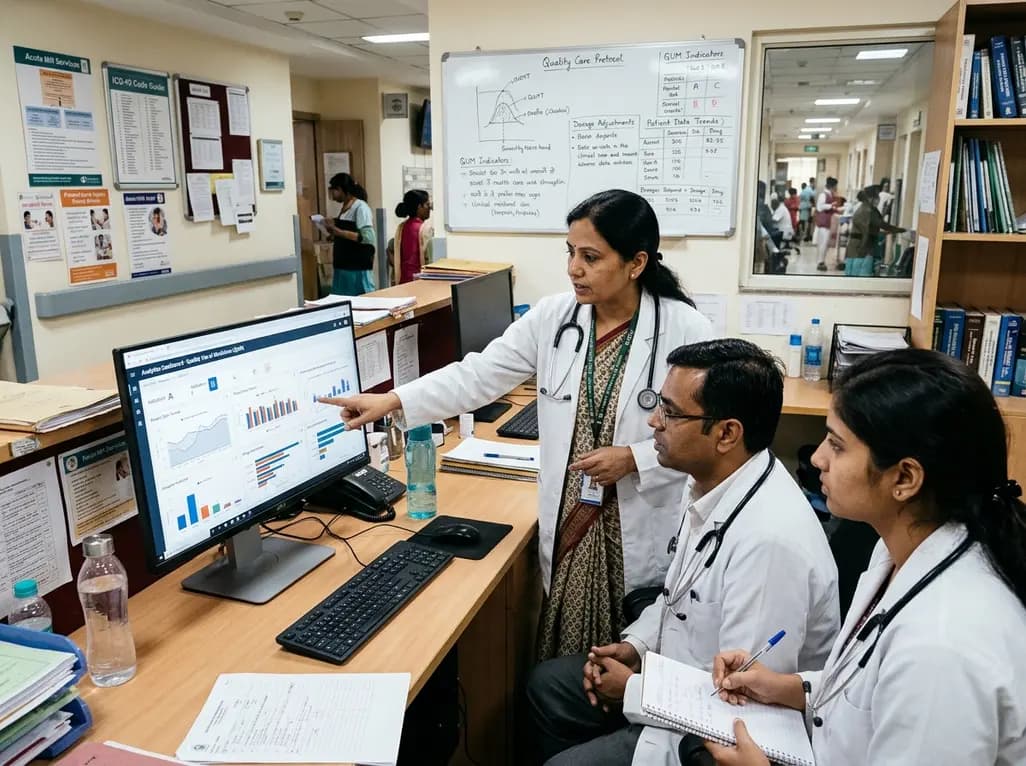
Ensuring the quality use of medicines represents one of the most critical challenges in modern psychiatry. In acute mental health care, clinicians frequently encounter patients in extreme distress who require urgent pharmacotherapy. Consequently, psychiatrists must balance rapid symptomatic stabilization against substantial drug-related risks. Severe mental illnesses affect nearly one in five individuals globally, driving high hospital admission rates. During these acute admissions, treatment regimens quickly escalate in complexity. Clinicians frequently prescribe multi-agent regimens without immediate visibility into past drug intolerances or long-term systemic consequences. Therefore, digital transformation offers an unprecedented opportunity to translate electronic health records into active clinical intelligence. By designing real-time analytics platforms, multidisciplinary teams can monitor prescribing behaviors, mitigate adverse events, and safeguard vulnerable patients.
Acute psychiatric inpatient units operate in fast-paced, high-stress environments. In these settings, rapid tranquilization and swift behavioral control often take precedence over prolonged therapeutic titration. Consequently, clinicians frequently resort to psychotropic polypharmacy, combining several antipsychotics, mood stabilizers, and sedatives. While acute clinical emergencies may occasionally justify short-term co-prescribing, unmonitored regimens often persist long after discharge. Furthermore, patients with severe mental illness face heightened vulnerability to adverse drug reactions. For example, concurrent administration of multiple psychotropics substantially elevates the risk of severe extrapyramidal symptoms, metabolic derangements, anticholinergic toxicity, and QTc interval prolongation. In addition, physical health monitoring in acute psychiatric wards frequently falls below recommended clinical guidelines. Routine assessments of lipid profiles, fasting blood glucose, and baseline electrocardiograms are frequently missed amid acute psychiatric crises. Moreover, patients with severe psychosis or cognitive impairment cannot always communicate adverse effects reliably. As a result, subtle toxicities often progress unrecognized until acute medical complications occur. Therefore, inpatient teams urgently require reliable, automated surveillance mechanisms. Standard manual prescription audits remain labor-intensive, retrospective, and unable to prevent real-time prescribing errors. Digital solutions directly bridge this dangerous gap by tracking medication administration continuously.
To address persistent prescribing hazards, healthcare systems must actively operationalize the quality use of medicines. The core tenets of this framework mandate judicious, appropriate, safe, and cost-effective medication management. In acute psychiatry, achieving these goals requires dynamic tools that deliver actionable feedback directly into clinical workflows. Electronic medical records capture vast amounts of clinical data every minute. However, raw electronic documentation rarely provides immediate clinical utility without intelligent synthesis. Clinicians navigating acute emergencies rarely have the time to sift through dense unstructured clinical notes. This is precisely where specialized visual analytics dashboards deliver transformative value. A well-designed analytics dashboard extracts continuous data on drug dosages, administration times, physiological vitals, and laboratory parameters. Subsequently, the platform translates these complex data points into clear visual alerts and performance indicators. For instance, the system instantly flags concurrent prescriptions of multiple first-generation antipsychotics or supratherapeutic cumulative dosages. Furthermore, the dashboard alerts the treatment team when essential laboratory monitoring is overdue. By presenting synthesized data clearly at the point of decision-making, analytics tools empower psychiatrists to make safer prescribing choices. Consequently, clinical teams transition from reactive crisis management to proactive, preventative pharmacotherapy.
Developing an effective clinical analytics platform requires rigorous engineering and comprehensive stakeholder engagement. The cross-country research protocol establishes a systematic four-phase pathway: identification, reconciliation, translation, and validation. During the initial identification phase, researchers conduct scoping reviews and extensive stakeholder consultations to define core prescribing safety indicators. These metrics focus on high-risk clinical practices, such as rapid dose escalation and absent metabolic screening. Next, the reconciliation phase harmonizes diverse electronic medical record architectures. Because healthcare institutions often deploy disparate electronic interfaces, data informaticians must standardize medication nomenclature, clinical terminologies, and laboratory reporting formats. Following reconciliation, the translation phase converts these standardized clinical variables into an intuitive user interface. Crucially, successful translation demands collaborative co-design involving frontline psychiatrists, clinical pharmacists, psychiatric nurses, and patients with lived experience. Stakeholder participation ensures that dashboard visualizations remain practical, uncluttered, and culturally adaptable. Finally, the validation phase rigorously tests the tool within active acute psychiatric wards. Clinicians evaluate dashboard responsiveness, workflow integration, and algorithmic accuracy under authentic clinical pressures. This structured methodology guarantees that the finished digital tool directly addresses real-world clinical demands rather than theoretical ideals.
A compelling feature of this study protocol lies in its parallel execution across high-income and middle-income healthcare systems. Mental disorders contribute substantially to the global disease burden, affecting roughly twenty percent of populations across diverse economies. However, resource disparities often shape clinical workflows and prescribing patterns differently. High-income healthcare systems typically boast mature digital infrastructure, specialized clinical informatics personnel, and comprehensive electronic medication records. Conversely, health facilities in low- and middle-income nations frequently navigate fragmented digital platforms, inconsistent network reliability, and acute staffing shortages. Despite these structural discrepancies, clinicians in both environments share identical clinical objectives: delivering safe, effective, and dignified psychiatric care. Conducting collaborative research across distinct healthcare systems highlights universally transferable quality indicators while identifying context-specific implementation barriers. For instance, high-resource centers might prioritize advanced predictive algorithms for treatment resistance. Meanwhile, emerging digital health systems can focus on foundational safety checks, such as identifying adverse drug-drug interactions and preventing duplicate therapy. Furthermore, cross-country collaborations foster bilateral knowledge exchange and reduce health inequities. Shared technical architectures and interoperable clinical dashboards accelerate global digital health adoption, ensuring that safety innovations benefit diverse patient populations worldwide.
Implementing digital analytics dashboards fundamentally alters psychiatric hospital culture. Traditionally, clinical governance committees conducted retrospective reviews months after medication errors occurred. Consequently, audit findings rarely influenced the care of the affected patient. Real-time analytics dashboards replace this delayed feedback loop with immediate point-of-care clinical governance. When a multidisciplinary psychiatric team conducts morning ward rounds, the analytics dashboard provides an instant clinical overview of the entire ward. Clinicians can immediately spot patients who have missed lithium level monitoring or those on rising benzodiazepine doses. Moreover, ward pharmacists can quickly prioritize high-risk patients for comprehensive medication reconciliation. This continuous visibility dramatically reduces therapeutic inertia, prompting clinicians to taper unnecessary adjunct medications promptly. In addition, transparent ward-level data promotes healthy peer benchmarking and collaborative prescribing discussions among junior doctors and supervising consultants. Beyond immediate clinical care, aggregated dashboard data provides health administrators with robust quality metrics. Hospital executives can track institutional compliance with national clinical guidelines, identify emerging prescribing trends, and allocate clinical pharmacy resources effectively. Ultimately, embedding intelligent analytics within routine mental healthcare transforms routine data collection into lifesaving clinical protection.
The quality use of medicines in acute mental health care ensures that psychotropic agents are prescribed judiciously, safely, and effectively. This framework prioritizes selecting the most appropriate drug for an individual, minimizing unneeded polypharmacy, and adhering to evidence-based dosing schedules. Furthermore, it mandates continuous clinical monitoring for adverse drug reactions, metabolic complications, and treatment efficacy, thereby protecting acute psychiatric patients from avoidable pharmacological harm during hospital admissions.
Real-time analytics dashboards continuously extract and synthesize clinical data directly from electronic medical records. Consequently, these systems alert clinicians to high-risk prescribing practices, such as excessive psychotropic polypharmacy, drug interactions, and duplicate therapies. In addition, dashboards track overdue physical health checks, such as serum drug levels and metabolic panels. Presenting actionable visualizations at the point of care allows clinical teams to correct errors immediately rather than relying on delayed retrospective audits.
Stakeholder co-design actively engages frontline psychiatrists, psychiatric nurses, clinical pharmacists, and patients throughout the development process. This collaborative approach ensures that software developers create dashboards addressing authentic ward workflows rather than theoretical needs. Moreover, direct clinician involvement prevents alert fatigue and visual clutter, ensuring high daily usability. Similarly, incorporating consumer perspectives guarantees that the resulting digital health intervention respects patient values, promotes therapeutic transparency, and advances equitable, patient-centered psychiatric care.
Disclaimer: This content is for informational and educational purposes only... Refer to the latest local and national guidelines for clinical practice.
References
Bui TNT et al. Developing a Stakeholder-Informed Quality Use of Medicines Analytics Dashboard for Acute Mental Health Care: Protocol for a Cross-Country Study. JMIR Res Protoc. 2026 Nov 17. doi: 10.2196/104678. PMID: 43044115.
Stojanova J et al. Equity and quality use of medicines in people who present to the Psychiatric Alcohol and Non-Prescription Drug Assessment Unit. Br J Clin Pharmacol. 2025;91(4):1120-1131.
Gallego JA et al. Metabolic monitoring and psychotropic polypharmacy in psychiatric inpatient units. J Clin Psychiatry. 2022;83(3):21m14150.

Read summarized clinical updates, watch expert medical content, and earn CME certifications right from your smartphone.
Open your smartphone camera to scan and install.





A multi-country study protocol outlines the co-design and implementation of an electronic medical record-based analytics dashboard. This digital health intervention aims to enhance the quality use of medicines in acute mental health settings, tracking prescribing indicators, drug interactions, and clinical outcomes.
Today

Hospital-based tobacco cessation programs often encounter operational friction. A quality improvement study shows structured workflow modifications increased counseling reach from 82% to 90% across 8,800+ patients, offering practical strategies to maximize cessation interventions.
Today

A qualitative study on the Dutch HPV vaccination catch-up campaign reveals that young adult hesitancy stems from information gaps and accessibility barriers rather than rampant misinformation. Clinicians can leverage these social listening insights to improve vaccine communication and address patient concerns.
Today

A multicenter longitudinal study of the CHARLS and HRS cohorts demonstrates that elevated cumulative pulse pressure and high-stable trajectories significantly increase incident sarcopenia risk in older adults, particularly in those with heart disease, linking arterial stiffness directly to progressive muscle loss.
Today

A 491-patient cohort study in Sudan reveals critical insights into war trauma reconstructive surgery, analyzing injury patterns, soft-tissue procedures, and a 25.5% complication rate in resource-limited conflict zones.
Today

A descriptive qualitative study reveals that dietary and exercise relapses in mHealth apps stem from stress, cultural misalignment, and emotional disengagement. Clinicians must champion flexible, relapse-responsive digital therapeutics that foster gentle reentry and sustained glycemic control.
Today
