.webp&w=384&q=75)

Loading, please wait...
Loading, please wait...

The landscape of cardiac electrophysiology is currently undergoing a dramatic shift toward non-thermal modalities. While thermal energy has been the cornerstone of arrhythmia management for decades, the emergence of newer technologies offers significant hope for safer interventions. Specifically, pulsed field ablation VT applications are gaining substantial traction as clinicians seek ways to avoid the complications associated with radiofrequency or cryoablation. In India, where the burden of structural heart disease is high, managing ventricular arrhythmias efficiently is a major clinical priority. Consequently, the medical community is closely observing the transition of pulsed field ablation (PFA) from atrial fibrillation treatment to more complex ventricular substrates. This systematic review provides a timely assessment of how this technology performs when targeting the more robust tissues of the ventricles. Furthermore, the feasibility studies conducted thus far suggest that PFA might soon become a primary tool in the electrophysiology lab. Initial results are highly encouraging, yet the integration of such advanced technology requires a deep understanding of its safety profile and long-term efficacy. Therefore, this analysis examines pooled data regarding acute success rates and recurrence patterns.
Pulsed field ablation operates on the principle of irreversible electroporation, a process that uses ultra-short, high-voltage electrical pulses. Unlike radiofrequency ablation, which relies on thermal injury, PFA creates microscopic pores in the cell membranes of cardiomyocytes. Resultantly, these pores lead to the loss of cellular homeostasis and subsequent cell death through apoptotic pathways. One of the most significant advantages of this approach is its tissue selectivity. Myocardial cells have a lower threshold for electroporation compared to adjacent structures like the esophagus, phrenic nerve, or coronary arteries. Therefore, the risk of collateral damage is significantly minimized, which is a major concern during ventricular procedures. In addition, the delivery of energy is exceptionally fast, often taking only milliseconds to complete a lesion. This speed reduces the dependence on prolonged catheter stability, which is often difficult to maintain in a beating ventricle. Furthermore, because the injury is non-thermal, there is a reduced likelihood of steam pops or char formation, which are known risks in conventional therapy. Consequently, PFA provides a cleaner lesion profile that may enhance the durability of the treatment. Thus, the biophysical characteristics of PFA make it a theoretically superior option for ventricular environments.
The systematic review analyzed data from seven studies involving 74 patients who underwent ablation for ventricular tachycardia. Notably, the pooled acute procedural success rate was remarkably high at 0.92, indicating that pulsed field ablation VT procedures are highly effective at achieving immediate non-inducibility. However, the long-term follow-up data presents a more nuanced picture for clinicians to consider. Recurrence rates for VT ranged from 20% to as high as 54% across the included studies. Such variability suggests that while the initial lesion creation is successful, maintaining the long-term integrity of those lesions in thick ventricular tissue remains a challenge. Moreover, the complexity of ventricular substrates, often involving deep intramural or epicardial circuits, may require more refined energy delivery protocols or deeper penetration. Despite these recurrence rates, the ability to safely target scar-related VT without the systemic stress of thermal energy is a significant clinical milestone. In addition, many of these patients were considered high-risk, where traditional thermal ablation might have carried prohibitive safety concerns. Therefore, while acute success is well established, the electrophysiology community must now focus on optimizing waveforms and catheter designs to reduce these recurrence figures in the near future.
In addition to ventricular tachycardia, the review evaluated 86 patients treated for premature ventricular complexes (PVC). The results for this group were equally impressive, with a pooled acute procedural success rate of 0.93. Even more significant was the observation regarding clinical burden reduction. The mean reduction in PVC burden was 86.54%, providing substantial symptomatic relief for the patients involved. Long-term success rates for PVC ablation ranged from 50% to 85%, which is comparable to traditional thermal methods. Notably, PVCs originating from challenging anatomical locations, such as the outflow tracts or papillary muscles, were effectively managed using PFA. Because PFA can create deeper lesions without the risk of overheating blood or tissue, it appears particularly well-suited for these difficult substrates. Furthermore, the reduced procedure times associated with PFA enhance the throughput of the electrophysiology lab, which is a critical factor in the Indian healthcare context. Consequently, PFA is establishing itself as a feasible and highly effective modality for PVC suppression. As standardized protocols continue to emerge, the consistency of these outcomes is expected to improve further, making PFA a preferred choice for symptomatic PVC management in modern practice.
Safety remains the paramount concern when introducing a new energy source into clinical practice. This systematic review demonstrated satisfactory outcomes overall, though it highlighted some specific risks. Major adverse cardiovascular events (MACE) during follow-up occurred in four patients, all of whom had significant pre-existing comorbidities. Additionally, major adverse events (AEs) were recorded in 11 patients. However, the authors noted that many of these complications were preventable through improved procedural techniques and better patient selection. Interestingly, minor adverse events consisted almost exclusively of vascular access site issues, such as hematomas or pseudoaneurysms. This suggests that the energy delivery itself is remarkably safe, with very few energy-specific complications like cardiac perforation or coronary vasospasm reported. Furthermore, no cases of phrenic nerve palsy or esophageal injury were observed, reinforcing the tissue-selective nature of the technology. In contrast to thermal ablation, where collateral injury is a constant threat, PFA provides a safer operating window. Therefore, while practitioners must remain vigilant during the learning curve, the safety profile of PFA appears robust. Consequently, the transition to PFA could potentially reduce the overall morbidity associated with complex ventricular ablation procedures in the coming years.
The feasibility of PFA for both VT and PVC ablation is clearly supported by the current evidence. While acute success is high, the variability in long-term recurrence rates for VT underscores the need for more extensive studies. Furthermore, the development of standardized protocols is essential to ensure that the high safety standards observed in early trials are maintained across wider clinical adoption. In the Indian context, the arrival of PFA represents a significant technological leap. Thus, with careful implementation and continued research, PFA is poised to transform the management of ventricular arrhythmias globally.
Pulsed field ablation differs from radiofrequency ablation primarily through its non-thermal mechanism of action. While radiofrequency uses heat to destroy tissue, PFA utilizes ultra-short, high-voltage electrical pulses to create microscopic pores in cell membranes. This process, known as irreversible electroporation, selectively targets myocardial cells while sparing surrounding structures like nerves and blood vessels. Consequently, PFA offers a significantly higher safety margin and faster energy delivery times compared to conventional thermal techniques.
Acute success rates for pulsed field ablation in treating ventricular arrhythmias are highly promising, reaching approximately 92% for ventricular tachycardia and 93% for premature ventricular complexes. These figures indicate that the technology is exceptionally effective at achieving immediate procedural goals. However, clinicians should note that long-term recurrence rates, particularly for VT, can vary between 20% and 54%. Therefore, while the immediate results are excellent, further refinements in catheter design are necessary to improve lesion durability.
The safety profile of pulsed field ablation is considered satisfactory, with a very low incidence of energy-specific complications. Unlike thermal ablation, PFA does not typically cause damage to the esophagus or phrenic nerve due to its tissue-selective properties. Most reported adverse events are related to vascular access rather than the ablation itself. However, high-risk patients with significant comorbidities still require careful monitoring to minimize the risk of major adverse cardiovascular events during the recovery period.
Disclaimer: This content is for informational and educational purposes only. It does not constitute medical advice or establish a doctor-patient relationship. Professional medical consultation is required for diagnosis and treatment. Refer to the latest local and national guidelines for clinical practice.
References
Irnizarifka I et al. Feasibility of pulsed field ablation for ventricular arrhythmia: a systematic review. Future Cardiol. 2026 Jul 11. doi: 10.1080/14796678.2026.2699788. PMID: 42434806.
Reddy VY et al. Pulsed-Field Ablation to Enhance the Durability of Pulmonary Vein Isolation and Treat Paroxysmal Atrial Fibrillation. J Am Coll Cardiol. 2026 Jan 21. doi: 10.1016/j.jacc.2025.10.084. PMID: 41563170.
Peichl P et al. Efficacy and safety of focal pulsed-field ablation for ventricular arrhythmias: two-centre experience. Europace. 2024 Jul 28. doi: 10.1093/europace/euae192. PMID: 40714216.

Read summarized clinical updates, watch expert medical content, and earn CME certifications right from your smartphone.
Open your smartphone camera to scan and install.





Pulsed field ablation (PFA) shows high acute success rates for ventricular tachycardia (92%) and premature ventricular complexes (93%). While long-term recurrence remains a factor for VT, the safety profile is satisfactory, marking PFA as a transformative tool for complex cardiac arrhythmias.
3 months ago
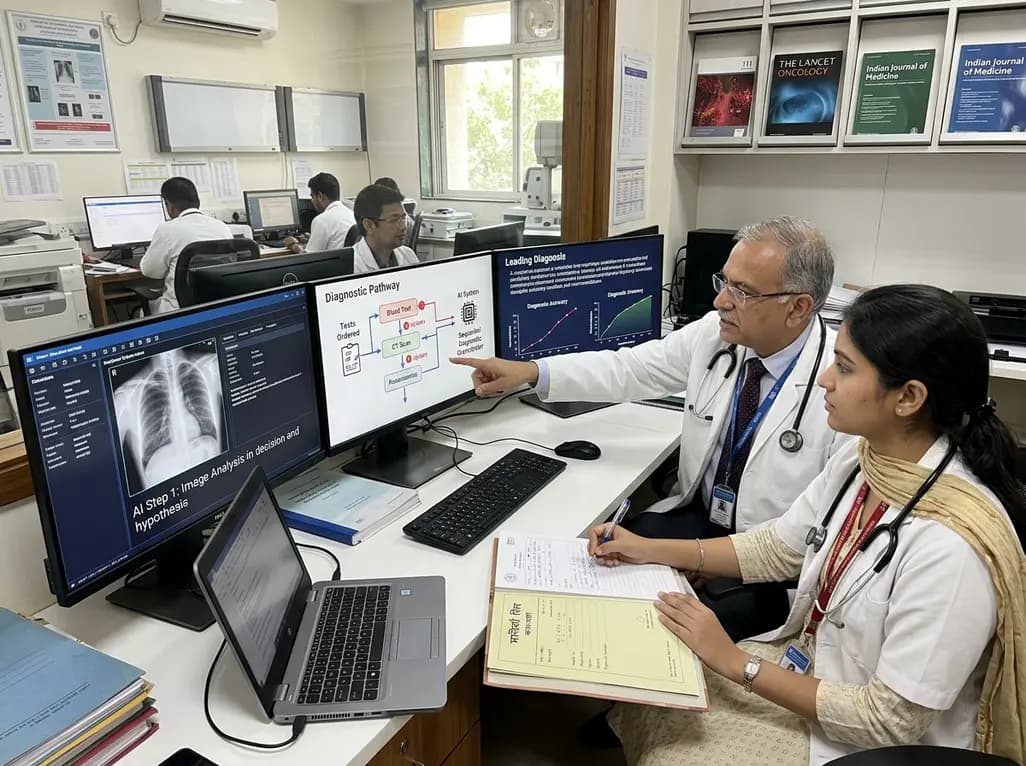
A breakthrough peer-reviewed study demonstrates that a sequential AI diagnosis system can mirror real-world clinical reasoning. By ordering stepwise tests and updating hypotheses dynamically, this multi-agent orchestrator achieved superior diagnostic accuracy while reducing investigative costs.
Today

A prenatal case highlights severe glutaric acidemia type II presenting as bilateral hyperechoic cystic kidneys at 18 weeks. Whole-exome sequencing revealed a novel homozygous ETFDH frameshift variant, demonstrating the power of rapid genetic testing in fetal renal anomalies.
Today

Review how tailored exercise programs benefit frail older patients with heart failure. Explore pathophysiological mechanisms, individualized training prescriptions, and strategies to overcome adherence barriers in clinical practice.
Yesterday

This comparative study evaluates posterior labral tears with and without glenohumeral instability, highlighting distinct demographic patterns, MRI underestimation in stable shoulders, and successful arthroscopic repair outcomes.
Yesterday

A clinical study demonstrates that early intervention with tocilizumab, either as monotherapy or bridged with corticosteroids, achieves significant proptosis reduction and resolves active inflammation in treatment-naive thyroid eye disease.
Yesterday
