.webp&w=384&q=75)

Loading, please wait...
Loading, please wait...

Recent research underscores the significance of pulse wave velocity variability as an independent predictor of long-term cardiovascular health. While clinicians traditionally rely on a single measurement of arterial stiffness, this study highlights that visit-to-visit fluctuations provide essential prognostic data. Therefore, monitoring these changes could help identify patients at higher risk of major adverse cardiovascular events (MACE).
The study analyzed 794 participants with an average age of 62.6 years over a median follow-up of 6.31 years. Researchers measured brachial-ankle pulse wave velocity (baPWV) at baseline, one month, six months, and twelve months. They used the coefficient of variation (CV) to determine pulse wave velocity variability. Notably, participants who experienced MACE showed significantly higher variability compared to those who did not. Specifically, the hazard ratio for MACE in the highest variability group was 2.38, even after adjusting for traditional risk factors.
Furthermore, Kaplan-Meier analyses demonstrated a clear trend. Patients in the higher tertiles of variability experienced progressively lower event-free survival. Consequently, longitudinal monitoring of arterial stiffness offers a more comprehensive view of vascular health than a single snapshot. Because arterial stiffness can fluctuate, these variations likely reflect underlying vascular instability or the cumulative impact of poorly controlled risk factors.
Moreover, these findings suggest that stable arterial stiffness measurements are as important as low absolute values. Physicians should consider serial baPWV measurements to better stratify patient risk. This approach allows for more personalized intervention strategies. Additionally, reducing variability through optimized blood pressure control and lifestyle changes may further mitigate cardiovascular risk. Therefore, clinicians should integrate periodic assessments into their long-term management plans for hypertensive or high-risk patients.
A single reading provides a static view of arterial stiffness at one moment. In contrast, variability measures how much that stiffness changes over multiple visits. This study proves that these fluctuations independently predict future heart attacks and strokes.
The study reported a hazard ratio of 2.38. This means that individuals with high variability were more than twice as likely to experience a major adverse cardiovascular event compared to those with low variability.
Regular monitoring is particularly beneficial for older adults and patients with hypertension or metabolic disorders. Tracking changes over time helps physicians detect early signs of vascular deterioration.
Disclaimer: This content is for informational and educational purposes only. It does not constitute medical advice or professional services. Always seek the advice of your physician or other qualified health provider regarding a medical condition. Refer to the latest local and national guidelines for clinical practice.
References
Kim HL et al. The variability of pulse wave velocity and long-term cardiovascular outcomes. Am J Hypertens. 2026 Mar 17. doi: undefined. PMID: 41844528.
Vlachopoulos C, Aznaouridis K, Stefanadis C. Prediction of cardiovascular events and all-cause mortality with arterial stiffness: a systematic review and meta-analysis. J Am Coll Cardiol. 2010;55(13):1318-1327.
Ohkuma T, Ninomiya T, Tomiyama H, et al. Brachial-Ankle Pulse Wave Velocity and the Risk Prediction of Cardiovascular Disease: An Individual Participant Data Meta-Analysis. Hypertension. 2017;69(6):1045-1052.

Read summarized clinical updates, watch expert medical content, and earn CME certifications right from your smartphone.
Open your smartphone camera to scan and install.





A new study shows that visit-to-visit variability in pulse wave velocity (baPWV) independently predicts long-term cardiovascular risk beyond a single measur...
7 months ago
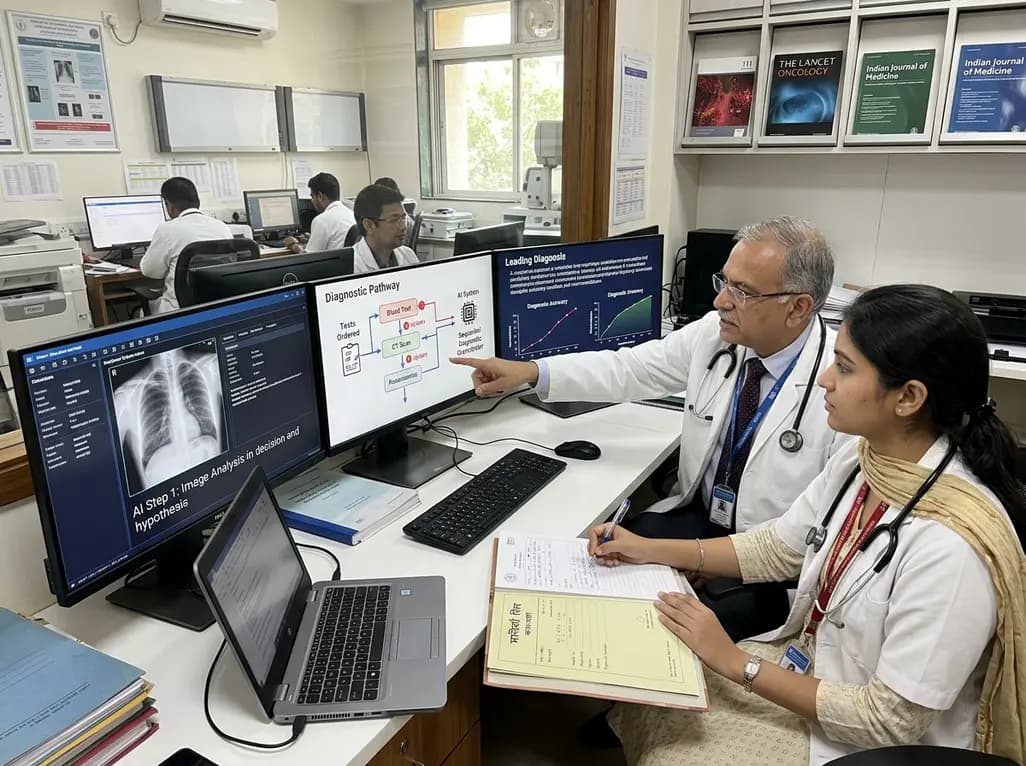
A breakthrough peer-reviewed study demonstrates that a sequential AI diagnosis system can mirror real-world clinical reasoning. By ordering stepwise tests and updating hypotheses dynamically, this multi-agent orchestrator achieved superior diagnostic accuracy while reducing investigative costs.
Today

A prenatal case highlights severe glutaric acidemia type II presenting as bilateral hyperechoic cystic kidneys at 18 weeks. Whole-exome sequencing revealed a novel homozygous ETFDH frameshift variant, demonstrating the power of rapid genetic testing in fetal renal anomalies.
Today

Review how tailored exercise programs benefit frail older patients with heart failure. Explore pathophysiological mechanisms, individualized training prescriptions, and strategies to overcome adherence barriers in clinical practice.
Yesterday

This comparative study evaluates posterior labral tears with and without glenohumeral instability, highlighting distinct demographic patterns, MRI underestimation in stable shoulders, and successful arthroscopic repair outcomes.
Yesterday

A clinical study demonstrates that early intervention with tocilizumab, either as monotherapy or bridged with corticosteroids, achieves significant proptosis reduction and resolves active inflammation in treatment-naive thyroid eye disease.
Yesterday
