.webp&w=384&q=75)

Loading, please wait...
Loading, please wait...
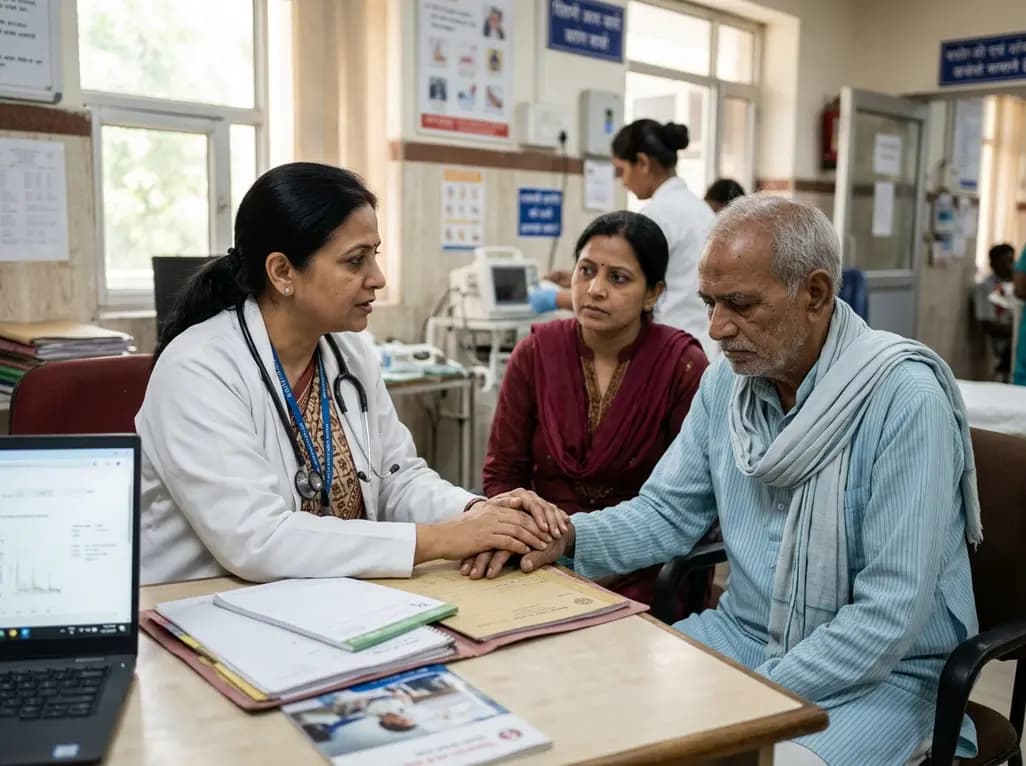
Immune checkpoint inhibitors have revolutionized modern thoracic oncology, yet lung cancer immunotherapy frequently produces intricate psychosomatic symptoms. Clinicians traditionally evaluate physical toxicities and psychological distress as separate entities during oncologic visits. However, this fragmented approach often overlooks how somatic manifestations and emotional suffering continuously aggravate each other. Patients undergoing treatment routinely report persistent fatigue, neuromuscular discomfort, insomnia, and acute emotional distress. Consequently, standard single-symptom evaluations fail to capture the true complexity of patient suffering. Recent clinical evidence indicates that immune activation triggers neuroinflammatory pathways that directly alter mood and cognitive regulation. Therefore, oncologists must evaluate physical adverse events and psychiatric complications concurrently. In addition, recognizing co-occurring symptom profiles enables healthcare teams to offer timely supportive care. When clinicians manage physical complaints in isolation, unaddressed psychological distress often amplifies physical disability. Conversely, unmanaged emotional turmoil can undermine therapeutic compliance and functional independence. Accordingly, modern clinical practices require comprehensive frameworks to assess psychosomatic symptoms holistically. By adopting systematic symptom profiling, clinicians can anticipate complications and improve long-term patient well-being during active immunotherapy.
A landmark cross-sectional study involving 971 patients undergoing immune checkpoint blockade identified clear phenotypic subgroups. Using latent profile analysis, investigators classified patients into three distinct psychosomatic categories that reflect meaningful biological and clinical variation. First, the High Symptom Burden with Comorbid Distress phenotype comprised 25.1% of the cohort. Patients within this subgroup experienced severe concurrent physical toxicities alongside substantial psychiatric distress. Second, the Emotional Distress Dominant phenotype represented 29.2% of the participants. Interestingly, these individuals reported moderate physical toxicities but exhibited severe anxiety, persistent depression, and mental exhaustion. Third, the Mild Adaptive phenotype formed the largest subgroup, representing 45.6% of the overall patient sample. Individuals in this category maintained preserved functional capabilities and showed minimal psychosomatic burden. Furthermore, network analysis demonstrated that network density differed significantly across these clinical groups. The high-burden and distress-dominant groups exhibited markedly denser symptom networks compared to the mild adaptive group. Thus, symptoms in vulnerable patients reinforce one another through tight interconnectivity. Consequently, latent profile analysis equips clinicians with a powerful risk stratification tool that surpasses routine adverse event scoring.
Multivariate logistic regression revealed critical clinical and demographic variables that govern patient allocation across symptom phenotypes. Notably, a history of cigarette smoking represented an immense risk factor for the high symptom burden profile, increasing odds over twenty-eight-fold. In addition, advanced stage IV cancer and poor baseline performance status strongly correlated with membership in this high-burden category. In contrast, several social and therapeutic elements provided robust protection against adverse symptom clusters. For instance, patients residing with family members had an eighty-five percent lower risk of entering the high symptom burden group. Similarly, receiving combination systemic regimens and presenting without metastatic spread conferred marked protective advantages against multi-symptom distress. Meanwhile, sex-specific vulnerabilities influenced the emotional distress dominant profile, where female patients faced a three-fold higher risk. Therefore, clinicians must evaluate both biological traits and social support structures during routine clinical discussions. Recognizing these risk factors enables multidisciplinary teams to deploy proactive supportive resources before complications escalate. Ultimately, integrating social determinants into clinical assessment allows oncologists to deliver targeted care to vulnerable patients.
Network analysis revealed that symptom interactions depend upon distinct topological hubs within each patient profile. In the high symptom burden cohort, profound fatigue operated as the primary core symptom anchoring the network. Furthermore, functional interference with general daily activities served as the essential bridging symptom linking physical disability to psychiatric distress. For the emotional distress dominant profile, sleep disturbance functioned as the core driver sustaining psychiatric morbidity. Meanwhile, loss of interest acted as the bridging symptom that transferred affective distress into somatic complaints and functional decline. Conversely, the mild adaptive subgroup demonstrated a simpler, less dense network structure. Within this resilient cohort, diminished enjoyment of life served simultaneously as both the core and bridging symptom. Therefore, psychosomatic symptoms do not develop as disconnected clinical problems during cancer treatment. Instead, they organize around identifiable central hubs that actively spread distress across the entire symptom network. Consequently, oncologists must focus therapeutic efforts on these central nodes rather than attempting to alleviate every peripheral symptom simultaneously.
Computer-simulated intervention modeling offers clear, hypothesis-generating pathways to deactivate symptom networks efficiently. In the high-burden cohort, virtual simulation revealed that suppressing fatigue produced the greatest overall network collapse. Consequently, physical rehabilitation, fatigue-targeted pharmacotherapy, and scheduled rest periods represent optimal initial interventions. In contrast, simulated interventions indicated that strengthening interpersonal networks achieved the strongest stabilization for emotional distress dominant patients. Therefore, psychological counseling, peer mentorship groups, and family counseling should anchor support protocols for this subgroup. Meanwhile, interventions aimed at preserving daily enjoyment of life proved most beneficial for the mild adaptive cohort. Clinicians can maintain functional resilience in this adaptive population using mild exercise and recreational therapy. Translating these simulation-driven findings into routine oncology practice requires coordinated multidisciplinary collaboration. When screening tools flag elevated distress or severe physical fatigue, oncology teams should quickly mobilize targeted clinical pathways. In addition, social workers must evaluate domestic caregiving resources, particularly for vulnerable patients with substantial smoking histories. Ultimately, adopting phenotype-specific supportive frameworks elevates cancer care, ensuring that immunotherapeutic advancements translate into meaningful improvements in patient survivorship.
Latent profile analysis identifies three distinct phenotypes: High Symptom Burden with Comorbid Distress, Emotional Distress Dominant, and Mild Adaptive. These categories reflect divergent combinations of physical toxicities and emotional morbidity, requiring clinicians to look beyond conventional single-symptom evaluations and tailor psychological and somatic care to each patient profile.
Heavy cigarette smoking history constitutes the most prominent risk factor, increasing high-burden odds over twenty-eight-fold. Furthermore, advanced stage IV cancer and poor ECOG performance status significantly elevate vulnerability. Conversely, protective elements include living with family members, receiving combination treatment regimens, and having localized disease without distant metastatic spread.
Network analysis pinpoints central hub symptoms and bridging pathways that maintain distress. Rather than treating all symptoms uniformly, clinicians can prioritize core drivers identified in simulations. Specifically, managing fatigue destabilizes high-burden networks, enhancing interpersonal support mitigates emotional distress profiles, and preserving life enjoyment sustains resilience in adaptive patients.
Disclaimer: This content is for informational and educational purposes only. It does not constitute medical advice, diagnosis, or treatment recommendations. Clinical decisions should be made by qualified healthcare professionals based on individual patient evaluations and applicable clinical guidelines. The views expressed do not necessarily reflect the official policy or position of any affiliated organization or publisher. Refer to the latest local and national guidelines for clinical practice.
References

Read summarized clinical updates, watch expert medical content, and earn CME certifications right from your smartphone.
Open your smartphone camera to scan and install.





A cross-sectional study of 971 patients receiving lung cancer immunotherapy reveals three distinct psychosomatic phenotypes and identifies fatigue, sleep disturbance, and life enjoyment as core targets for stratified clinical intervention.
last month

A breakthrough study evaluated H5N1 transmission efficiency across mammalian isolates. Researchers discovered that human-derived D1.1 harboring the PB2 D701N mutation spread efficiently in ferrets, unlike strains carrying PB2 E627K. This finding highlights critical genetic markers for zoonotic surveillance.
Today

A comparative cohort study evaluates vNOTES vs TLH hysterectomy for benign conditions, demonstrating shorter operative duration, faster return to daily activities, and equivalent female sexual function scores without increased dyspareunia.
Today

Review how tailored exercise programs benefit frail older patients with heart failure. Explore pathophysiological mechanisms, individualized training prescriptions, and strategies to overcome adherence barriers in clinical practice.
Yesterday

This comparative study evaluates posterior labral tears with and without glenohumeral instability, highlighting distinct demographic patterns, MRI underestimation in stable shoulders, and successful arthroscopic repair outcomes.
Yesterday

A clinical study demonstrates that early intervention with tocilizumab, either as monotherapy or bridged with corticosteroids, achieves significant proptosis reduction and resolves active inflammation in treatment-naive thyroid eye disease.
Today
