.webp&w=384&q=75)

Loading, please wait...
Loading, please wait...

India's platform economy has grown into a massive employment engine. However, this rapid expansion comes with significant human costs. A recent qualitative study explores the lived experiences of food delivery riders in urban India. The research highlights the critical importance of gig worker psychosocial health in the face of precarious employment and algorithmic management.
Food delivery riders operate under extreme conditions. They face harsh climatic shifts and navigate congested urban traffic daily. Consequently, many workers suffer from persistent physical pain and embodied exhaustion. Beyond the physical strain, riders manage intense emotional labor. They must remain polite to customers even when facing disrespect. This emotional discipline is often forced by constant surveillance through delivery algorithms. Therefore, the internal struggles of these workers often go unnoticed by the public and policymakers alike.
The study identifies several themes, including surviving precision and fragmented routines. These workers often internalize blame for issues beyond their control, such as traffic delays. This internalization leads to social withdrawal and significant emotional fatigue. Current labor frameworks, like the Code on Social Security 2020, have begun to recognize gig workers. Nevertheless, there is an urgent need for psychosocially sensitive governance. Strengthening mental health support and ensuring dignity for delivery partners is essential for a sustainable digital economy. Healthcare providers in India should be aware of these occupational hazards when treating patients from the gig workforce.
The primary risks include algorithmic surveillance, emotional suppression, social withdrawal, and high economic insecurity. These factors contribute to long-term mental health challenges and burnout.
Persistent physical pain and exhaustion from difficult weather conditions often lead to emotional fatigue. This combination can cause workers to internalize blame and experience a sense of symbolic exclusion from society.
Experts advocate for policy reforms that protect mental health, ensure social inclusion, and provide transparent grievance mechanisms. Transitioning from a focus on speed to a focus on worker well-being is vital.
Disclaimer: This content is for informational and educational purposes only. It does not constitute medical advice or establish a doctor-patient relationship. Refer to the latest local and national guidelines for clinical practice.
References
1. Kariveliparambil A et al. Invisible burdens of platform work: a qualitative study of food-delivery riders' lived experiences in urban India. Int J Qual Stud Health Well-being. 2026 Dec 31. doi: 10.1080/17482631.2026.2644577. PMID: 41830419.
2. Samal J et al. Rise of the 'Gig Economy' and its Health Toll on Workers. Indian J Occup Environ Med. 2025;29:96–101.
3. NITI Aayog. India's Booming Gig and Platform Economy: Perspectives and Recommendations on the Future of Work. June 2022.

Read summarized clinical updates, watch expert medical content, and earn CME certifications right from your smartphone.
Open your smartphone camera to scan and install.





A qualitative study on the psychosocial and physical challenges faced by food delivery riders in India, highlighting the need for better health governance....
7 months ago
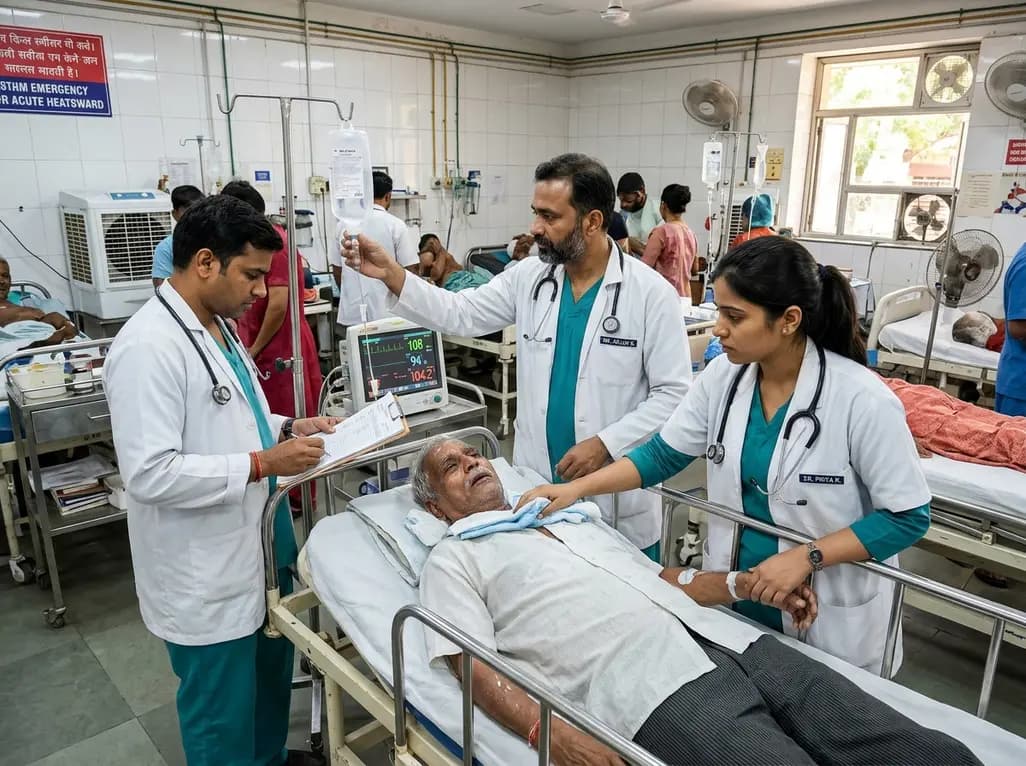
Recent epidemiological data reveals a dramatic surge in summer heat mortality driven by human-induced climate warming. This analysis explores the pathophysiological impacts on cardiac and renal systems, diagnostic dilemmas in death certification, and essential emergency cooling protocols for acute clinical care.
Today

Odisha has established India's first state-level clinical protocol specifically tailored for pregnant women with sickle cell disease. Developed with NHM and UNICEF, the framework provides structured antenatal screening, crisis mitigation, standardized referral pathways, and specialized interdisciplinary care.
Today

India is advancing preventive healthcare by integrating genomics, artificial intelligence, and quantum technologies. With the SANGAM programme sequencing one million Indian genomes, clinicians can unlock personalized therapies, detect cardiometabolic risks early, and curb the burden of diabetes and heart disease.
Today

A randomized controlled trial demonstrates that an eight-week dual-task training intervention significantly improves static and dynamic postural control over standard balance exercises in individuals with chronic ankle instability, addressing critical neurocognitive deficits during athletic and daily activities.
Today

A retrospective cohort study of 7,716 ICU patients from the MIMIC-IV database demonstrates that Gradient Boosting Decision Trees significantly outperform traditional SOFA scores in predicting in-hospital mortality among patients with sepsis and diabetes, with SHAP analysis providing clinical interpretability.
Today
