.webp&w=384&q=75)

Loading, please wait...
Loading, please wait...

Emerging research across psychiatric medicine has sparked renewed interest in novel pharmacological agents, particularly for severe and treatment-resistant mood disorders. Investigating psychedelic therapeutics for adolescents represents a critical frontier in child and adolescent psychiatry. Adolescence is a crucial period of neurodevelopment, marked by substantial vulnerability to refractory depressive disorders, trauma, and debilitating anxiety. While early studies in adult cohorts demonstrate therapeutic potential, clinicians must approach adolescent applications with profound caution, methodological rigor, and robust ethical oversight.
Clinical equipoise serves as the foundational principle for initiating clinical trials in vulnerable populations. Consequently, investigators must demonstrate genuine uncertainty regarding whether the experimental intervention offers superior efficacy compared to standard therapeutic regimens. When evaluating novel psychedelic therapeutics for adolescents, researchers must balance the imperative to alleviate chronic suffering against the unquantified neurodevelopmental risks of psychoactive compounds. Therefore, clinical research protocols must deliberately establish stringent inclusion criteria, ensuring that candidate participants have exhausted evidence-based psychotherapeutic and pharmacological options.
Furthermore, clinical equipoise demands an ongoing, objective re-evaluation of emerging safety endpoints throughout trial execution. Because developing neural pathways exhibit heightened plasticity, pharmacological stimulation may generate different behavioral and cognitive outcomes in youth than in mature adult brains. Clinicians must maintain scientific objectivity, actively avoiding therapeutic optimism or premature adoption before rigorous phase trials establish reproducible efficacy profiles.
Conducting clinical research with minors introduces intricate ethical dimensions concerning informed consent, voluntary assent, and potential vulnerability to therapeutic misconception. Adolescents aged 16 to 17 years frequently possess cognitive maturity to understand trial mechanisms, yet their decision-making can be influenced by severe distress or family pressure. Therefore, ethical trial designs must incorporate thorough assent procedures alongside informed parental permission, ensuring that young participants fully grasp the experimental nature of psychedelic-assisted protocols.
Additionally, investigators must implement safeguards against the therapeutic misconception, wherein participants or their guardians mistake experimental protocols for established clinical care. Clear communication regarding randomisation, placebo controls, and potential adverse events remains vital. Moreover, institutional review boards must include child and adolescent psychiatrists with specific expertise in developmental psychopathology to rigorously evaluate study risks, psychological support mechanisms, and post-session integration protocols.
A significant clinical concern involves the uncritical extrapolation of adult efficacy and pharmacokinetic data to adolescent populations. Historically, pediatric psychiatry has witnessed complications when adult prescribing patterns were applied to youth without adequate developmental validation. Off-label prescribing without definitive pediatric regulatory approval introduces serious clinical hazards, including unanticipated adverse psychological reactions, behavioural destabilisation, or neurodevelopmental alterations.
Moreover, adolescent neurobiology entails dynamic synaptic pruning and receptor maturation, particularly involving serotonergic and dopaminergic circuits. As a result, psychoactive compounds that modulate these systems might yield unique physiological and psychological responses. Clinicians and regulatory authorities must strongly discourage off-label use outside carefully monitored clinical research settings, thereby protecting vulnerable youth from unregulated administration and unproven treatment regimens.
Ensuring patient safety requires standardized, multi-tiered clinical frameworks throughout preparation, dosing, and integration phases. Before administering any investigational agent, clinical teams must conduct comprehensive medical and psychiatric screenings, strictly excluding individuals with personal or strong familial predispositions to psychotic disorders or bipolar diatheses. Furthermore, structured preparatory psychotherapy sessions are essential to build therapeutic alliance, establish clear expectations, and cultivate grounding techniques.
During dosing sessions, trained medical and psychological facilitators must maintain continuous monitoring to manage acute psychological distress, autonomic fluctuations, or perceptual alterations. Subsequently, structured integration sessions must immediately follow to help adolescents process their cognitive and emotional experiences constructively. Methodologically rigorous research designs, incorporating objective rating scales and longitudinal follow-up assessments, are imperative to accurately delineate safety signals and durable therapeutic outcomes.
In India, adolescent mental health concerns represent an escalating public health challenge, with rising rates of depression, deliberate self-harm, and severe anxiety disorders. Although novel therapeutic avenues generate global clinical interest, the Indian psychiatric landscape currently relies strictly on established psychopharmacological agents and evidence-based psychotherapy. Indian regulatory frameworks, including the Central Drugs Standard Control Organisation (CDSCO), enforce stringent guidelines regarding novel substances and pediatric research.
Consequently, mental health professionals in India must emphasize rigorous primary care interventions, early psychiatric diagnosis, and culturally adapted psychotherapies as primary treatment strategies. While keeping abreast of international clinical literature, practitioners must uphold evidence-based medicine and discourage unapproved experimental interventions. Future involvement in international multi-centre trials must strictly adhere to Indian Council of Medical Research (ICMR) ethical guidelines, ensuring optimal safety and developmental protection for young patients.
Clinical equipoise refers to genuine scientific uncertainty within the medical community regarding whether psychedelic-assisted therapy offers greater benefit than risk compared to standard treatments. This principle ensures that adolescent trials are ethically justifiable and designed strictly for treatment-resistant patients who lack effective alternatives.
Adolescent brains undergo critical neurodevelopment, including synaptic pruning and neurotransmitter receptor maturation. Consequently, pharmacodynamics, pharmacokinetics, and psychological vulnerabilities differ significantly from adults. Extrapolating adult trial data risks unexpected behavioral or developmental adverse effects without dedicated pediatric safety studies.
No, off-label prescribing of psychedelics for adolescents is strongly discouraged and regulatory bodies prohibit it in clinical practice. These experimental compounds require rigorous evaluation within approved clinical research trials featuring comprehensive psychological preparation, supervised dosing, and structured integration support.
Disclaimer: This content is for informational and educational purposes only. It is not intended to be a substitute for professional medical advice, diagnosis, or treatment. Always seek the advice of your physician or other qualified health provider with any questions you may have regarding a medical condition. Refer to the latest local and national guidelines for clinical practice.
References
1. Jeffrey JK et al. Psychedelic Therapeutics for Adolescents: Ethics, Safety, Opportunities, and Equipoise-Authors' Reply. J Am Acad Child Adolesc Psychiatry. 2025 Jul. doi: 10.1016/j.jaac.2024.12.002. PMID: 39709010.
2. Jeffrey JK, Weintraub MJ, Grob CS. Clinical Research Trials of Psychedelic-Assisted Therapy in Adolescents Aged 16 to 17 Years: Rationale Balanced With Caution. J Am Acad Child Adolesc Psychiatry. 2024 Dec;63(12):1196-1198. doi: 10.1016/j.jaac.2024.03.021.
3. Indian Council of Medical Research. National Ethical Guidelines for Biomedical and Health Research Involving Human Participants. ICMR, New Delhi, 2017.

Read summarized clinical updates, watch expert medical content, and earn CME certifications right from your smartphone.
Open your smartphone camera to scan and install.





Evaluating psychedelic therapeutics for adolescents requires balancing potential treatment benefits with rigorous safety standards, clinical equipoise, and strict avoidance of off-label extrapolation from adult clinical trial data.
last month

A study reveals that salivary cortisone correlates more strongly with serum cortisol than salivary cortisol during dynamic adrenal testing, while salivary dexamethasone accurately confirms compliance. This provides a non-invasive, precise alternative to venipuncture for diagnosing adrenal disorders.
Today
Prenatal evaluation of fetal growth restriction requires an integrated diagnostic approach. While chromosomal microarray remains fundamental, exome sequencing offers significant diagnostic yield in isolated and syndromic cases, especially when ultrasound shows skeletal anomalies or normal placental function.
Today

Evaluating disagreement among Friedewald, Martin-Hopkins, and Sampson LDL-C equations reveals diagnostic uncertainty at statin cutoffs. An interpretable regime-aware calibration model rescues patient misclassifications without extra testing costs.
Today
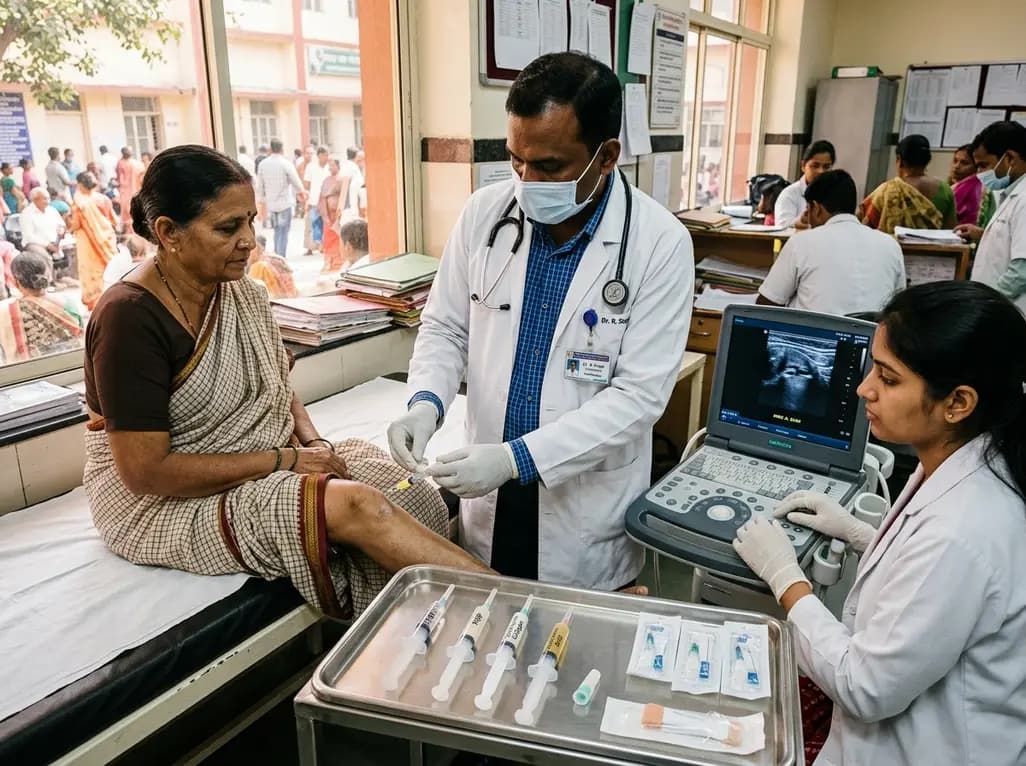
A randomized controlled trial compared ultrasound-guided intra-articular injections of PRP, hydrolyzed type I collagen, and hyaluronic acid in knee osteoarthritis. All therapies demonstrated significant improvements in WOMAC and pain scores at six months, supporting hydrolyzed collagen as a viable biological option.
Today

A groundbreaking review highlights mitochondrial quality control as a pivotal gating layer between metabolite signaling and regulated cell death, offering transformative therapeutic avenues across cardiology, oncology, and critical care.
Today
