.webp&w=384&q=75)

Loading, please wait...
Loading, please wait...

Endocrinologists routinely utilize dynamic adrenal testing to evaluate hypothalamic-pituitary-adrenal axis disorders, including hypercortisolism and primary or secondary adrenal insufficiency. Historically, standard evaluation protocols have required repeated venipuncture to quantify total serum cortisol. However, circulating total cortisol levels fluctuate significantly with alterations in corticosteroid-binding globulin concentrations. Estrogen therapy, chronic hepatic dysfunction, and acute critical illness frequently skew these measurements. Consequently, clinicians encounter diagnostic ambiguity when interpreting total serum hormone levels. Salivary diagnostics provide a compelling, non-invasive alternative because salivary fluid reflects unbound, biologically active free steroid hormones. In a landmark cross-sectional study, researchers evaluated 640 adults and analyzed 815 paired serum and salivary specimens during dynamic adrenal testing protocols. The investigators systematically compared salivary cortisol, cortisone, and dexamethasone against established serum measurements across overnight dexamethasone suppression tests, cosyntropin stimulation tests, and overnight metyrapone tests. Importantly, the researchers utilized high-precision liquid chromatography-tandem mass spectrometry to quantify salivary analytes. This technological rigor ensured precise quantification without the cross-reactivity issues commonly observed in traditional immunoassays. Therefore, these groundbreaking findings offer definitive evidence regarding the diagnostic reliability of salivary matrices in routine endocrine practice.
During the overnight 1-mg dexamethasone suppression test, salivary cortisone demonstrated clear superiority over salivary cortisol. Specifically, salivary cortisone exhibited a much stronger correlation with serum cortisol compared to salivary cortisol, reaching a correlation coefficient of 0.86 versus 0.53. This striking divergence arises directly from the distinct physiology of the human salivary gland. Salivary acinar cells express abundant 11beta-hydroxysteroid dehydrogenase type 2 enzyme activity. This intracellular enzyme rapidly metabolizes active cortisol into inactive cortisone to protect local mineralocorticoid receptors. At suppressed circulating cortisol concentrations following dexamethasone ingestion, salivary cortisol concentrations frequently drop near the analytical limit of quantitation. In contrast, salivary cortisone concentrations remain robustly measurable and proportional to systemic circulating levels. Furthermore, salivary cortisone exhibits higher stability and reproducibility across varied collection techniques. Clinicians can accurately identify autonomous cortisol excess because cortisone reflects the systemic adrenal suppression profile without technical artifact. Consequently, measuring salivary cortisone via mass spectrometry resolves borderline suppression results with exceptional accuracy. Endocrinologists can therefore establish reliable cutoffs that match conventional serum thresholds, simplifying the outpatient screening pathway for suspected hypercortisolism.
Interpreting dexamethasone suppression testing requires absolute certainty regarding adequate patient compliance and systemic drug absorption. In clinical reality, false-positive suppression failures frequently occur due to poor medication adherence, rapid hepatic clearance, or drug interactions. For instance, concurrent antiepileptic medications or rifampin induce cytochrome P450 3A4 enzymes, rapidly degrading dexamethasone before it can suppress pituitary adrenocorticotropic hormone secretion. Previously, endocrinologists verified drug exposure by drawing additional blood samples for serum dexamethasone quantification. However, this blood draw adds inconvenience and expense to outpatient evaluations. The recent study conclusively demonstrates that salivary dexamethasone levels correlate tightly with serum dexamethasone concentrations. Therefore, clinicians can simultaneously collect salivary dexamethasone alongside salivary cortisol and cortisone in a single saliva tube. This dual analysis confirms therapeutic drug exposure while simultaneously assessing hypothalamic-pituitary-adrenal axis suppression. Moreover, simultaneous measurement completely eliminates the need for confirmatory venipuncture in non-suppressing patients. If salivary dexamethasone remains low, clinicians can immediately identify inadequate drug absorption rather than erroneously diagnosing autonomous hypercortisolism. As a result, this non-invasive approach protects patients from unwarranted imaging and unnecessary surgical referrals.
The investigation also evaluated the diagnostic fidelity of salivary steroids during cosyntropin stimulation testing for suspected adrenal insufficiency. During dynamic cosyntropin stimulation, exogenous adrenocorticotropic hormone rapidly stimulates adrenocortical steroidogenesis, causing steep increases in circulating free and total cortisol. Notably, both salivary cortisol and cortisone correlated strongly with post-stimulation serum cortisol concentrations. As adrenal production surges, serum free cortisol increases non-linearly once corticosteroid-binding globulin reaches saturation capacity. Salivary measurements directly capture this physiological expansion of the biologically active fraction. Furthermore, salivary cortisone provides an exceptionally steady readout across standard stimulation intervals. In secondary adrenal insufficiency, basal and stimulated salivary values reliably mirror impaired adrenal reserve. Additionally, salivary sampling avoids the physiological stress of repeated needle sticks, which can paradoxically induce endogenous corticotropin secretion in anxious individuals. Consequently, pediatric patients, elderly individuals, and individuals with fragile venous access derive tremendous clinical benefit from saliva-based stimulation protocols. Clinicians must, however, adhere to validated, assay-specific cutoffs when interpreting peak salivary responses. Ultimately, these mass spectrometry thresholds provide diagnostic performance equivalent to gold-standard serum immunoassays.
Adopting salivary dynamic testing requires structured outpatient workflows to guarantee sample integrity and clinical accuracy. First, healthcare teams must educate patients on proper pre-analytical preparation before collecting saliva specimens. Patients should avoid brushing teeth, smoking, consuming acidic beverages, or eating within thirty minutes prior to sampling. Blood contamination from gingival bleeding can artificially elevate salivary cortisol concentrations, skewing test interpretation. Second, clinical practices must partner with accredited reference laboratories that utilize validated liquid chromatography-tandem mass spectrometry assays. Immunoassays frequently display cross-reactivity with synthetic glucocorticoids and endogenous steroid precursors, compromising diagnostic accuracy. In contrast, mass spectrometry accurately distinguishes cortisol, cortisone, and dexamethasone within a single, minimal salivary volume. Moreover, salivary testing enables seamless at-home collection protocols for patients living in rural or underserved regions. Patients simply collect their saliva upon waking following midnight dexamethasone ingestion and transport the tubes to the clinic. Thus, salivary testing drastically lowers logistical barriers to comprehensive adrenal screening. As specialized endocrine laboratories expand mass spectrometry panels, salivary dynamic profiling will emerge as the standard of care for adrenal diagnostics.
Salivary cortisone provides superior diagnostic accuracy because 11beta-hydroxysteroid dehydrogenase type 2 in salivary glands converts cortisol into cortisone. Following dexamethasone suppression, salivary cortisol drops to near-undetectable concentrations, which challenges assay sensitivity limits. In contrast, salivary cortisone remains within a measurable analytical range and correlates strongly with serum cortisol. Therefore, salivary cortisone reliably differentiates autonomous cortisol excess from normal suppression without technical imprecision.
Salivary dexamethasone measurements confirm whether a patient ingested and adequately absorbed the prescribed dexamethasone tablet. Accelerating hepatic metabolism via cytochrome P450 enzyme-inducing medications or non-compliance causes false-positive suppression failure in conventional testing. Because salivary dexamethasone correlates tightly with serum dexamethasone, clinicians can readily confirm systemic drug bioavailability. Consequently, endocrinologists avoid misdiagnosing mild autonomous cortisol secretion and prevent unnecessary imaging or invasive interventions.
Patients must strictly avoid eating, drinking, smoking, and brushing their teeth for at least thirty minutes before collecting saliva. These precautions prevent food contamination and local pH shifts from altering hormone concentrations. Furthermore, patients must avoid vigorous flossing to prevent microscopic gingival bleeding, which introduces serum cortisol directly into the saliva sample. Clinicians must also ensure testing occurs via validated liquid chromatography-tandem mass spectrometry platforms.
Disclaimer: This content is for informational and educational purposes only. It does not constitute medical advice, diagnosis, or treatment recommendations. Clinical decisions should always be made by qualified healthcare professionals based on individual patient circumstances and relevant clinical guidelines. The authors and publishers assume no liability for actions taken based on this information. Refer to the latest local and national guidelines for clinical practice.
References

Read summarized clinical updates, watch expert medical content, and earn CME certifications right from your smartphone.
Open your smartphone camera to scan and install.





A study reveals that salivary cortisone correlates more strongly with serum cortisol than salivary cortisol during dynamic adrenal testing, while salivary dexamethasone accurately confirms compliance. This provides a non-invasive, precise alternative to venipuncture for diagnosing adrenal disorders.
Today
Prenatal evaluation of fetal growth restriction requires an integrated diagnostic approach. While chromosomal microarray remains fundamental, exome sequencing offers significant diagnostic yield in isolated and syndromic cases, especially when ultrasound shows skeletal anomalies or normal placental function.
Today

Evaluating disagreement among Friedewald, Martin-Hopkins, and Sampson LDL-C equations reveals diagnostic uncertainty at statin cutoffs. An interpretable regime-aware calibration model rescues patient misclassifications without extra testing costs.
Today
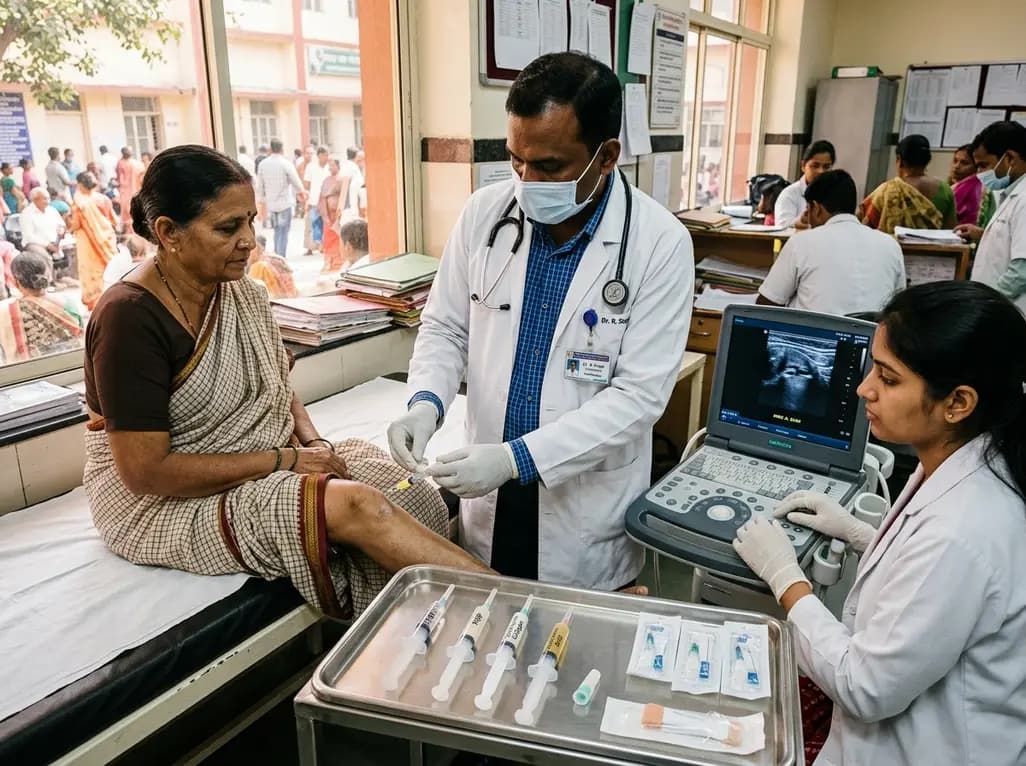
A randomized controlled trial compared ultrasound-guided intra-articular injections of PRP, hydrolyzed type I collagen, and hyaluronic acid in knee osteoarthritis. All therapies demonstrated significant improvements in WOMAC and pain scores at six months, supporting hydrolyzed collagen as a viable biological option.
Today

A groundbreaking review highlights mitochondrial quality control as a pivotal gating layer between metabolite signaling and regulated cell death, offering transformative therapeutic avenues across cardiology, oncology, and critical care.
Today
