.webp&w=384&q=75)

Loading, please wait...
Loading, please wait...

Metabolic dysfunction-associated steatotic liver disease (MASLD) represents a significant health challenge in India, where metabolic syndrome is increasingly common. Recent evidence suggests that provitamin A carotenoids MASLD risk reduction is possible through focused dietary patterns. This research highlights the inverse association between these nutrient-rich foods and liver fat accumulation.
A recent population-based study utilizing NHANES data from 6,613 participants evaluated how carotenoids affect liver health. Researchers observed that a higher intake of provitamin A carotenoid-rich foods significantly lowers the likelihood of developing MASLD. Specifically, the adjusted odds ratio was 0.684, indicating a substantial protective benefit. Interestingly, women and certain adult age groups showed even stronger protective associations in subgroup analyses.
The protective effect of these nutrients is not isolated from external factors. The study identified that socioeconomic status (SES) and healthy lifestyle choices act as vital mediators. SES, which includes education and income, accounted for a 12.92% mediation proportion. Meanwhile, healthy behaviors like physical activity and smoking cessation contributed 16.84% to the overall risk reduction. Consequently, improving liver health requires a holistic approach addressing both nutrition and social determinants.
For practitioners in India, these results underscore the importance of promoting carotenoid-rich local foods. Dietitians and general practitioners should encourage the consumption of carrots, leafy greens, and seasonal fruits to mitigate metabolic risks. Furthermore, addressing the socioeconomic barriers to healthy living remains essential for comprehensive MASLD prevention strategies.
Excellent dietary sources include orange and yellow vegetables such as carrots and pumpkins, along with leafy greens like spinach. Many tropical fruits available in India, such as mangoes and papayas, are also rich in these protective compounds.
Lifestyle factors, including physical activity and non-smoking, account for nearly 17% of the risk-lowering effect seen with carotenoid intake. Therefore, maintaining an active lifestyle is a crucial complement to a healthy diet for liver protection.
Disclaimer: This content is for informational and educational purposes only. It does not constitute medical advice or a professional relationship. Refer to the latest local and national guidelines for clinical practice.
References
Liu C et al. Association between provitamin A carotenoid-rich foods intake and metabolic dysfunction-associated steatotic liver disease risk: mediating effects of socioeconomic status and healthy lifestyle. Br J Nutr. 2026 May 22. doi: 10.1017/S0007114526107582. PMID: 42168801.
Chakrabarti SK, Chattopadhyay D. India's Hidden Liver Crisis: Understanding MASLD (Formerly NAFLD) Through a Precision Lens. Biores Scientia. 2025.

Read summarized clinical updates, watch expert medical content, and earn CME certifications right from your smartphone.
Open your smartphone camera to scan and install.





A study of 6,613 participants links provitamin A carotenoid intake to a 31.6% lower MASLD risk, with SES and lifestyle acting as key mediators....
5 months ago
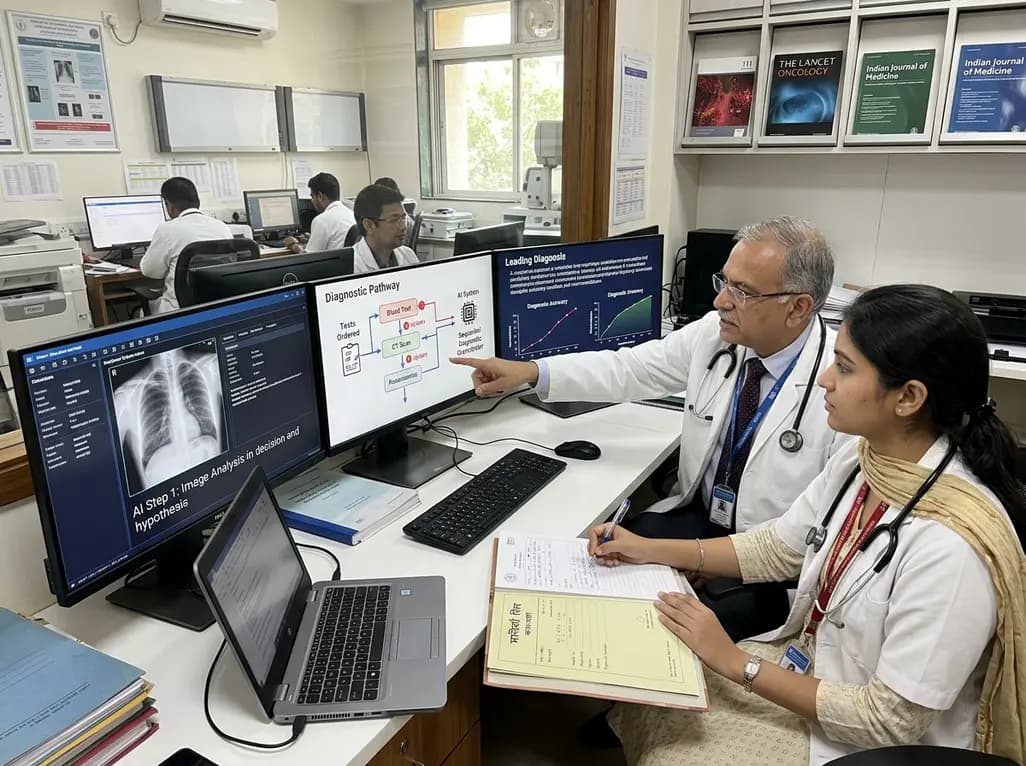
A breakthrough peer-reviewed study demonstrates that a sequential AI diagnosis system can mirror real-world clinical reasoning. By ordering stepwise tests and updating hypotheses dynamically, this multi-agent orchestrator achieved superior diagnostic accuracy while reducing investigative costs.
Today

A prenatal case highlights severe glutaric acidemia type II presenting as bilateral hyperechoic cystic kidneys at 18 weeks. Whole-exome sequencing revealed a novel homozygous ETFDH frameshift variant, demonstrating the power of rapid genetic testing in fetal renal anomalies.
Today

Review how tailored exercise programs benefit frail older patients with heart failure. Explore pathophysiological mechanisms, individualized training prescriptions, and strategies to overcome adherence barriers in clinical practice.
Yesterday

This comparative study evaluates posterior labral tears with and without glenohumeral instability, highlighting distinct demographic patterns, MRI underestimation in stable shoulders, and successful arthroscopic repair outcomes.
Yesterday

A clinical study demonstrates that early intervention with tocilizumab, either as monotherapy or bridged with corticosteroids, achieves significant proptosis reduction and resolves active inflammation in treatment-naive thyroid eye disease.
Yesterday
