.webp&w=384&q=75)

Loading, please wait...
Loading, please wait...
Chikungunya virus (CHIKV) continues to represent a significant public health challenge across the Indian subcontinent and other tropical regions. This mosquito-borne alphavirus primarily spreads through the bite of infected Aedes aegypti and Aedes albopictus mosquitoes. While many viral infections result in transient illness, chikungunya often leaves patients with incapacitating febrile symptoms. More importantly, a high percentage of patients progress to chronic, long-lasting, and recurring arthritis that can persist for years. Consequently, the socioeconomic burden of the disease remains immense, particularly in endemic areas where diagnostic resources are sometimes limited. Clinicians frequently encounter diagnostic dilemmas due to the overlapping clinical features of chikungunya, dengue, and Zika viruses. Therefore, understanding the immunological markers of protection becomes essential for both individual patient management and broader epidemiological surveillance. Recent research focusing on anti-chikungunya virus antibodies has provided new insights into how we might measure and achieve long-term immunity. By identifying specific protective thresholds, the medical community can better predict outbreak outcomes and evaluate the effectiveness of emerging therapeutic interventions. This progress is vital for India, which often experiences explosive outbreaks during monsoon seasons.
In response to the unpredictable nature of global outbreaks, the World Health Organization (WHO) formally established the 1502/19 International Standard for anti-CHIKV antibodies in 2022. Previously, the lack of a universal reference material made it difficult for laboratories to compare serological data accurately. Different assays often produced varying results, leading to confusion regarding the actual level of immunity within a population. The introduction of 1502/19 addresses this gap by providing a traceable common reporting unit for quantifying IgG neutralising activity. Specifically, this standard allows researchers to calibrate assays and ensure that data from clinical trials are internationally comparable. Furthermore, the standard helps in the evaluation of diagnostic kits, ensuring that they maintain high sensitivity and specificity. By having a reliable benchmark, scientists can now refine their understanding of how natural infection or vaccination contributes to herd immunity. This standardisation is particularly relevant for Indian pharmaceutical companies that are currently leading the charge in global vaccine development. Ultimately, the WHO 1502/19 standard serves as the cornerstone for harmonising global efforts to control the spread of this debilitating virus.
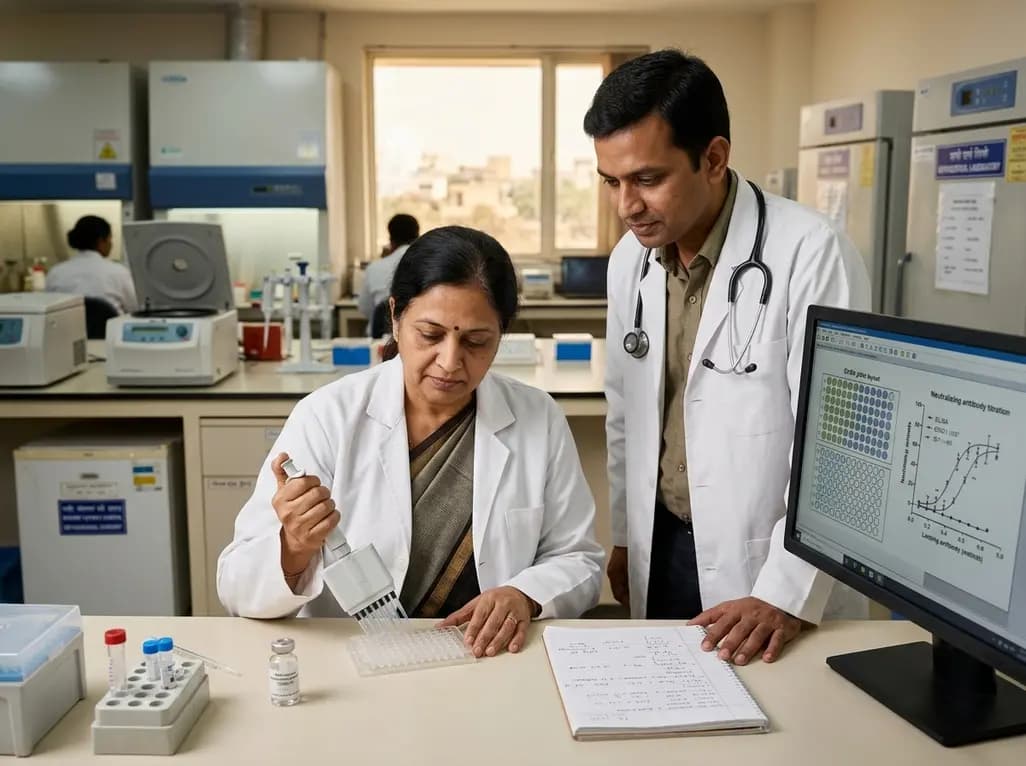
To enhance the clinical utility of the 1502/19 standard, a recent study utilized a mouse model to determine the precise protective titre required to prevent lethal disease. Researchers administered varying dilutions of the international standard to naïve mice to simulate different levels of circulating anti-chikungunya virus antibodies. Following this administration, the mice faced a challenge with the CHIKV isolate LR2006-OPY1, which is known for its high virulence. Notably, the study measured antibody levels exactly twenty-four hours before the viral challenge to establish a baseline for protection. The results were striking, as mice receiving undiluted 1502/19 survived the otherwise fatal infection throughout the fourteen-day observation period. This finding confirms that passive transfer of these specific antibodies is sufficient to provide robust protection against severe disease. In addition, the study helps delineate the minimum concentration of antibodies necessary to ensure survival. Such data are invaluable because they provide a biological correlate of protection that was previously undefined. Consequently, medical researchers can now use these findings to predict whether a person’s antibody levels are likely to shield them from severe clinical manifestations of the virus.
One of the most significant conclusions of the recent mouse model research is the confirmation that standalone humoral immunity can offer complete protection against chikungunya. While the cellular immune response certainly plays a role in viral clearance, these findings highlight the primary importance of neutralising antibodies. By establishing a standardised protective threshold, the study provides a clear target for future vaccine efficacy trials. Moreover, this research simplifies the evaluation process for new biological products. Instead of relying solely on complex and expensive clinical endpoint trials during unpredictable outbreaks, researchers can use the protective titre as a surrogate marker. This approach is highly efficient and potentially speeds up the regulatory approval process for much-needed vaccines. Additionally, the study emphasizes the need for high-quality antibody responses rather than just the presence of binding antibodies. Therefore, clinicians should understand that the quality of the immune response is just as critical as the quantity. As we move closer to universal vaccination strategies, focusing on these neutralising antibody levels will remain a priority for ensuring public safety and long-term health in endemic regions.
The establishment of a protective threshold for the WHO International Standard has direct implications for the current landscape of vaccine development. In India, several indigenous vaccine candidates are progressing through advanced clinical trial phases. Historically, determining the efficacy of these vaccines has been challenging due to the sporadic nature of chikungunya outbreaks. However, with a standardised correlate of protection, developers can now benchmark their candidates against a globally recognised reference. This standardisation facilitates easier collaboration between international regulatory bodies and local manufacturers, such as Bharat Biotech. Furthermore, the ability to predict vaccine success through serological markers reduces the risk of failure in late-stage trials. It also allows for smaller, more focused studies that can yield definitive results regarding immunogenicity. Consequently, the path to licensure becomes clearer and more predictable for innovative vaccine platforms, including live-attenuated and virus-like particle (VLP) technologies. Besides, these standardised metrics allow for better monitoring of vaccine stability and potency across different batches. As global health organisations strive for more equitable access to preventives, these scientific advancements ensure that every vaccine dose meets a rigorous, evidence-based standard of protection.
For practitioners in India, these findings underscore the importance of early diagnosis and the potential for future immunotherapies. While the current study focused on a preventive mouse model, the data reinforce the idea that high titres of antibodies can mitigate the severity of viral impact. In the clinic, this might eventually translate into the use of monoclonal antibodies or hyperimmune globulins for high-risk patients, such as the elderly or neonates. Meanwhile, the clear link between antibody levels and protection helps explain why some individuals suffer from chronic joint pain while others recover quickly. Patients with a robust initial neutralising response may be less likely to experience the viral persistence that leads to chronic arthritis. Additionally, clinicians can use this knowledge to educate patients about the value of future vaccinations once they become commercially available in India. By framing vaccination as a way to achieve the proven protective threshold, healthcare providers can increase vaccine confidence and uptake. Furthermore, continued surveillance of circulating antibody levels in the population will help public health officials predict when a region is susceptible to a new wave of infections. Essentially, the transition from experimental models to clinical practice is paved by these rigorous standardisation efforts.
The WHO 1502/19 International Standard is crucial because it provides a globally recognised reference for quantifying anti-chikungunya antibodies. Before its establishment, laboratories lacked a common unit, making it difficult to compare different study results or diagnostic tests. This standard allows for the harmonisation of serological assays, ensuring that data regarding immunity and vaccine efficacy are consistent and reliable across different geographical regions and various research institutions worldwide.
Anti-chikungunya virus antibodies provide protection primarily through neutralisation. These antibodies bind to specific proteins on the surface of the virus, effectively preventing it from entering and infecting host cells. The recent mouse model study demonstrated that when high enough levels of these antibodies are present in the bloodstream, they can independently prevent lethal disease. This confirms that a strong humoral immune response is a vital component of lasting protection against the virus.
Defining a protective titre is essential because it serves as a correlate of protection for regulatory approval. Because chikungunya outbreaks are often unpredictable, traditional large-scale efficacy trials can be difficult to conduct. Having a standardised antibody threshold allows vaccine developers to demonstrate that their product elicits an immune response known to prevent disease. This helps accelerate the development and licensure of new vaccines, ensuring they reach vulnerable populations much faster than before.
Disclaimer: This content is for informational and educational purposes only. It does not constitute medical advice or a professional relationship between the reader and any healthcare provider. Always seek the advice of a qualified physician or other qualified health provider with any questions you may have regarding a medical condition. Refer to the latest local and national guidelines for clinical practice.
References
Dowall SD et al. Protective titre of the WHO international standard for anti-chikungunya virus antibodies in a mouse model. Vaccine. 2026 Jul 10. doi: undefined. PMID: 42430874.
World Health Organization. Expert Committee on Biological Standardization: Seventy-sixth report. WHO Technical Report Series. 2023.
International Vaccine Institute. Global Chikungunya Vaccine Clinical Development Program (GCCDP) Update. March 2025.

Read summarized clinical updates, watch expert medical content, and earn CME certifications right from your smartphone.
Open your smartphone camera to scan and install.





This article explores the establishment of a protective titre for the WHO International Standard (1502/19) for anti-chikungunya virus antibodies. Using a mouse model, researchers confirmed that standalone humoral immunity provides survival against lethal infection, offering a standardised benchmark for vaccines.
3 months ago

Explore vital recurrent stroke predictors in lacunar stroke patients managed with intensive blood pressure lowering. This analysis examines trial findings from SPS3 to uncover residual vascular risks, metabolic factors, and targeted secondary prevention strategies for high-risk neurological patients.
Today

Recent advances in fetal hematopoiesis reveal that embryonic progenitor waves establish permanent immune compartments. Prenatal stressors like maternal inflammation alter developmental trajectories, predisposing offspring to immune dysfunction and preleukemic transformation.
Today

The Directorate General of Health Services directs Indian states to halt the hazardous reuse and reprocessing of single-use medical devices. Discover regulatory implications under the Drugs and Cosmetics Act, critical infection risks, legal liabilities, and operational changes required across clinical specialties.
Today

Mitochondria-targeted nanoparticles self-assembled from EGCG and L-glutamic acid effectively restore mitochondrial homeostasis, suppress synovial inflammation, and attenuate chondrocyte senescence in osteoarthritis, offering a promising disease-modifying nanotherapy.
Today

India is advancing preventive healthcare by integrating genomics, artificial intelligence, and quantum technologies. With the SANGAM programme sequencing one million Indian genomes, clinicians can unlock personalized therapies, detect cardiometabolic risks early, and curb the burden of diabetes and heart disease.
Today
