.webp&w=384&q=75)

Loading, please wait...
Loading, please wait...

Scientists are revolutionizing gut health by developing advanced probiotic delivery systems. These systems protect live microorganisms like Lactobacillus acidophilus from harsh digestive acids. Recently, a study successfully utilized bacterial cellulose films to immobilize this probiotic strain. This method ensures that the bacteria remain viable until they reach the target site in the intestine. Furthermore, this approach offers a sustainable alternative for the food and pharmaceutical industries. Consequently, manufacturers can now ensure higher therapeutic efficacy in their products.
The research team used field emission scanning electron microscopy to examine the film. They observed a smooth structure with minimal pores, which effectively shields the bacteria. Additionally, thermal analysis demonstrated that the composite film remains stable even at high temperatures. These findings suggest that the cellulose matrix acts as a durable physical barrier. Consequently, the bacteria are less likely to suffer damage during storage or processing. Moreover, the chemical integration of the probiotics was confirmed through infrared spectroscopy.
The study focused on the release profile within simulated gastrointestinal environments. Crucially, the immobilized bacteria showed much higher survival rates in simulated intestinal fluid compared to free cells. Therefore, using bacterial cellulose as a carrier significantly improves the therapeutic potential of probiotics. This technology allows for a controlled release, ensuring the host receives the necessary amount of beneficial microbes. Moreover, the amorphous structure created during immobilization enhances the overall stability of the functional food product. This represents a significant leap forward in nutritional science.
Bacterial cellulose forms a dense, smooth matrix that physically traps the microorganisms. This structure shields them from acidic gastric juices and digestive enzymes, allowing them to reach the intestines alive.
Lactobacillus acidophilus is highly sensitive to environmental stressors like heat and low pH. Immobilization in a protective carrier ensures the probiotic remains viable during both storage and digestion.
Disclaimer: This content is for informational and educational purposes only. It does not constitute medical advice or replace professional healthcare judgment. Refer to the latest local and national guidelines for clinical practice.
References
1. Eshkafti PM et al. A probiotic shield: Lactobacillus acidophilus immobilized in bacterial cellulose for a more sustainable release process and improved viability. J Sci Food Agric. 2026 Jun 02. doi: 10.1002/jsfa.70765. PMID: 42231057.
2. Garg M, Mathur G. Bacterial cellulose as a sustainable matrix for probiotic immobilization in functional foods. Cell Chem Technol. 2026;60(3-4).
3. Lappa IK, Kachrimanidou V, Alexandri M, Papadaki A, Kopsahelis N. Novel probiotic/bacterial cellulose biocatalyst for the development of functional dairy beverage. Foods. 2022;11(17):2586. doi: 10.3390/foods11172586.

Read summarized clinical updates, watch expert medical content, and earn CME certifications right from your smartphone.
Open your smartphone camera to scan and install.





This study highlights how bacterial cellulose films improve the survival and release of Lactobacillus acidophilus in the gastrointestinal tract....
4 months ago
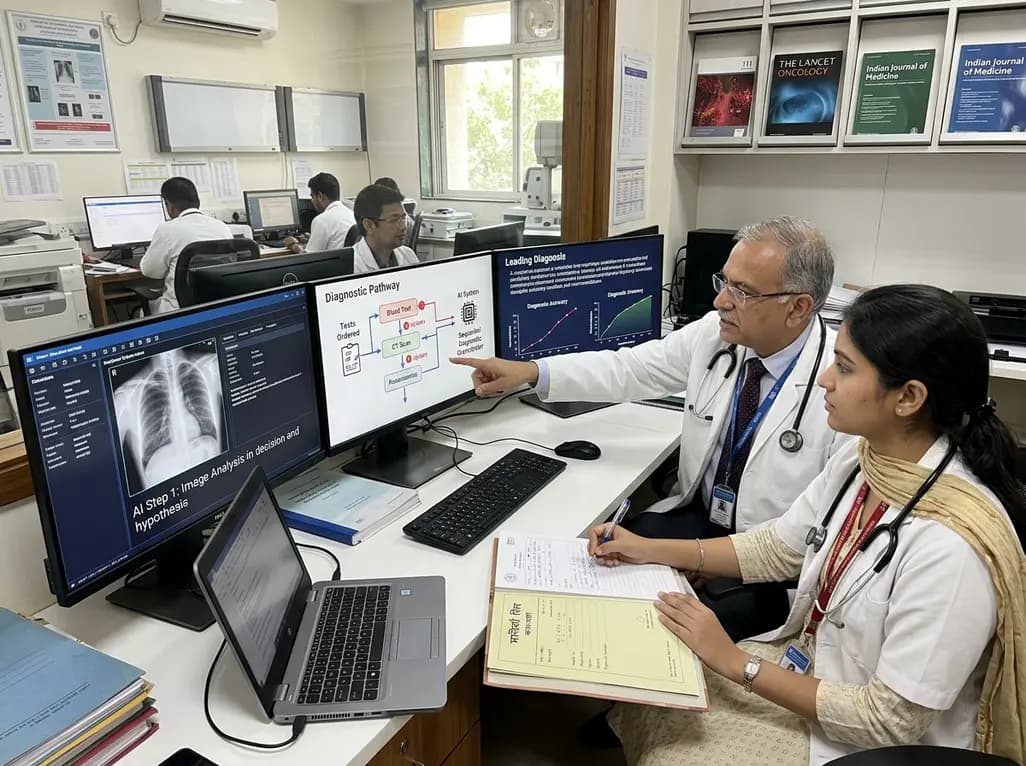
A breakthrough peer-reviewed study demonstrates that a sequential AI diagnosis system can mirror real-world clinical reasoning. By ordering stepwise tests and updating hypotheses dynamically, this multi-agent orchestrator achieved superior diagnostic accuracy while reducing investigative costs.
Today

A prenatal case highlights severe glutaric acidemia type II presenting as bilateral hyperechoic cystic kidneys at 18 weeks. Whole-exome sequencing revealed a novel homozygous ETFDH frameshift variant, demonstrating the power of rapid genetic testing in fetal renal anomalies.
Today

Review how tailored exercise programs benefit frail older patients with heart failure. Explore pathophysiological mechanisms, individualized training prescriptions, and strategies to overcome adherence barriers in clinical practice.
Yesterday

This comparative study evaluates posterior labral tears with and without glenohumeral instability, highlighting distinct demographic patterns, MRI underestimation in stable shoulders, and successful arthroscopic repair outcomes.
Yesterday

A clinical study demonstrates that early intervention with tocilizumab, either as monotherapy or bridged with corticosteroids, achieves significant proptosis reduction and resolves active inflammation in treatment-naive thyroid eye disease.
Yesterday
