.webp&w=384&q=75)

Loading, please wait...
Loading, please wait...

Mesial temporal lobe epilepsy remains the most prevalent form of medically refractory focal epilepsy in adults. Mesial temporal sclerosis represents the primary histopathological cause driving this disabling drug-resistant condition. Consequently, mesial temporal sclerosis surgery provides a proven curative option for candidates when antiepileptic pharmacological regimens fail. Surgical intervention frequently establishes long-term seizure freedom and enhances patient functioning. However, clinical outcomes demonstrate noticeable variability across different patient cohorts. Cohort investigations indicate that resective procedures achieve seizure freedom rates between 50% and 75% at two years postoperatively. Anterior temporal lobectomy typically attains seizure freedom rates near 70%, outperforming more restricted techniques. Nonetheless, identifying which candidates will derive maximal benefit remains a paramount clinical objective. Multidisciplinary teams must evaluate preoperative predictors diligently to optimize patient selection and surgical success. Therefore, systematic analyses synthesize clinical, electrophysiological, and neuroimaging factors to clarify prognostic determinants. By evaluating these variables rigorously, clinicians can improve presurgical counseling and avoid inappropriate resections. Furthermore, standardized presurgical evaluations streamline operative planning across tertiary epilepsy centers. Ultimately, recognizing reliable predictive markers transforms surgical decision-making and patient outcomes.
Multimodal diagnostic concordance stands out as the most powerful determinant of postoperative seizure freedom. Specifically, optimal surgical prognostication requires complete alignment across three fundamental diagnostic modalities. This triad combines unilateral hippocampal sclerosis on structural imaging with unilateral ictal onset on electroencephalography. In addition, concordant ipsilateral temporal hypometabolism on fluorodeoxyglucose positron emission tomography solidifies this favorable profile. When these three diagnostic pillars converge seamlessly onto a single temporal lobe, surgical success rates peak reliably. Furthermore, this tripartite agreement confirms that the epileptogenic zone aligns directly with the surgically resectable anatomical substrate. Conversely, discordant diagnostic data disrupt prognostic certainty and complicate clinical decisions. If neuroimaging reveals unilateral hippocampal pathology but electrophysiological monitoring demonstrates contralateral or bilateral seizure onsets, postoperative outcomes decline sharply. Similarly, conflicting functional metabolic patterns signal complex epileptogenic networks that extend beyond conventional surgical margins. Therefore, presurgical evaluation protocols cannot rely on structural imaging in isolation. Clinicians must demand clear electro-clinical and metabolic alignment before finalizing resection boundaries. Consequently, comprehensive noninvasive evaluations allow multidisciplinary teams to select optimal surgical candidates. Ultimately, verifying concordance across independent diagnostic modalities remains the gold standard for surgical planning.
The presence of bilateral preoperative abnormalities consistently portends less favorable postoperative seizure control. In particular, bilateral independent interictal epileptiform discharges on electroencephalography correlate with elevated rates of surgical failure. These bilateral discharges often indicate widespread epileptogenicity rather than a discrete, resectable unilateral focus. Similarly, bilateral temporal hypometabolism detected on functional neuroimaging indicates widespread network disturbances. When bilateral cerebral abnormalities exist, focal resection frequently fails to eradicate all epileptogenic tissue. As a result, persistent postoperative seizures often frustrate both patients and clinicians. In contrast, strictly unilateral abnormalities provide clear boundaries for surgical intervention. Moreover, extensive extratemporal electrographic involvement or discordant functional patterns warrant extreme caution during presurgical case discussions. Clinicians should never interpret subtle unilateral hippocampal volume changes as definitive evidence when widespread network disturbances coexist. In such equivocal scenarios, multidisciplinary teams frequently recommend extended invasive monitoring with intracranial stereotactic electroencephalography. Therefore, recognizing bilateral electrophysiological and metabolic red flags prevents inappropriate surgical resections. In addition, thorough risk disclosure helps set realistic expectations for patients harboring bilateral abnormalities. Ultimately, identifying negative predictors protects surgical candidates from unnecessary operative morbidity.
Surgical technique directly influences long-term seizure freedom and cognitive outcomes in mesial temporal lobe epilepsy. Historically, anterior temporal lobectomy has served as the primary surgical benchmark for treating hippocampal sclerosis. Clinical cohort analyses consistently show that anterior temporal lobectomy produces seizure freedom rates near 70% at two years postoperatively. However, this extensive resection carries well-documented neurocognitive risks, especially verbal memory impairment following dominant hemisphere surgery. Consequently, neurosurgeons developed selective amygdalohippocampectomy to spare the lateral neocortex and preserve functional cognitive networks. Selective approaches resect the mesial structures while reducing neocortical disruption. In addition, stereotactic laser interstitial thermal therapy has emerged as a minimally invasive alternative for selected candidates. This laser ablation technique achieves meaningful seizure reduction with reduced operative recovery times. Nonetheless, broader resective techniques like anterior temporal lobectomy typically yield marginally superior seizure control compared to restricted ablative methods. Furthermore, incomplete resection of sclerotic tissue or residual parahippocampal structures substantially increases the likelihood of surgical failure. Therefore, surgical teams must carefully balance the likelihood of complete seizure freedom against potential neuropsychological deficits. Overall, choosing between standard lobectomy and selective procedures demands individualized clinical assessment.
Recent neuroimaging research has explored whether detailed microstructural metrics refine preoperative outcome prediction. Researchers have extensively analyzed hippocampal subfield volumetry and histopathological sclerosis subtypes to uncover nuanced prognostic indicators. Surprisingly, evidence demonstrates that specific hippocampal subfield volumes and subfield sclerosis classifications provide negligible predictive value regarding postoperative seizure freedom. In fact, gross qualitative magnetic resonance confirmation of hippocampal atrophy and hyperintensity remains far more clinically meaningful than complex subfield segmentations. Furthermore, clinical variables provide critical prognostic context during evaluation. Patients with a history of early childhood febrile status epilepticus frequently demonstrate classic unilateral pathology and favorable postoperative trajectories. Conversely, prolonged epilepsy duration before surgical intervention correlates with progressive network reorganization and lower odds of long-term seizure freedom. Therefore, clinicians must avoid delaying surgical referrals for drug-resistant patients who fail two appropriate antiseizure medications. In addition, comprehensive neuropsychological assessments establish reliable baseline cognitive profiles and assist in predicting postoperative verbal memory decline. As a result, clinical decision-making relies primarily on macrostructural imaging, electrophysiology, and disease duration rather than experimental volumetric indices. Multidisciplinary teams achieve the best outcomes by adhering to established, reproducible prognostic criteria.
Multimodal diagnostic concordance represents the most reliable predictor of postoperative seizure freedom. Specifically, patients who exhibit clear unilateral hippocampal sclerosis on neuroimaging, unilateral ictal onset during video-electroencephalography, and concordant ipsilateral temporal hypometabolism on functional positron emission tomography consistently achieve the highest rates of long-term seizure freedom following surgical resection.
Bilateral independent epileptiform discharges on electroencephalography consistently signal a poorer surgical prognosis. These widespread electrical abnormalities indicate extensive network hyperexcitability that transcends a unilateral focus. Consequently, focal temporal resection often fails to eliminate all seizure activity, leading to lower postoperative remission rates and requiring cautious patient counseling prior to intervention.
Current systematic clinical evidence demonstrates that quantitative hippocampal subfield volumetry and histopathological sclerosis classifications do not meaningfully improve postoperative outcome prediction. Instead, standard qualitative magnetic resonance imaging confirming visible hippocampal atrophy, combined with congruent electrophysiological and metabolic localization, provides superior and sufficient prognostic accuracy for clinical decision-making and surgical planning.
Disclaimer: This content is for informational and educational purposes only... Refer to the latest local and national guidelines for clinical practice.
References

Read summarized clinical updates, watch expert medical content, and earn CME certifications right from your smartphone.
Open your smartphone camera to scan and install.





A systematic review highlights that multimodal presurgical concordance across MRI, EEG, and PET reliably predicts seizure freedom in mesial temporal sclerosis surgery, while bilateral abnormalities increase failure risks.
Today

A North Texas pilot study reveals that combining virtual physician consultations with in-person house calls safely manages adult pneumonia. By utilizing CRB-65 severity scores, clinicians effectively triaged patients, providing home-based recovery while directing higher-risk individuals to emergency care.
Today

A quasi-experimental study demonstrates that culturally tailored educational interventions significantly boost HPV knowledge and vaccination intentions. These findings provide actionable strategies for healthcare providers in India to overcome vaccine hesitancy and advance cervical cancer prevention.
Today
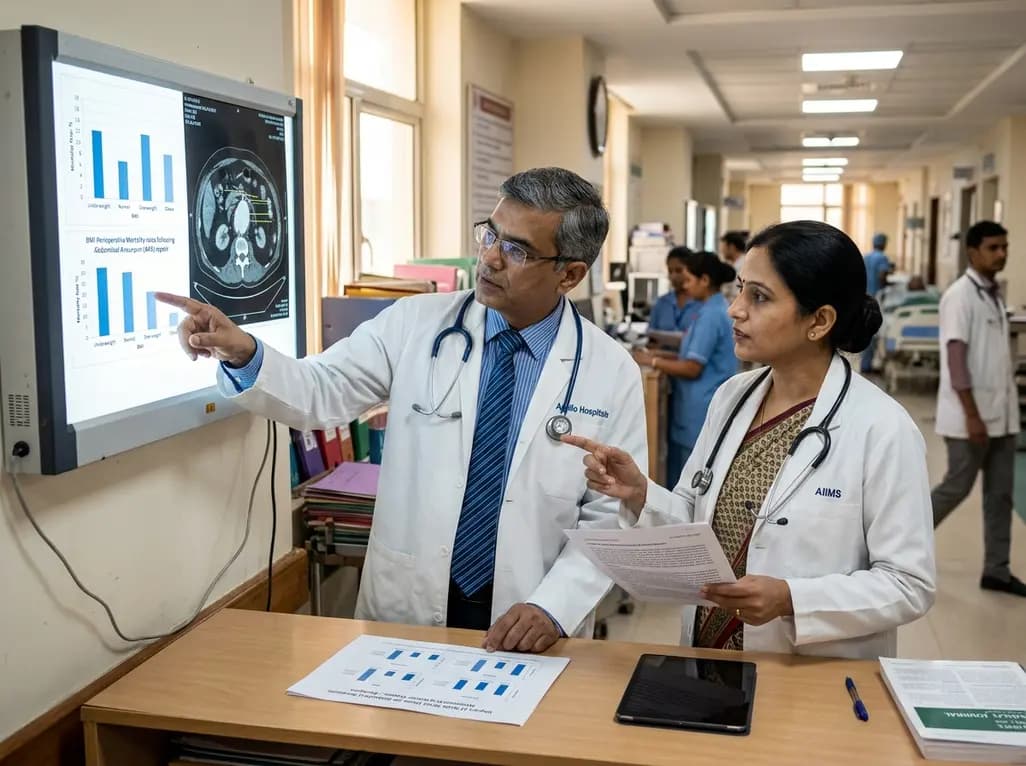
A comprehensive meta-analysis evaluates the association between Body Mass Index and outcomes following abdominal aortic aneurysm repair. Discover how overweight and obesity correlate with lower mortality while underweight status confers heightened risk, challenging conventional preoperative risk stratification.
Today

The SOLARIO trial shows that a short course (≤7 days) of systemic antibiotic therapy is noninferior to long courses (≥4 weeks) in orthopedic infections treated with local antibiotic carriers, with significantly fewer adverse events.
Today
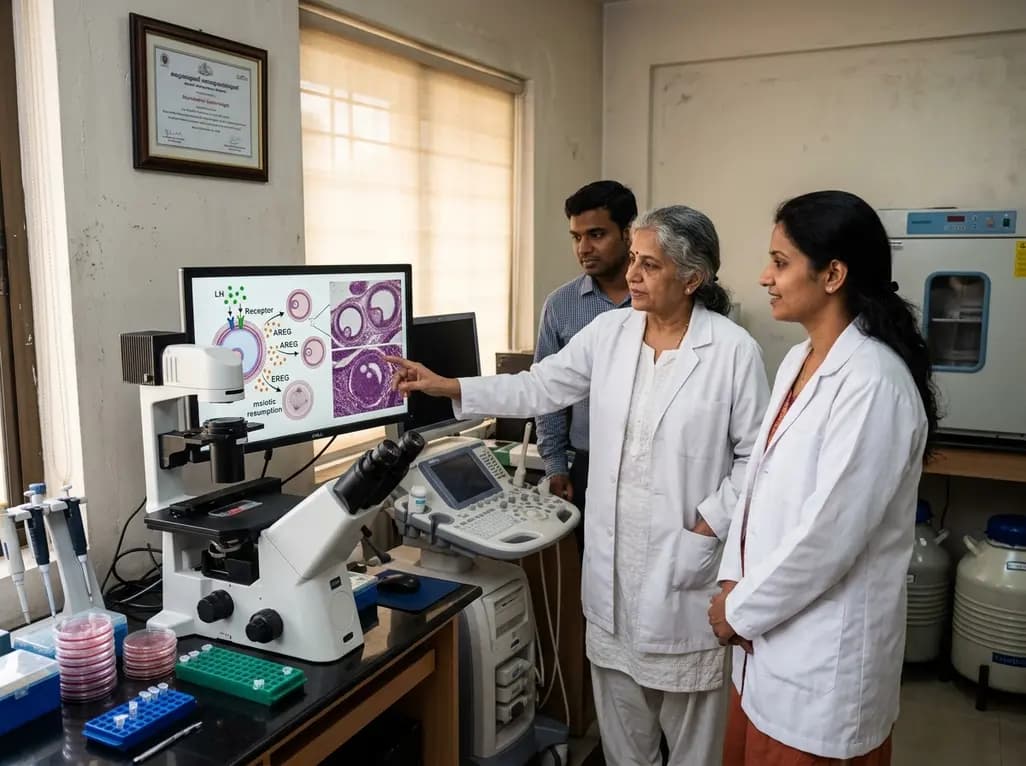
New research reveals that preovulatory follicles communicate via LH-induced paracrine signaling. Diffusible EGF ligands epiregulin and amphiregulin coordinate oocyte meiotic resumption across neighboring follicles, challenging traditional concepts of follicular autonomy.
Today
