.webp&w=384&q=75)

Loading, please wait...
Loading, please wait...

Reducing kinesiophobia is essential for successful postoperative recovery in older adults. A recent randomized controlled trial investigated the impact of preoperative education for kinesiophobia on patients undergoing total knee arthroplasty (TKA). The study demonstrated that nurse-led interventions significantly lower anxiety and improve mobilization indicators. Consequently, structured education before the procedure can alleviate these fears. Furthermore, addressing psychological barriers ensures that patients feel more prepared for the rehabilitation process.
The trial included 120 participants divided into experimental and control groups. Specifically, the experimental group received specialized education while the control group received standard hospital-based information. Results showed that the experimental group experienced significantly lower levels of kinesiophobia 24 hours after mobilization. Furthermore, these patients reported reduced anxiety on the morning of their surgery. Therefore, the nurse-led approach proved more effective than traditional methods. In addition, the study highlighted that early intervention is key to managing patient expectations.
Moreover, the intervention directly influenced physical activity. Patients in the experimental group initiated mobilization much earlier than those in the control group. Additionally, they recorded a significantly higher number of steps after the operation. By addressing the psychological barriers to movement, nurses helped patients regain their functional independence faster. Specifically, the use of smart bracelets allowed for precise tracking of movement metrics. This suggests that psychological preparedness is just as vital as physical readiness for surgery.
In conclusion, implementing nurse-led programs can drastically improve the surgical experience for older adults. Reducing the fear of movement through targeted education leads to better mobilization and lower stress. Healthcare facilities should consider integrating these protocols into standard preoperative care to enhance recovery rates. Moreover, specialized training for nursing staff can ensure these educational modules remain effective and patient-centered.
Kinesiophobia refers to an excessive and irrational fear of physical movement. In knee surgery patients, it often stems from the belief that moving the joint will cause reinjury or unbearable pain, which can delay recovery.
Nurses provide structured information about the surgical process, pain management, and expected recovery milestones. This empowers patients with knowledge, reduces anxiety, and builds confidence in their ability to move safely after surgery.
Yes, studies show that patients who receive targeted preoperative education often start walking earlier after surgery and achieve higher daily step counts compared to those who receive standard care.
Disclaimer: This content is for informational and educational purposes only. It does not constitute medical advice or a professional relationship. Always consult a qualified healthcare provider for personal health concerns. Refer to the latest local and national guidelines for clinical practice.
References
Reis N et al. Nurse-led preoperative education on kinesiophobia in older adult patients undergoing total knee arthroplasty: A randomized controlled trial. Geriatr Nurs. 2026 Jun 08. doi: undefined. PMID: 42258910.
Longo UG et al. Preoperative and Postoperative Kinesiophobia Influences Postoperative Outcome Measures Following Anterior Cruciate Ligament Reconstruction: A Prospective Study. J Clin Med. 2023;12(14):4858.
Khorfan R et al. Preoperative patient education and patient preparedness are associated with less postoperative use of opioids. Surgery. 2020;167(1):15-18.

Read summarized clinical updates, watch expert medical content, and earn CME certifications right from your smartphone.
Open your smartphone camera to scan and install.





A recent RCT shows that nurse-led preoperative education significantly reduces kinesiophobia and improves mobilization in older adults undergoing knee surge...
4 months ago
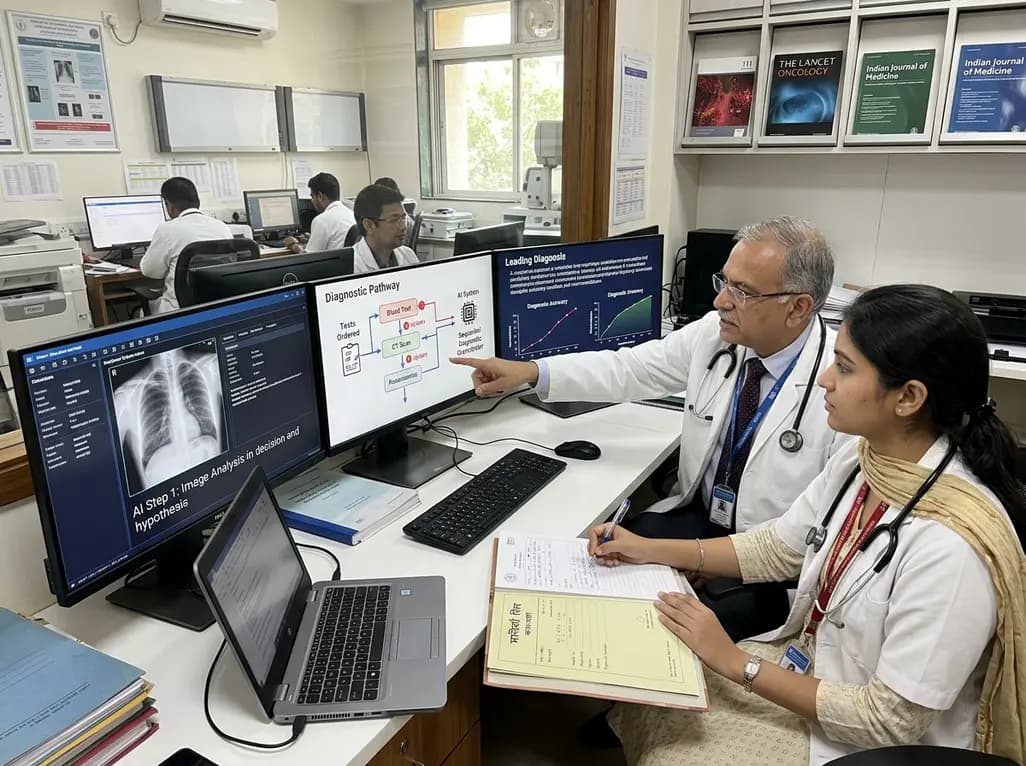
A breakthrough peer-reviewed study demonstrates that a sequential AI diagnosis system can mirror real-world clinical reasoning. By ordering stepwise tests and updating hypotheses dynamically, this multi-agent orchestrator achieved superior diagnostic accuracy while reducing investigative costs.
Today

A prenatal case highlights severe glutaric acidemia type II presenting as bilateral hyperechoic cystic kidneys at 18 weeks. Whole-exome sequencing revealed a novel homozygous ETFDH frameshift variant, demonstrating the power of rapid genetic testing in fetal renal anomalies.
Today

Review how tailored exercise programs benefit frail older patients with heart failure. Explore pathophysiological mechanisms, individualized training prescriptions, and strategies to overcome adherence barriers in clinical practice.
Yesterday

This comparative study evaluates posterior labral tears with and without glenohumeral instability, highlighting distinct demographic patterns, MRI underestimation in stable shoulders, and successful arthroscopic repair outcomes.
Yesterday

A clinical study demonstrates that early intervention with tocilizumab, either as monotherapy or bridged with corticosteroids, achieves significant proptosis reduction and resolves active inflammation in treatment-naive thyroid eye disease.
Yesterday
