.webp&w=384&q=75)

Loading, please wait...
Loading, please wait...

Substance use during pregnancy presents complex clinical challenges and increases the risk of adverse neonatal outcomes. Therefore, identifying barriers to care is vital for healthcare providers. Specifically, a recent study examined substance use treatment wait times to understand why many pregnant women experience delays in accessing necessary services. Moreover, the research utilized comprehensive data from 2,695 pregnant women across varied clinical settings.
Notably, the study highlighted how structural environments impact access. For instance, individuals experiencing homelessness faced significantly higher odds of prolonged wait times. Furthermore, patients living in states without pregnancy-priority policies experienced longer delays. Consequently, these findings suggest that social stability and legislative support are essential for timely care. Additionally, the lack of priority laws creates systemic bottlenecks for vulnerable patients.
Interestingly, some individual factors aligned with shorter wait times. Specifically, patients who were Black or Indigenous, as well as those with co-occurring mental health disorders, showed lower odds of facing long delays. Moreover, referral sources played a major role. Compared to self-referral, individuals whom healthcare providers referred accessed treatment more quickly. Therefore, this underscores the importance of proactive clinician involvement in the intake process. In conclusion, both individual and systemic factors dictate the speed of treatment entry. Furthermore, clinicians should prioritize early screening to bypass potential barriers.
State laws that prioritize pregnant women for treatment slots effectively reduce wait times. These policies ensure that facilities dedicate resources specifically to this high-risk group, facilitating faster clinical intervention.
Homelessness serves as a significant barrier to care. Patients without stable housing often struggle with logistics and communication, which leads to longer substance use treatment wait times compared to those living independently.
Disclaimer: This content is for informational and educational purposes only. It does not constitute professional medical advice, diagnosis, or treatment. Always seek the advice of your physician or other qualified health provider with any questions you may have regarding a medical condition. Refer to the latest local and national guidelines for clinical practice.
References

Read summarized clinical updates, watch expert medical content, and earn CME certifications right from your smartphone.
Open your smartphone camera to scan and install.





A study of 2,695 pregnant women identifies key factors like homelessness and state policies that influence wait times for substance use treatment....
8 months ago
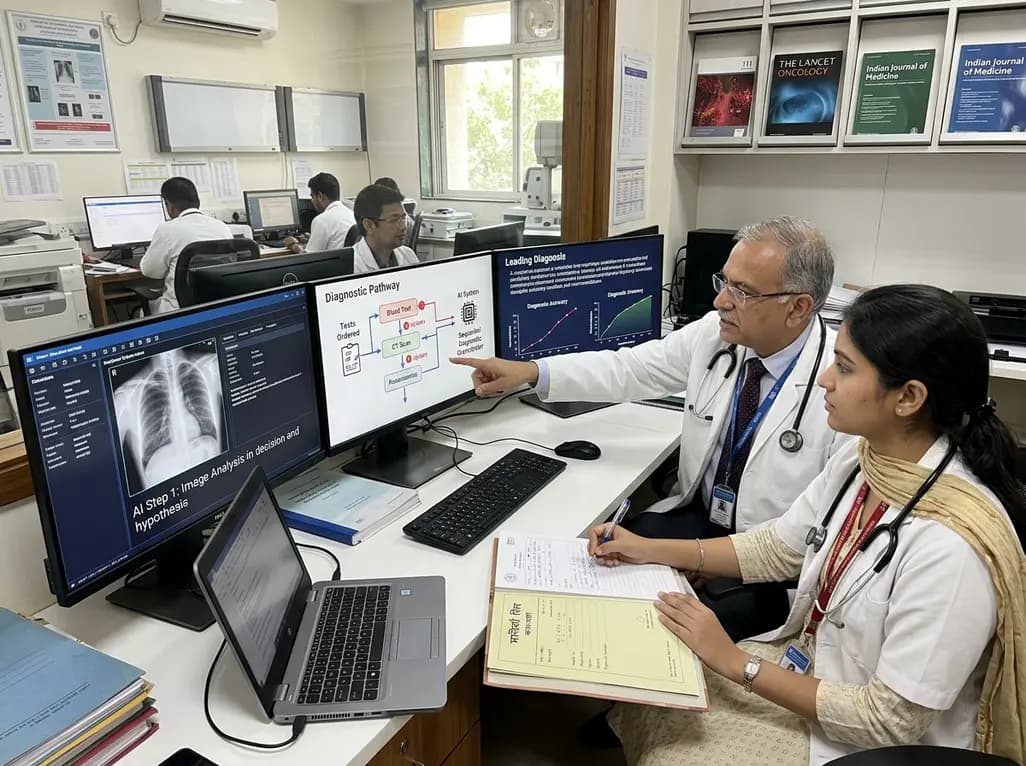
A breakthrough peer-reviewed study demonstrates that a sequential AI diagnosis system can mirror real-world clinical reasoning. By ordering stepwise tests and updating hypotheses dynamically, this multi-agent orchestrator achieved superior diagnostic accuracy while reducing investigative costs.
Today

A prenatal case highlights severe glutaric acidemia type II presenting as bilateral hyperechoic cystic kidneys at 18 weeks. Whole-exome sequencing revealed a novel homozygous ETFDH frameshift variant, demonstrating the power of rapid genetic testing in fetal renal anomalies.
Today

Review how tailored exercise programs benefit frail older patients with heart failure. Explore pathophysiological mechanisms, individualized training prescriptions, and strategies to overcome adherence barriers in clinical practice.
Yesterday

This comparative study evaluates posterior labral tears with and without glenohumeral instability, highlighting distinct demographic patterns, MRI underestimation in stable shoulders, and successful arthroscopic repair outcomes.
Yesterday

A clinical study demonstrates that early intervention with tocilizumab, either as monotherapy or bridged with corticosteroids, achieves significant proptosis reduction and resolves active inflammation in treatment-naive thyroid eye disease.
Yesterday
