.webp&w=384&q=75)

Loading, please wait...
Loading, please wait...

Managing a non-acute subdural hematoma presents substantial clinical challenges in modern neurosurgical practice. Subacute and chronic subdural collections frequently affect elderly individuals who carry multiple underlying comorbidities. Although conventional surgical evacuation reliably provides immediate intracranial decompression, post-treatment recurrence rates historically remain high, ranging from 10% to 30%. Consequently, neurosurgeons and neurointerventionalists increasingly embrace multimodal paradigms that blend open operative techniques with targeted endovascular therapies. However, identifying precisely which patient profiles and procedural factors drive recurrence has remained an active area of investigation.
A multicenter cohort study across six high-complexity referral centers investigated 247 cases of non-acute subdural hematoma managed between January 2023 and June 2025. The investigators analyzed clinical, radiological, surgical, and endovascular variables to clarify independent predictors of symptom relapse and surgical reintervention. Overall, recurrence occurred in 20.6% of hematomas, and 17.8% required reintervention. Ultimately, the findings offer vital prognostic markers that assist clinicians in risk-stratifying patients and customizing multimodal interventions to improve long-term neurological recovery.
Patient-specific systemic factors demonstrated the strongest statistical association with hematoma recurrence. Notably, active tobacco smoking increased the odds of recurrence more than ninefold compared to non-smoking status. Nicotine and chronic carbon monoxide exposure impair microvascular integrity and stimulate fragile neoangiogenesis within the subdural outer membrane. Therefore, persistent micro-hemorrhages readily perpetuate fluid accumulation inside the subdural space.
Additionally, chronic arterial hypertension significantly elevated recurrence risk by more than five times. Elevated hydrostatic pressure within delicate, newly formed neocapillaries accelerates microvascular rupture, thereby driving hematoma re-expansion. Furthermore, advanced age emerged as another independent risk factor. Age-related cerebral atrophy enlarges the potential subdural space, which reduces brain re-expansion and hampers mechanical tamponade against bridging veins. Consequently, clinicians must maintain heightened post-procedural surveillance for elderly hypertensive smokers presenting with a non-acute subdural hematoma.
Computed tomography (CT) remains the primary diagnostic modality for evaluating subdural collections. In this multicenter analysis, baseline hematoma thickness on non-contrast head CT showed an independent correlation with post-treatment recurrence. Specifically, every millimeter increase in initial hematoma depth heightened the odds of recurrence by 20%. Greater hematoma thickness typically reflects extensive neo-membrane formation, severe underlying cortical collapse, and larger volumes of chronic liquefactive collection.
Moreover, thick hematomas frequently harbor complex internal architecture, including internal septations and multi-layered hyperdense components. These internal features correlate with active, ongoing exudation and localized fibrinolysis. When cortical parenchyma fails to fully re-expand after drainage, persistent fluid pockets remain behind. Thus, pre-procedural imaging measurements provide practical prognostic utility for predicting recurrence and guiding decisions regarding adjunctive therapies.
Surgical technique dramatically influences post-evacuation stability and long-term resolution. Among operative variables, the presence of post-drain pneumocephalus emerged as an extremely potent predictor of recurrence, elevating odds more than thirteen-fold. Entrapped subdural air disrupts close brain-dura apposition, prevents the cerebral mantle from re-expanding, and creates a negative pressure differential that encourages reactive effusion.
In contrast, extending the duration of closed subdural durostomy drainage provided a statistically significant protective effect. Each additional period of continuous catheter drainage substantially lowered the odds of hematoma reaccumulation. Prolonged closed drainage continuously evacuates breakdown products, residual fibrinolytics, and inflammatory cytokines from the subdural space. As a result, maintaining a functional closed drain until fluid clearance occurs reduces the likelihood of repeat surgery.
Endovascular techniques have transformed modern subdural hematoma care, with middle meningeal artery (MMA) embolization offering targeted devascularization. In this study, combining surgical evacuation with MMA embolization reduced the odds of recurrence by 56% compared to surgery alone. The middle meningeal artery supplies the fragile network of sinusoidal neocapillaries permeating the subdural capsule. Consequently, blocking this arterial inflow effectively halts repetitive micro-bleeding and promotes gradual reabsorption of the chronic fluid cavity.
Interestingly, specific endovascular technical variables, such as microcatheter position and choice of embolic agent, did not independently influence recurrence rates. This finding suggests that the fundamental therapeutic value stems from achieving comprehensive devascularization of the convexity dura rather than minor technical nuances. Combining mechanical evacuation for acute mass effect with embolization for biological stabilization represents a robust therapeutic approach.
Optimizing clinical outcomes for patients with non-acute subdural hematoma requires a coordinated, multidisciplinary strategy. Neurosurgeons, emergency physicians, and geriatric specialists must collaborate to evaluate anatomical dimensions, baseline comorbidities, and vascular architecture before selecting an intervention. For high-risk individuals—such as elderly smokers with hypertension and massive hematomas—upfront multimodal treatment with surgical drainage and adjunctive MMA embolization provides superior durability.
Furthermore, surgical protocols should prioritize meticulous operative steps that minimize air entrapment during durostomy closure. Postoperatively, surgical teams should maintain closed subdural drainage for an adequate duration rather than rushing premature catheter removal. By actively controlling vascular risk factors, optimizing surgical drainage mechanics, and integrating endovascular embolization, clinical teams can significantly reduce reintervention rates and improve functional independence in this vulnerable demographic.
The primary clinical predictors include active cigarette smoking, chronic arterial hypertension, and advanced patient age. These factors impair vascular integrity, elevate capillary hydrostatic pressure, and delay brain re-expansion, thereby creating an environment prone to repeated microvascular bleeding and persistent subdural fluid accumulation.
Surgical drainage rapidly relieves intracranial mass effect, whereas middle meningeal artery embolization permanently blocks arterial blood supply to the fragile neocapillaries within the hematoma capsule. Consequently, this combined strategy eliminates ongoing micro-hemorrhages, accelerates collection resolution, and reduces recurrence odds by more than half.
Entrapped subdural air prevents the compressed cerebral mantle from re-expanding against the inner table of the skull. This mechanical disruption maintains a persistent dead space and creates pressure differentials that foster the reaccumulation of inflammatory subdural fluid and repeat hemorrhage.
Disclaimer: This content is for informational and educational purposes only. It is not intended to provide medical advice or to be used as a substitute for professional diagnosis or treatment. The findings and perspectives shared here are for educational purposes only and should not be considered an endorsement. Refer to the latest local and national guidelines for clinical practice.
References

Read summarized clinical updates, watch expert medical content, and earn CME certifications right from your smartphone.
Open your smartphone camera to scan and install.





A multicenter study identifies critical clinical, radiological, and surgical predictors of recurrence and reintervention in non-acute subdural hematoma, highlighting the protective benefit of combining surgery with middle meningeal artery embolization.
last month

A groundbreaking review highlights mitochondrial quality control as a pivotal gating layer between metabolite signaling and regulated cell death, offering transformative therapeutic avenues across cardiology, oncology, and critical care.
Today

A large retrospective study evaluates the screening accuracy, positive predictive value, and test failure rates of noninvasive prenatal testing (NIPT) in assisted reproductive technology (ART) pregnancies compared to spontaneous conceptions, highlighting key considerations for pretest counseling.
Today
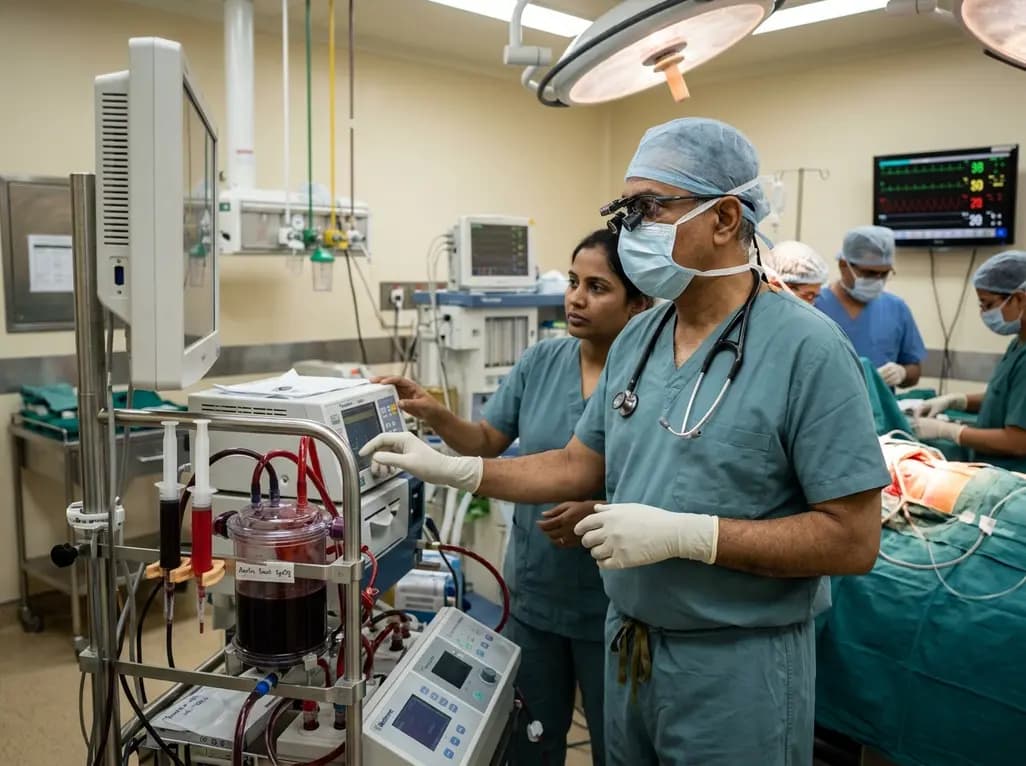
Differential oxygenation during peripheral TA-NRP can cause undetected coronary hypoxemia due to arch vessel clamping. A novel circuit with continuous aortic root monitoring detects desaturation early, facilitating left ventricular unloading and preventing allograft dysfunction and unnecessary heart discard.
Today

A randomized controlled trial compared ultrasound-guided intra-articular injections of PRP, hydrolyzed type I collagen, and hyaluronic acid in knee osteoarthritis. All therapies demonstrated significant improvements in WOMAC and pain scores at six months, supporting hydrolyzed collagen as a viable biological option.
Today

A scoping review evaluates 116 studies on AI in women's reproductive health, finding that 83.6% carry high risk of bias. While ensemble models show promise, disparities and lack of validation hinder LMIC deployment.
Today
