.webp&w=384&q=75)

Loading, please wait...
Loading, please wait...

Timely depression treatment use remains a significant hurdle in modern mental healthcare. Historically, clinicians assumed that persistent trait severity or diminished social support primarily prompted patients to seek psychiatric intervention. However, cross-sectional studies often fail to distinguish chronic baseline distress from acute individual changes. A landmark longitudinal study evaluated 1,417 individuals across seven annual assessments to untangle these complex variables. The researchers examined how fluctuations in mood, peer relationships, and life stressors correlate with healthcare engagement over multi-year intervals. Consequently, the findings revealed that acute within-person symptom elevations, rather than overall average pathology, serve as the primary catalyst driving clinical consultation. Therefore, understanding these personal threshold shifts helps primary care physicians and psychiatrists capture critical intervention windows before depressive crises escalate.
Conventional epidemiological analyses traditionally focus on between-person comparisons, which examine whether more depressed individuals utilize services more frequently than healthier peers. In contrast, disaggregating within-person variance evaluates how a single patient deviates from their own habitual emotional baseline. The investigation demonstrated that within-person increases in depressive severity independently predicted concurrent depression treatment use. Moreover, these personal symptom spikes continued to predict therapeutic service engagement at the subsequent annual follow-up. This robust temporal association persisted even after researchers adjusted for subjective stressors and interpersonal support. Thus, individuals do not necessarily seek medical attention simply because their absolute distress score is high compared to normative samples. Instead, patients actively reach out for therapeutic support when their current suffering markedly exceeds their personal typical experience.
Mental health professionals frequently hypothesize that erosion of family networks or mounting external hardships directly initiates psychiatric consultations. Surprisingly, the study observed that fluctuations in family or friend support showed inconsistent associations with clinical engagement. Similarly, self-reported life stressors did not reliably predict service utilization once analysts controlled for depressive severity. While strong interpersonal circles provide vital emotional buffers, their presence or temporary absence does not consistently dictate formal help-seeking decisions. Rather, internal psychological distress remains the decisive factor compelling an individual to access professional care. Consequently, clinicians must recognize that patients with robust family networks remain equally vulnerable to sudden care needs during acute symptom decompensation. Therefore, healthcare providers cannot rely solely on reported social stress as a surrogate marker for escalating clinical urgency.
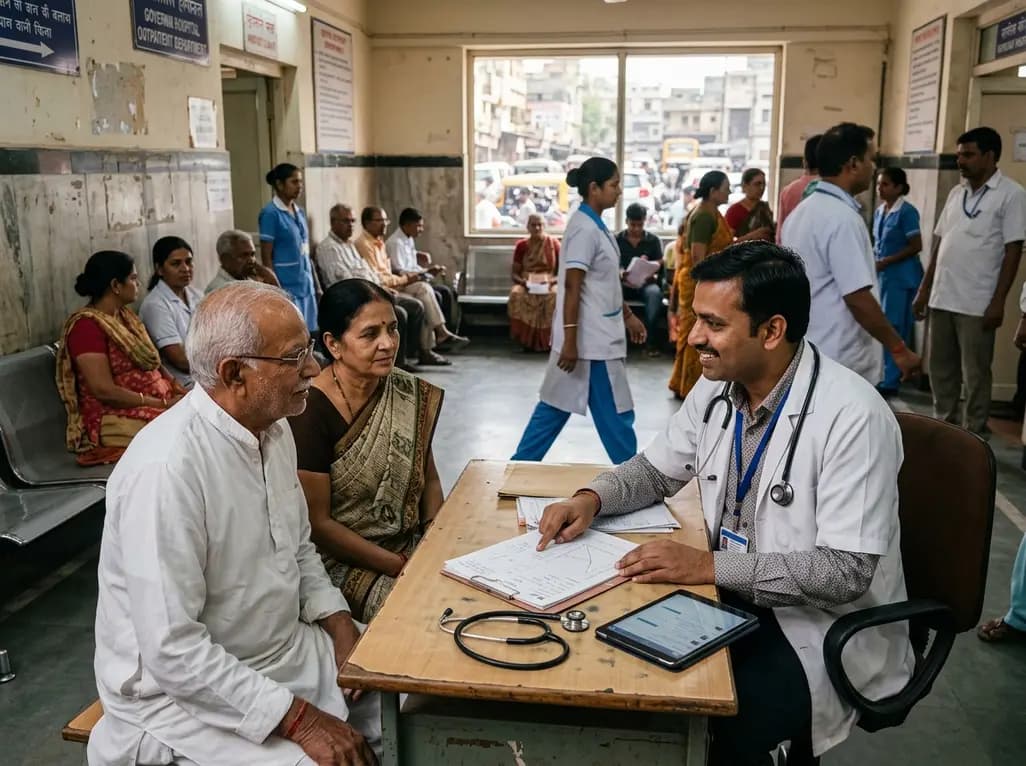
These empirical insights carry profound clinical relevance for general practitioners and psychiatric triage teams across outpatient settings. In India, where mental health stigma frequently delays formal consultation, patients often present to primary care physicians with vague somatic complaints. Because patients seek intervention primarily when symptoms spike beyond their personal baseline, opportunistic screening becomes paramount. Clinicians should incorporate rapid standardized assessments, such as the Patient Health Questionnaire, during routine medical checkups. Furthermore, practitioners should ask patients whether their current mental state feels markedly worse than their personal normal state over recent months. Identifying these subjective deviations allows physicians to validate patient distress and recommend timely psychiatric referral. As a result, early clinical detection prevents chronic morbidity, self-harm risks, and prolonged psychosocial impairment.
To optimize ongoing depression treatment use, health systems must implement proactive longitudinal monitoring strategies rather than relying on sporadic visits. Primary care clinics can deploy digital symptom trackers or periodic text-based assessments to monitor subtle mood trajectory changes. In addition, psychoeducation must teach patients and their families to recognize subjective warning signs of impending decompensation. Clinicians should also establish low-barrier access pathways, such as rapid walk-in consultations or telepsychiatry options, to capture transient motivation during acute distress. Furthermore, addressing systemic barriers like financial toxicity and medication myths encourages long-term therapeutic adherence. When healthcare systems respond swiftly to acute symptom flares, they foster patient trust and improve sustained clinical engagement across outpatient environments.
Research confirms that acute within-person increases in depressive severity primarily drive clinical service utilization. Patients seek professional help when their current distress significantly surpasses their personal typical baseline, regardless of chronic trait severity, external environmental hardships, or the perceived availability of interpersonal support networks.
Although strong social connections enhance overall emotional well-being, fluctuations in family or peer support inconsistently predict formal care seeking. Personal psychological distress remains the dominant driver of clinical consultations, meaning that patients with excellent social backing may still require timely, proactive professional intervention during symptom escalations.
Clinicians should implement regular longitudinal symptom tracking using validated rating tools during routine consultations. Inquiring whether current emotional functioning deviates sharply from the patient's individual baseline enables early detection of clinical decompensation, allowing timely psychiatric referrals before severe functional impairment occurs.
Disclaimer: This content is for informational and educational purposes only and does not constitute medical advice, diagnosis, or treatment. Healthcare professionals should exercise their independent clinical judgment when interpreting and applying this information. Clinical decisions must always be tailored to individual patient needs and circumstances. Refer to the latest local and national guidelines for clinical practice.
References

Read summarized clinical updates, watch expert medical content, and earn CME certifications right from your smartphone.
Open your smartphone camera to scan and install.





A landmark multi-year study reveals that within-person symptom increases, rather than baseline severity or social support, directly drive depression treatment use. Discover practical clinical insights to detect acute depressive fluctuations and improve timely care engagement in psychiatric and primary care practice.
Today

Pancreatic cancer cachexia affects over 80% of patients, driving severe muscle wasting, systemic inflammation, and treatment intolerance. This review highlights key pathophysiological drivers, exocrine insufficiency, objective CT imaging, and emerging therapies like GDF-15 inhibitors to improve clinical outcomes.
Today

A scoping review reveals how pregnancy affects phonation through laryngeal edema and reduced phonation time rather than major acoustic pitch alterations. Learn how to identify, evaluate, and manage vocal symptoms in expectant mothers.
Today
According to WHO data, average lifespan reached 73.3 years in 2023, recovering from pandemic lows. However, healthy life expectancy lags at 62.8 years due to surging noncommunicable conditions like cardiovascular disease and dementia, demanding proactive primary screening and sustained chronic care.
Today

Researchers have engineered an artificial sensory-pain integrated receptor using a multi-threshold organic synaptic transistor. The system distinguishes benign touch from noxious stimuli, enabling safer, more responsive prosthetic limbs with built-in memory and simplified hardware architecture.
Today

Medical robotics is transitioning beyond operative suites into diagnostics, cardiology, and endocrinology. Explore how innovations in tele-robotics, AI integration, and nanomedicine are overcoming geographical barriers and transforming precision healthcare delivery across India's evolving disease landscape.
Today
