.webp&w=384&q=75)

Loading, please wait...
Loading, please wait...

Mental health disorders frequently lead to significant work disability and extended periods of absence. Consequently, identifying patients at high risk for Mental Health Sick Leave early in the treatment process is essential for effective occupational rehabilitation. A recent population-based study published in the Journal of Occupational Rehabilitation analyzed data from 2,765 patients to determine which clinical and sociodemographic factors best predict leave status and duration.
The research highlighted that nearly one-fourth of patients were already on sick leave at the time of their referral to clinical psychology. Interestingly, the study found that routine clinical variables often possess limited predictive value. Instead, the strongest indicator of both current status and future duration was a patient\'s prior history of sick leave. Furthermore, patients receiving psychopharmacological treatment or those in a stable relationship showed higher odds of being on leave at the point of referral.
Conversely, the study observed that female sex was associated with lower odds of being on leave. This finding suggests that gender-specific factors may influence help-seeking behavior and work-related decisions. However, when researchers adjusted for prior history, these sociodemographic variables became less significant. This shift underscores the importance of integrating work-related history into electronic health records (EHRs) to improve clinical decision-making.
To reduce long-term work disability, clinicians should prioritize the assessment of a patient\'s occupational history. Standardized measures of work-related functioning within EHRs can facilitate earlier identification of high-risk individuals. Moreover, healthcare providers must recognize that a history of Mental Health Sick Leave is a "red flag" for prolonged disability. By addressing these factors early, medical professionals can tailor interventions to support sustained return-to-work outcomes.
The most accurate predictor is a prior history of sick leave episodes. While clinical diagnosis and treatment are important, the past pattern of work absence provides the most reliable indicator of risk for future prolonged disability.
EHRs can assist by incorporating standardized clinical and work-related measures. This integration allows clinicians to identify high-risk patients during routine referrals and implement early interventions to prevent permanent work disability.
Disclaimer: This content is for informational and educational purposes only. It does not constitute medical advice or a substitute for professional healthcare consultation. Refer to the latest local and national guidelines for clinical practice.
References
González-Blanch C et al. Predictors of Mental Health-Related Sick Leave at Referral to Clinical Psychology: A Population-Based Study Using Electronic Health Records. J Occup Rehabil. 2026 May 18. doi: 10.1007/s10926-026-10414-7. PMID: 42151719.
Saxena V. A Review of Occupational Mental Health Status in India. OJHAS. 2024 Jan 03. Available from: ojhas.org.
Inoue S et al. Predicting mental health–related sick leave using Stress Check data: Development and validation of a workplace risk model. J Occup Health. 2026. doi:10.1093/joccuh/uiag011.

Read summarized clinical updates, watch expert medical content, and earn CME certifications right from your smartphone.
Open your smartphone camera to scan and install.





A study of 2,765 patients reveals that prior sick leave history is the most critical predictor of mental health-related work disability....
5 months ago

Recent epidemiological data reveals a dramatic surge in summer heat mortality driven by human-induced climate warming. This analysis explores the pathophysiological impacts on cardiac and renal systems, diagnostic dilemmas in death certification, and essential emergency cooling protocols for acute clinical care.
Today

Odisha has established India's first state-level clinical protocol specifically tailored for pregnant women with sickle cell disease. Developed with NHM and UNICEF, the framework provides structured antenatal screening, crisis mitigation, standardized referral pathways, and specialized interdisciplinary care.
Today

India is advancing preventive healthcare by integrating genomics, artificial intelligence, and quantum technologies. With the SANGAM programme sequencing one million Indian genomes, clinicians can unlock personalized therapies, detect cardiometabolic risks early, and curb the burden of diabetes and heart disease.
Today
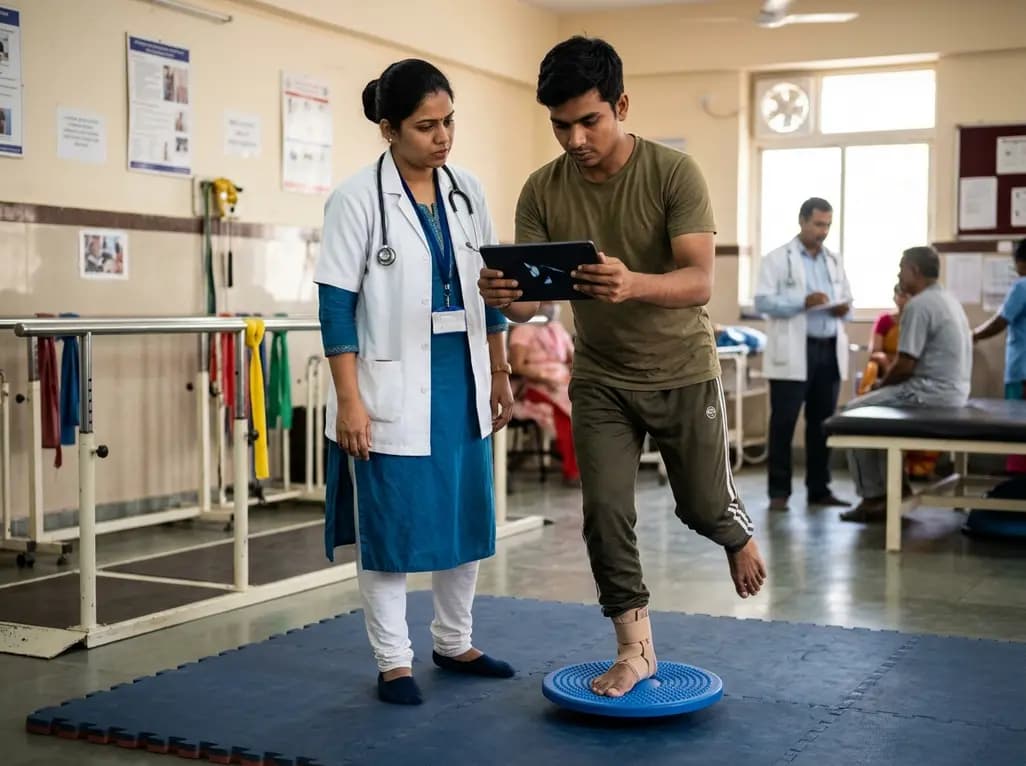
A randomized controlled trial demonstrates that an eight-week dual-task training intervention significantly improves static and dynamic postural control over standard balance exercises in individuals with chronic ankle instability, addressing critical neurocognitive deficits during athletic and daily activities.
Today

A retrospective cohort study of 7,716 ICU patients from the MIMIC-IV database demonstrates that Gradient Boosting Decision Trees significantly outperform traditional SOFA scores in predicting in-hospital mortality among patients with sepsis and diabetes, with SHAP analysis providing clinical interpretability.
Today
