.webp&w=384&q=75)

Loading, please wait...
Loading, please wait...

Patients who present with synchronous brain metastases at lung cancer diagnosis require urgent clinical decision-making. Optimal central nervous system therapy depends directly on tumor histology and driver mutation status. However, complete histopathologic assessment and molecular next-generation sequencing frequently require several weeks. Consequently, clinicians face difficult trade-offs while waiting for tissue confirmation. Frontline systemic agents, stereotactic radiosurgery, whole-brain radiation therapy, and surgical resection each carry distinct risks and benefits. Small cell lung cancer exhibits marked radiosensitivity, making upfront surgical resection rarely beneficial. Conversely, epidermal growth factor receptor-mutated non-small cell lung cancer often responds durably to central nervous system-penetrant tyrosine kinase inhibitors. Therefore, clinicians might safely defer upfront radiotherapy in select asymptomatic patients with targetable alterations. In contrast, epidermal growth factor receptor wild-type tumors generally require prompt local neurosurgical intervention or stereotactic irradiation. Delayed treatment can cause rapid neurological decompensation and irreversible deficits. To resolve this therapeutic dilemma, researchers developed innovative machine-learning models for rapid lung cancer subtype prediction. By leveraging routinely acquired diagnostic data, clinicians can establish informed probabilistic treatment plans on day one.
To overcome diagnostic turnaround delays, investigators designed predictive models using baseline clinical and thoracic imaging parameters. They conducted a retrospective cohort study encompassing 305 patients with metastatic lung cancer diagnosed between 2016 and 2025. Specifically, the training cohort comprised 182 patients who presented without intracranial involvement at initial staging. Meanwhile, the independent validation cohort included 123 patients presenting with documented synchronous brain metastases. The team developed LASSO logistic regression and random forest algorithms to classify tumors into three clinically actionable groups. These subgroups included small cell lung cancer, epidermal growth factor receptor-mutated non-small cell lung cancer, and epidermal growth factor receptor wild-type disease. Notably, the logistic regression models achieved areas under the receiver operating characteristic curve of 0.887 for the mutated subtype, 0.811 for small cell histology, and 0.801 for wild-type tumors. Furthermore, random forest algorithms demonstrated comparable discriminatory accuracy, achieving an area under the curve of 0.907 for mutated disease. These robust discrimination metrics demonstrate that mathematical models can effectively synthesize diverse diagnostic variables.
Integrating thoracic computed tomography findings into clinical prediction models significantly boosted overall diagnostic performance. Initially, models relying solely on basic clinical characteristics such as age, sex, and smoking history provided modest predictive accuracy. However, adding structured radiological features from initial diagnostic chest imaging substantially improved discriminatory power for both small cell lung cancer and mutated non-small cell lung cancer. Feature importance analyses revealed several radiological patterns that strongly influenced model outputs. For instance, the presence of background pulmonary fibrosis and emphysema strongly correlated with specific histologic groups. Furthermore, a miliary pattern of hematogenous dissemination, cavitation, pleural attachment, and vessel encasement provided powerful predictive signals. Small cell carcinomas frequently presented with bulky mediastinal adenopathy, central bronchial narrowing, and vessel encasement. In contrast, epidermal growth factor receptor-mutated adenocarcinomas presented more frequently with peripheral ground-glass attenuation, pleural retraction, and miliary nodular patterns in non-smokers. Consequently, extracting standardized radiological descriptions transforms routine diagnostic scans into functional surrogate biomarkers while clinicians await definitive pathology.
A granular evaluation of classification performance reveals distinct clinical strengths across the three diagnostic subsets. Specifically, three-way prediction demonstrated the highest positive predictive value for epidermal growth factor receptor-mutated tumors. This high precision provides oncology teams with substantial confidence when considering intracranial-active targeted therapies. Meanwhile, the model demonstrated exceptionally high negative predictive value for small cell lung cancer. Therefore, if the algorithm indicates a very low likelihood of small cell histology, neurosurgeons can confidently proceed with indicated craniotomies for solitary symptomatic lesions. Nevertheless, predictive algorithms never achieve absolute certainty. False-positive predictions could inappropriately delay essential intracranial radiotherapy or surgical decompression. Conversely, false-negative predictions might prompt invasive intracranial procedures in patients who would otherwise benefit from non-invasive targeted therapies. Thus, clinicians must interpret algorithmic scores as Bayesian pre-test probabilities rather than definitive diagnoses. Multidisciplinary tumor boards must always weigh these probabilistic estimates against acute neurological symptoms, lesion location, mass effect, and individual patient performance status.
Synchronous brain metastases demand seamless coordination across neurosurgery, radiation oncology, thoracic medical oncology, and diagnostic radiology. Because formal molecular testing often takes three weeks, early tumor board discussions frequently suffer from diagnostic uncertainty. Fortunately, computational modeling bridges this critical interim period by translating standard radiological reports into actionable clinical insights. When algorithms predict a high probability of oncogenic driver alterations, radiation oncologists can thoughtfully evaluate whether stereotactic radiation can safely wait for sequencing confirmation. Furthermore, neurosurgeons evaluating marginal operative candidates can defer highly invasive surgeries when algorithms indicate radiosensitive small cell disease. In resource-constrained health systems where comprehensive genomic sequencing encounters logistical barriers, such tools offer invaluable clinical triage support. Additionally, algorithmic subtype stratification facilitates prompt initiation of appropriate supportive care, such as targeted dexamethasone tapering or prophylactic antiepileptic therapy. Ultimately, integrating artificial intelligence into multidisciplinary workflows empowers clinicians to make timely, patient-centered interventions that balance systemic disease control against neurocognitive preservation.
Although these initial findings show tremendous diagnostic promise, several translational hurdles warrant careful consideration before widespread clinical deployment. First, the retrospective, single-center design necessitates rigorous prospective validation across multi-institutional, racially diverse cohorts. Second, standard radiological interpretations vary considerably across practicing radiologists, which may introduce inter-observer reporting variability. Therefore, future iterations should incorporate automated radiomic feature extraction and deep-learning segmentation directly from raw volumetric computed tomography scans. Such automation would minimize subjective reporting discrepancies and accelerate algorithmic throughput. Furthermore, incorporating emerging liquid biopsy assays, such as plasma circulating tumor DNA, could refine probabilistic predictions within days of initial presentation. In addition, health systems must establish robust governance frameworks to ensure algorithmic transparency and data privacy. Clinicians must also receive adequate training to avoid automation bias during critical emergencies. When deployed responsibly as supportive diagnostic adjuncts, predictive models can revolutionize clinical management for complex thoracic malignancies with central nervous system dissemination.
No, predictive machine-learning models cannot replace histological tissue biopsy or molecular sequencing. Formal pathological evaluation remains the essential gold standard for definitive diagnosis. Instead, these algorithms provide immediate probabilistic estimates that guide early multidisciplinary discussions, urgent surgical planning, and acute radiotherapy scheduling while clinicians await comprehensive tissue results.
Differentiating EGFR-mutated tumors is critical because third-generation tyrosine kinase inhibitors penetrate the central nervous system effectively and induce substantial intracranial responses. Identifying these alterations early allows multidisciplinary teams to consider deferring upfront brain radiation in select asymptomatic patients, thereby avoiding radiation-induced neurocognitive toxicities without sacrificing local intracranial disease control.
Small cell lung cancer strongly associates with extensive central mediastinal lymphadenopathy, bronchial compression, and vascular encasement. In contrast, EGFR-mutated adenocarcinomas correlate frequently with peripheral lung nodules, pleural retraction, ground-glass opacities, and miliary metastatic patterns, particularly when presenting in non-smoking patients without substantial background emphysema.
Disclaimer: This content is for informational and educational purposes only... Refer to the latest local and national guidelines for clinical practice.
References

Read summarized clinical updates, watch expert medical content, and earn CME certifications right from your smartphone.
Open your smartphone camera to scan and install.





Machine-learning models integrating clinical and chest CT features enable rapid lung cancer subtype prediction, helping multidisciplinary teams optimize early management for patients presenting with synchronous brain metastases while awaiting formal histopathology.
Today

A new systematic review protocol evaluates how virtual reality immersion levels and game formats—serious versus commercial—influence upper limb functional recovery after stroke, examining motor outcomes and adherence across acute and chronic stages.
Today

A cross-sectional study of over 33 million US live births from 2016 through 2024 reveals a 74% increase in hypertensive disorders of pregnancy. This clinical overview explores demographic drivers, maternal-fetal outcomes, and essential preventive strategies for obstetric practice.
Today
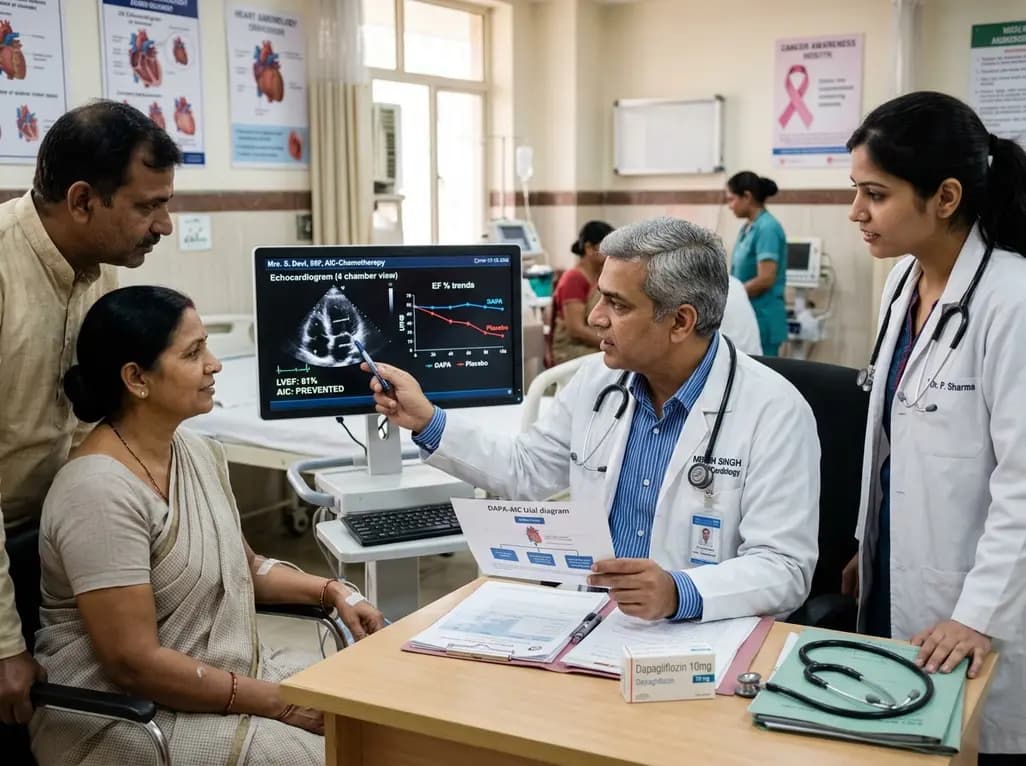
The phase II DAPA-AIC trial demonstrates that dapagliflozin 10 mg daily significantly preserves left ventricular ejection fraction compared to placebo over four months in adults undergoing anthracycline chemotherapy, highlighting a potential preventive strategy in cardio-oncology.
Today

A scoping review reveals severe gaps in long-term assistive technology provision following humanitarian emergencies. Addressing post-disaster rehabilitation requires systematic follow-up, workforce training, and integration into national health systems to sustain mobility and recovery.
Today
A randomized controlled trial investigated whether virtual reality thyroid biopsy reduces procedural pain, anxiety, and fear. While adjusted analyses showed modest pain reduction, unadjusted differences remained statistically insignificant, highlighting the need for larger confirmatory trials.
Today
