

Loading, please wait...
Loading, please wait...

Traumatic brain injury represents a substantial public health crisis worldwide, especially in emergency centers across India. Consequently, survivors frequently experience severe secondary complications that hinder their physical and cognitive recovery. Among these chronic sequelae, post-traumatic hypopituitarism poses a major diagnostic challenge because its symptoms often mimic post-concussive syndrome. Although neuroendocrine dysfunction affects a significant proportion of head trauma patients, clinicians frequently overlook subtle hormone deficiencies during acute stabilization. In addition, delayed recognition exacerbates neurological morbidity and impairs vocational rehabilitation. Therefore, establishing reliable predictive models is crucial to identify individuals at high risk for hypothalamic-pituitary damage early in their hospital stay.
Cranial trauma can disrupt the fragile vascular network and delicate stalk supplying the pituitary gland. As a result, patients suffer from deficiencies across multiple endocrine axes, including corticotropin, thyrotropin, gonadotropins, and growth hormone. Clinicians in intensive care units frequently encounter unstable hemodynamics, unprovoked hyponatremia, and prolonged lethargy caused by acute adrenal or thyroid insufficiencies. In addition, chronic anterior pituitary hormone deficiencies contribute to long-term fatigue, depression, metabolic dysregulation, and reduced quality of life. Despite these profound consequences, standardized screening remains inconsistent across neurosurgical centers. Many facilities lack routine protocols to evaluate pituitary reserves during the critical rehabilitation window. Furthermore, post-concussive symptoms disguise underlying endocrine failure, which delays necessary hormone replacement therapy. Undiagnosed hypopituitarism also elevates long-term cardiovascular risks and increases all-cause mortality among brain-injured cohorts. Timely diagnosis improves clinical outcomes, prevents life-threatening adrenal crises, and accelerates functional rehabilitation. Thus, neurointensivists and endocrinologists urgently require validated objective screening instruments to stratify vulnerable patients immediately following hospital admission.
A recent investigation involving 620 head trauma patients identified several critical clinical features that correlate with post-injury pituitary damage. Specifically, anatomical disruption and intracranial hypertension strongly elevate the risk of secondary pituitary ischemia. Patients presenting with a Glasgow Coma Scale score of eight or less exhibited significantly higher rates of endocrine dysfunction. Moreover, computed tomography findings provided critical prognostic insights during initial emergency triage. Radiological markers such as diffuse cerebral edema, traumatic skull base fracture, and cerebral herniation demonstrated strong statistical significance. Notably, a midline shift of five millimeters or greater emerged as the single most powerful predictor of subsequent hypopituitarism. Mechanical shear stresses during severe brain shift inevitably tear microvascular pedicles along the infundibulum. In addition, systemic complications directly worsen tissue perfusion at the sellar region. Factors such as pre-existing hypertension, requirement for intensive care admission, elevated intracranial pressure, emergency craniotomy, and prolonged hospital stay significantly correlated with pituitary injury. Consequently, clinicians must treat these tangible clinical indicators as immediate red flags indicating high endocrine vulnerability.
To improve risk stratification, researchers evaluated ten distinct artificial intelligence and statistical learning models using robust five-fold cross-validation. The experimental framework compared traditional logistic regression against modern decision trees, random forests, Naive Bayes, Support Vector Machines, k-nearest neighbors, and Multi-Layer Perceptrons. Additionally, the investigators tested sophisticated gradient boosting algorithms, including LightGBM, XGBoost, and CatBoost. Each model underwent rigorous evaluation across training and validation sets comprising seventy percent and thirty percent of the cohort, respectively. Performance metrics included area under the receiver operating characteristic curve, sensitivity, specificity, and predictive values. Advanced tree-based ensembles, particularly LightGBM and CatBoost, achieved competitive discrimination with high area under the curve metrics. Similarly, Naive Bayes demonstrated acceptable diagnostic performance across multiple testing subsets. However, complex black-box architectures frequently introduce overfitting and lack straightforward clinical transparency at the bedside. In contrast, simpler models often maintain superior generalizability when deployed across heterogeneous patient populations. Therefore, selecting an optimal algorithmic tool requires balancing predictive precision against practical interpretability in high-pressure emergency environments.
Remarkably, classical multivariable logistic regression outperformed the more sophisticated ensemble algorithms during rigorous validation. The logistic regression architecture demonstrated an exceptional area under the curve of 0.905 in the training cohort and 0.887 in the validation test set. Furthermore, the model maintained balanced sensitivity and specificity, minimizing dangerous false-negative classifications. Calibration analysis via the Hosmer-Lemeshow test confirmed excellent agreement between predicted event probabilities and observed patient outcomes. Although non-linear ensemble models handle complex interactions effectively, logistic regression prevents overfitting when analyzing well-curated physiological variables. More importantly, logistic regression offers clear clinical explainability. Physicians can readily convert logistic coefficients into straightforward bedside scoring rubrics and nomograms. Consequently, medical teams can comprehend the exact statistical weight that each predictor carries, such as midline shift or craniotomy status. For instance, clinicians can directly calculate individual probabilities without relying on opaque computational software. This high level of transparency fosters confidence among neurosurgeons and critical care physicians. Ultimately, logistic regression delivers the ideal combination of analytical power, mathematical stability, and practical clinical utility.
Implementing validated predictive algorithms within electronic medical record systems can transform acute trauma care. When an admitted trauma patient presents with extensive cerebral edema, intracranial hypertension, and a severe midline shift, the automated algorithm immediately computes an elevated risk score. As a result, neurointensive care teams can implement early targeted surveillance rather than waiting for overt endocrine collapse. In the acute setting, unrecognized secondary hypocortisolism causes refractory hypotension that resists conventional inotropic and fluid resuscitation. Similarly, undetected central diabetes insipidus triggers catastrophic hypernatremia and rapid hemodynamic collapse. By flagging high-risk individuals early, clinicians can monitor serum sodium, urine output, and morning serum cortisol levels proactively. Furthermore, timely glucocorticoid coverage prevents adrenal crises during physiological stress or emergency neurosurgical re-exploration. Integrating such predictive decision-support software optimizes resource utilization across resource-constrained hospitals. Specialists can focus costly and labor-intensive dynamic endocrine testing exclusively on patients who carry genuine anatomical and physiological vulnerability. Therefore, machine learning integration bridges the gap between emergency neurotrauma management and targeted metabolic preservation.
Pituitary dysfunction following traumatic brain injury frequently manifests as a chronic, evolving pathology rather than an isolated acute disturbance. Indeed, while some acute hormonal deficits resolve as cerebral edema subsides, new hormone deficiencies can emerge months or even years post-injury. Chronic anterior pituitary failure often produces insidious symptoms such as chronic exhaustion, depression, loss of libido, sarcopenia, and severe cognitive slowing. Unfortunately, families and rehabilitation teams often misattribute these clinical features entirely to primary brain contusions. Consequently, survivors miss critical opportunities for hormonal optimization that could dramatically enhance functional independence. A predictive risk classification formulated at initial admission establishes an enduring clinical record of endocrine vulnerability. Therefore, primary care physicians, physiatrists, and endocrinologists can coordinate scheduled reassessments at three, six, and twelve months post-discharge. Evaluators should check thyroid profiles, morning cortisol, testosterone, estradiol, and insulin-like growth factor 1 levels systematically. Moreover, prompt physiological replacement of deficient hormones improves metabolic health, enhances neuroplasticity, and restores neuropsychiatric well-being. Ultimately, embedding predictive analytics into long-term rehabilitation ensures comprehensive, patient-centered neurotrauma recovery.
Midline shift of five millimeters or greater on cranial imaging represents the strongest predictor of pituitary dysfunction. Severe lateral brain displacement produces acute mechanical shearing forces along the infundibular stalk and compromises hypothalamic-pituitary portal microvasculature. Consequently, extensive midline displacement causes ischemic pituitary necrosis and precipitates multi-axis anterior hormone loss.
Logistic regression achieved superior predictive performance because it avoids the overfitting frequently seen in complex non-linear algorithms when handling structured clinical data. It maintained robust discrimination across training and test cohorts with excellent calibration. Furthermore, logistic regression provides interpretable mathematical coefficients that clinicians can easily convert into bedside risk-scoring tools.
Clinicians must evaluate adrenal and thyroid reserves immediately during acute hospitalization if patients exhibit unexplained hypotension or hyponatremia. Subsequently, neurorehabilitation teams should screen all moderate-to-severe trauma survivors at three, six, and twelve months post-injury. Systematic long-term testing identifies late-onset growth hormone, gonadotropin, or adrenocortical deficiencies that hinder physical and cognitive recovery.
Disclaimer: This content is for informational and educational purposes only. Always seek the advice of a qualified healthcare provider with any questions regarding clinical management. Refer to the latest local and national guidelines for clinical practice.
References
Chen A et al. Machine Learning-Based Modeling for Predicting Hypopituitarism After Cranial Trauma. World Neurosurg. 2025 Jul. doi: 10.1016/j.wneu.2025.124018. PMID: 40368087.
Tan CL, Alavi SA, Baldeweg SE, et al. The screening and management of pituitary dysfunction following traumatic brain injury in adults: British Neurotrauma Group guidance. J Neurol Neurosurg Psychiatry. 2017;88(11):971-981. doi:10.1136/jnnp-2016-315500.
Zhang CD, Ioachimescu AG. Clinical manifestations and treatment of hypopituitarism due to traumatic brain injury. Best Pract Res Clin Endocrinol Metab. 2025;39(3):101996. doi:10.1016/j.beem.2025.101996.
Fleseriu M, Christ-Crain M, Langlois F, Gadelha M, Melmed S. Hypopituitarism. Lancet. 2024;403(10444):2632-2648. doi:10.1016/s0140-6736(24)00342-8.

Read summarized clinical updates, watch expert medical content, and earn CME certifications right from your smartphone.
Open your smartphone camera to scan and install.





A predictive modeling study evaluates machine learning algorithms for identifying post-traumatic hypopituitarism risk after head trauma. Multivariable logistic regression outperformed complex ensembles with an AUC of 0.887, highlighting midline shift ≥5 mm and intracranial hypertension as leading clinical predictors.
Today

The 2025 Australian meningococcal surveillance report shows a 13% decline in invasive meningococcal disease notifications to 118 cases. Genogroup B accounted for 82.2% of typed infections, predominantly impacting infants and young adults, highlighting critical vaccination and rapid diagnostic imperatives.
Today

Doctors at AIIMS New Delhi have achieved a historic milestone by performing India's first open prenatal myelomeningocele repair on a 25-week unborn fetus. This landmark multidisciplinary procedure provides vital neuroprotective benefits, lowers hydrocephalus risks, and transforms maternal-fetal medicine nationwide.
Today
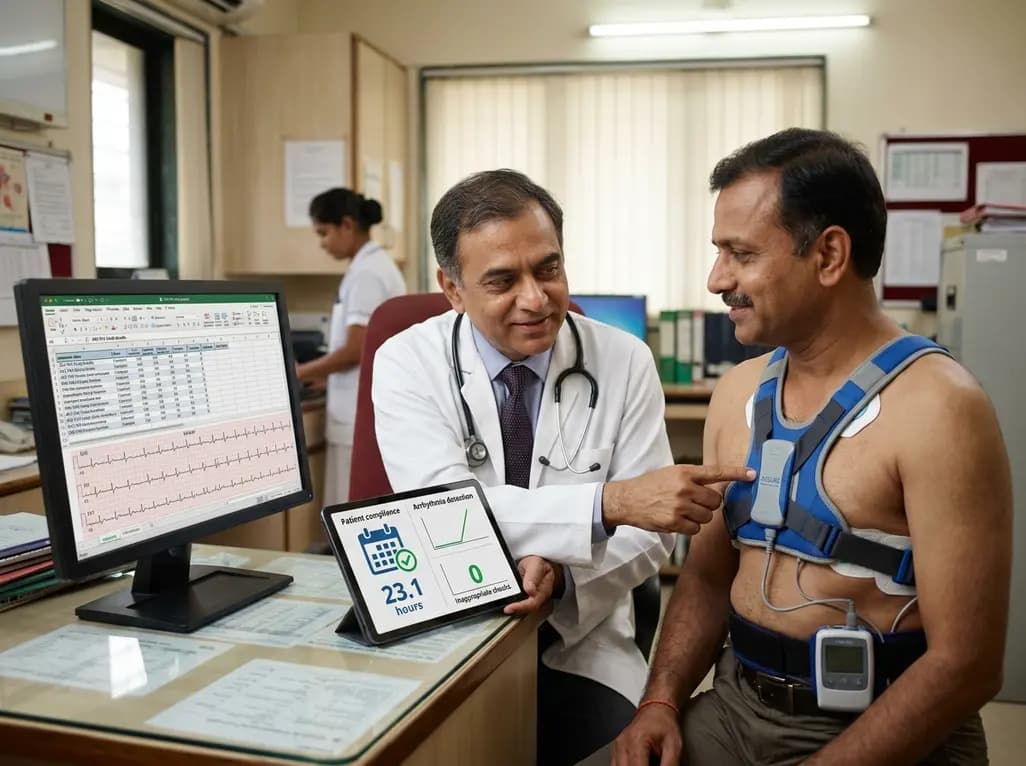
The ACE-PAS registry evaluated 21,612 patients fitted with the ASSURE wearable cardioverter defibrillator. The study demonstrated a 100% ventricular arrhythmia conversion rate, an inappropriate shock incidence of 0.0065 per patient-month, and high daily compliance of 23.1 hours, confirming real-world safety.
Today

A clinical overview of resveratrol supplementation in mitigating exercise-induced muscle damage. This narrative review explores physiological mechanisms, reductions in soreness markers like creatine kinase, dosage strategies, and bioavailability enhancements for sports medicine and nutrition practitioners.
Today

Childhood insulinoma is a rare cause of recurrent hyperinsulinemic hypoglycemia that often eludes early diagnosis. Advanced GLP-1 receptor-targeted PET/CT imaging using 68Ga-exendin-4 complements anatomic MRI to localize occult pancreatic lesions, facilitating focused, curative surgical enucleation.
Today
