.webp&w=384&q=75)

Loading, please wait...
Loading, please wait...
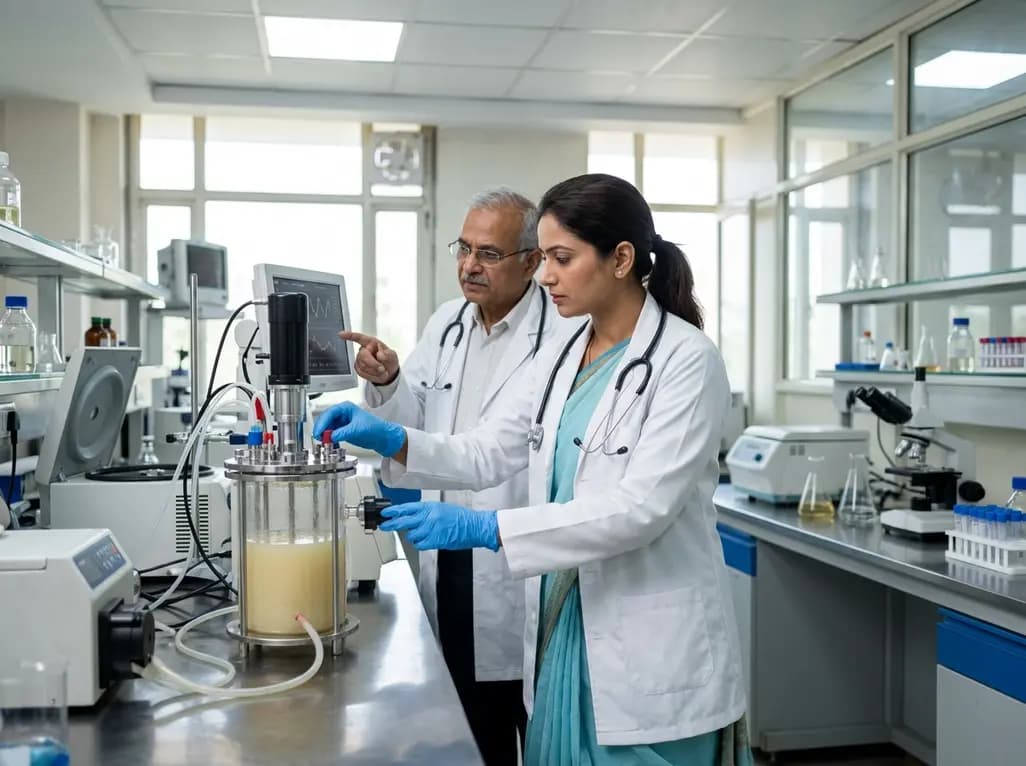
Precision fermentation is currently redefining the landscape of microbial food manufacturing. This technology enables the programmable biosynthesis of essential nutrients and functional ingredients. However, the industry faces significant hurdles. High metabolic burdens and growth-production trade-offs often limit large-scale deployment. Furthermore, biosafety concerns regarding host-derived impurities and endotoxins remain paramount. Experts are now focusing on precision fermentation food safety to meet stringent global standards.
Recent platform-level advances aim to decouple biosynthesis from cellular constraints. Researchers are highlighting cell-free systems and non-replicative minicells as breakthrough solutions. These systems act as intrinsically contained production chassis. Consequently, they mitigate the risk of unintended microbial replication. Additionally, these innovations simplify downstream processing by reducing host-derived contaminants. Such developments ensure that synthetic food components align better with food-grade requirements.
Secretion and efflux engineering play a vital role in modern bioprocessing. These methods facilitate efficient extracellular product recovery. Therefore, manufacturers can harvest products without lysing the host cells. This approach significantly reduces the presence of intracellular impurities. Moreover, scientists are exploring division-of-labor microbial consortia. This strategy addresses resource allocation limits by distributing metabolic tasks across different species. As a result, the entire system achieves higher efficiency and improved safety profiles.
In India, the Food Safety and Standards Authority of India (FSSAI) is actively evaluating these technologies. FSSAI currently categorizes precision-fermented ingredients as \"non-specified\" or \"novel foods.\" Recently, the Indian health ministry underscored the importance of robust regulatory frameworks for smart proteins. This shift ensures that emerging technologies maintain high safety standards while addressing food security. Consequently, doctors and nutritionists must stay informed about these \"safe-by-design\" frameworks as they enter the local market.
It is a biological process that uses engineered microorganisms to produce specific proteins, fats, or enzymes that are bioidentical to traditional sources.
Yes, newer \"safe-by-design\" frameworks utilize cell-free systems and secretion engineering to minimize contaminants and meet strict regulatory safety standards.
FSSAI treats them as novel foods under the \"Non-Specified Food\" regulations, requiring rigorous safety assessments before market approval.
Disclaimer: This content is for informational and educational purposes only. It does not constitute medical advice or a professional endorsement of specific food technologies. Refer to the latest local and national guidelines for clinical practice.
References

Read summarized clinical updates, watch expert medical content, and earn CME certifications right from your smartphone.
Open your smartphone camera to scan and install.





Explore how new microbial designs, cell-free systems, and FSSAI regulations are shaping the safety and efficiency of precision fermentation in India....
4 months ago
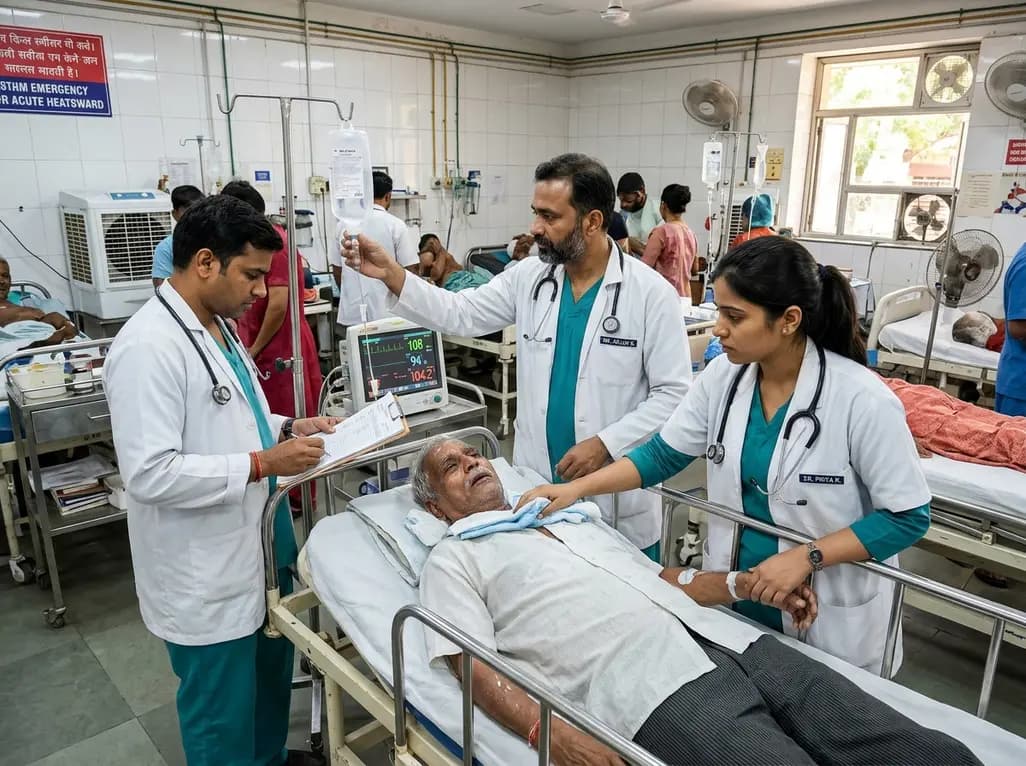
Recent epidemiological data reveals a dramatic surge in summer heat mortality driven by human-induced climate warming. This analysis explores the pathophysiological impacts on cardiac and renal systems, diagnostic dilemmas in death certification, and essential emergency cooling protocols for acute clinical care.
Today

Odisha has established India's first state-level clinical protocol specifically tailored for pregnant women with sickle cell disease. Developed with NHM and UNICEF, the framework provides structured antenatal screening, crisis mitigation, standardized referral pathways, and specialized interdisciplinary care.
Today

India is advancing preventive healthcare by integrating genomics, artificial intelligence, and quantum technologies. With the SANGAM programme sequencing one million Indian genomes, clinicians can unlock personalized therapies, detect cardiometabolic risks early, and curb the burden of diabetes and heart disease.
Today

A randomized controlled trial demonstrates that an eight-week dual-task training intervention significantly improves static and dynamic postural control over standard balance exercises in individuals with chronic ankle instability, addressing critical neurocognitive deficits during athletic and daily activities.
Today

A retrospective cohort study of 7,716 ICU patients from the MIMIC-IV database demonstrates that Gradient Boosting Decision Trees significantly outperform traditional SOFA scores in predicting in-hospital mortality among patients with sepsis and diabetes, with SHAP analysis providing clinical interpretability.
Today
