.webp&w=384&q=75)

Loading, please wait...
Loading, please wait...
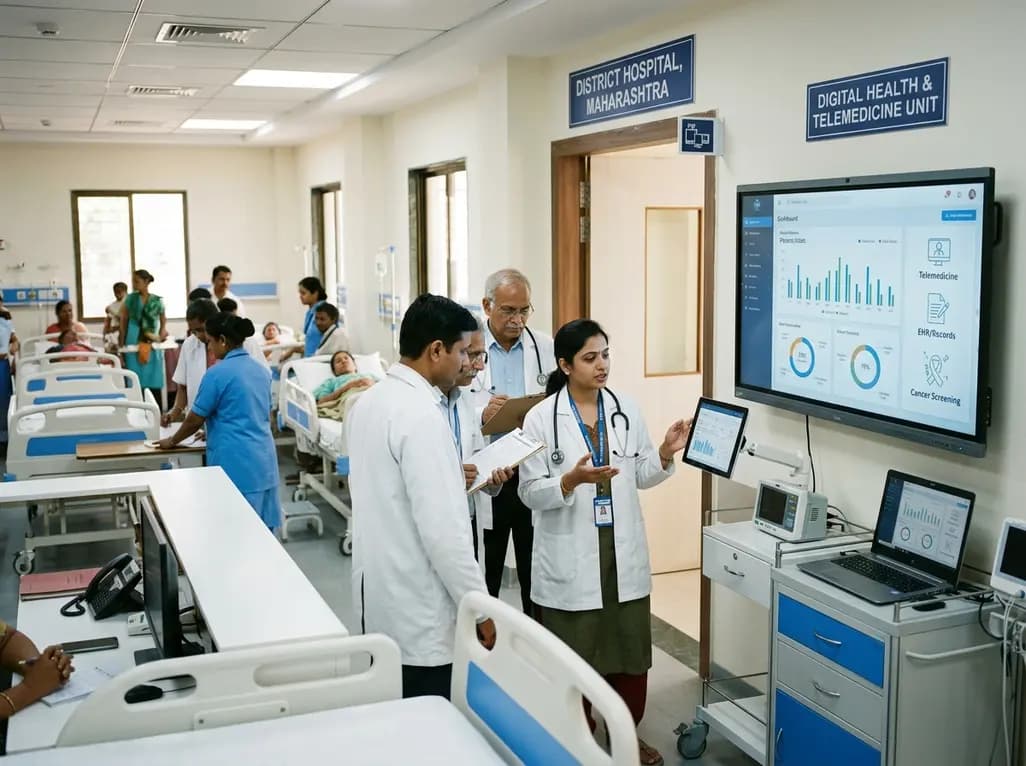
The Maharashtra State Cabinet has officially approved an extensive healthcare modernization initiative across five critical districts. Titled Primary Healthcare Reimagined with Advanced Governance and Accessible Technology Integration, the PRAGATI initiative Maharashtra represents an investment of Rs 4,250 crore. State Health Minister Prakash Abitkar confirmed that this initiative will add 1,600 hospital beds between 2026 and 2031. Consequently, the state aims to strengthen chronic illness management, improve diagnostic capabilities, and streamline regional clinical referral systems.
Public healthcare facilities frequently face overwhelming inpatient volumes and severe bed shortages. Therefore, this project systematically expands physical infrastructure in high-demand administrative regions. Specifically, the state will construct two major 500-bed district hospitals in Kolhapur and Nanded. These large medical centers will provide comprehensive tertiary services directly to rural and peri-urban populations. In addition, Pune will establish a dedicated 200-bed Regional Referral Hospital to decongest established academic medical complexes. Meanwhile, existing district hospitals in Latur and Nagpur will undergo extensive modernisation to become fully equipped 200-bed specialty hubs.
Importantly, these additions address regional disparities in bed availability and clinical capacity. Patients in central Maharashtra and Vidarbha often travel hundreds of kilometers to seek specialized consultations. Consequently, creating modern district facilities ensures prompt inpatient admissions and localized emergency interventions. Furthermore, upgrading these five regional facilities strengthens regional trauma care and critical care reserves across the state. Medical officers will gain access to advanced operating theatres, modern intensive care units, and specialized pathology suites. As a result, public hospital networks will deliver timely clinical interventions without overburdening existing staff. Additionally, local clinicians can stabilize critical trauma cases without organizing hazardous long-distance transfers.
Non-communicable diseases now account for substantial morbidity and premature mortality throughout India. Accordingly, the PRAGATI framework prioritizes prevention, aggressive screening, early diagnosis, and comprehensive long-term treatment for common lifestyle and degenerative illnesses. Clinicians will receive dedicated diagnostic infrastructure to manage essential hypertension, type 2 diabetes mellitus, and cardiovascular conditions. Furthermore, expanded facilities will support complex patients suffering from chronic kidney disease and end-stage renal complications.
In addition, the initiative expands specialized diagnostic equipment for chronic obstructive pulmonary disease, stroke prevention, and acute neurovascular recovery. Clinicians often observe severe visual and hepatic complications among poorly controlled diabetic cohorts. Therefore, district hospitals will establish specialized clinics for diabetic retinopathy and non-alcoholic fatty liver disease. Moreover, health authorities recognize the critical gap in psychiatric services across district populations. Consequently, the program integrates dedicated mental health units, structured counseling suites, and community psychiatric follow-up. Finally, the project establishes palliative care and hospice services to support patients facing advanced incurable conditions with dignity. Hence, families receive compassionate end-of-life care close to their homes without overwhelming private hospices. Similarly, routine dialysis units will ensure equitable renal replacement therapy for underserved communities.
Malignancies present severe clinical challenges when patients seek consultation only at advanced stages. Thus, the program establishes structured screening and diagnostic pathways for oral, breast, and cervical cancers across district health networks. Oral cancer remains highly prevalent in rural populations due to widespread smokeless tobacco habits. Similarly, cervical and breast cancers continue to cause preventable mortalities among women. Therefore, primary health centers and district referral units will deploy advanced diagnostic equipment, including digital mammography and colposcopy suites.
Additionally, health administrators will train frontline healthcare workers, community nurses, and medical officers to recognize pre-malignant lesions promptly. Behavior Change Communication campaigns will accompany these clinical measures to increase health literacy and eliminate social stigma. Consequently, local populations will actively participate in periodic health checkups and preventative screening drives. Furthermore, streamlined referral protocols will link community screening centers directly to district oncologists. Hence, oncological therapies, surgical interventions, and targeted chemotherapies can begin during earlier stages, dramatically improving survival rates. Ultimately, routine pathological assessments and immunohistochemistry tools will provide reliable diagnostic verification at the district level. Moreover, structured registries will monitor treated cancer patients to detect disease recurrences early.
Modern healthcare delivery requires strong digital foundations to ensure continuous patient management across clinical tiers. Accordingly, the newly introduced Maharashtra Health Technology Mission will spearhead the digital transformation of the public healthcare apparatus. The program will deploy interoperable Electronic Health Records across all participating district centers and sub-district units. Consequently, treating physicians can review longitudinal patient histories, medication records, and laboratory findings instantly.
Furthermore, the project significantly scales up state-wide telemedicine networks to connect rural secondary hospitals with academic specialists in Mumbai and Pune. Primary care practitioners can conduct virtual case consultations, specialist tele-radiology reviews, and remote patient monitoring. Therefore, rural patients receive expert clinical guidance without undertaking costly inter-district journeys. In addition, integrated health information systems will monitor real-time bed occupancy, emergency room volumes, and pharmaceutical inventories. As a result, district medical administrators can optimize drug procurement, reduce medicine stock-outs, and ensure equitable resource allocation throughout regional clinical facilities. Notably, digital registries will streamline chronic disease follow-ups by issuing automated reminders to patients requiring routine prescription refills or blood testing. Meanwhile, secure cloud platforms will maintain data confidentiality according to national digital guidelines.
The execution of the PRAGATI initiative Maharashtra represents a major milestone toward achieving Universal Health Coverage. To finance this comprehensive venture, the Asian Development Bank provides seventy percent of the funding through an investment loan of Rs 2,975 crore. Meanwhile, the Maharashtra state government contributes thirty percent, representing Rs 1,275 crore from state budgetary resources. This sustainable financing structure ensures uninterrupted construction and equipment procurement between 2026 and 2031.
Importantly, localized specialty services will sharply curtail catastrophic out-of-pocket health expenditures for vulnerable families. Patients will no longer rely on expensive private facilities for standard hemodialysis, cancer diagnostics, or cardiovascular monitoring. Moreover, comprehensive capacity building ensures that doctors, nurses, and paramedical teams receive continuous clinical education on modern management guidelines. Consequently, regional district hospitals will operate as resilient healthcare ecosystems capable of delivering standardized, evidence-based therapies. Thus, the public health framework will effectively bridge the historical divide between urban and rural medical services. Ultimately, this massive modernization program strengthens public trust, enhances patient safety, and elevates standard of care across Maharashtra. Furthermore, improved local outcomes will demonstrate the long-term clinical viability of public healthcare infrastructure investments.
Q1: What is the primary objective of the PRAGATI project in Maharashtra?
The initiative aims to overhaul public healthcare delivery across five key districts in Maharashtra. By adding 1,600 hospital beds and introducing modern diagnostic tools, the program targets rising chronic illness burdens. Furthermore, it bridges gaps between primary clinics and tertiary hospitals. Consequently, patients obtain timely screenings and specialized treatments locally, which significantly decreases out-of-pocket medical expenditures and relieves crowding at distant referral medical centers.
Q2: How will the project finance the bed additions and diagnostic upgrades?
The initiative requires an estimated investment of Rs 4,250 crore executed between 2026 and 2031. Notably, the Asian Development Bank funds seventy percent of this capital through a structured loan of Rs 2,975 crore. Meanwhile, the Maharashtra state government finances the remaining thirty percent, amounting to Rs 1,275 crore. Therefore, this multilateral partnership secures robust fiscal backing to build state-of-the-art facilities, procure diagnostic machinery, and expand public medical manpower.
Q3: Which chronic diseases receive dedicated attention under this health program?
The program targets common non-communicable diseases that heavily strain community health resources. Specifically, clinical teams will address cardiovascular disease, hypertension, diabetes mellitus, and chronic kidney ailments. Additionally, hospitals will expand care for chronic obstructive pulmonary disease, stroke recovery, diabetic retinopathy, fatty liver disorders, and mental health conditions. Dedicated oncological units will also deliver early screenings for oral, breast, and cervical cancers alongside compassionate palliative and hospice care services.
Disclaimer: This content is for informational and educational purposes only. It does not constitute medical advice or replace professional judgment. Refer to the latest local and national guidelines for clinical practice.
References

Read summarized clinical updates, watch expert medical content, and earn CME certifications right from your smartphone.
Open your smartphone camera to scan and install.





The Maharashtra cabinet has cleared the Rs 4,250 crore PRAGATI project, co-funded by ADB, to construct and upgrade district hospitals, expand clinical care for chronic non-communicable diseases, bolster cancer screening, and digitize regional healthcare services through modern telemedicine and electronic records.
last month
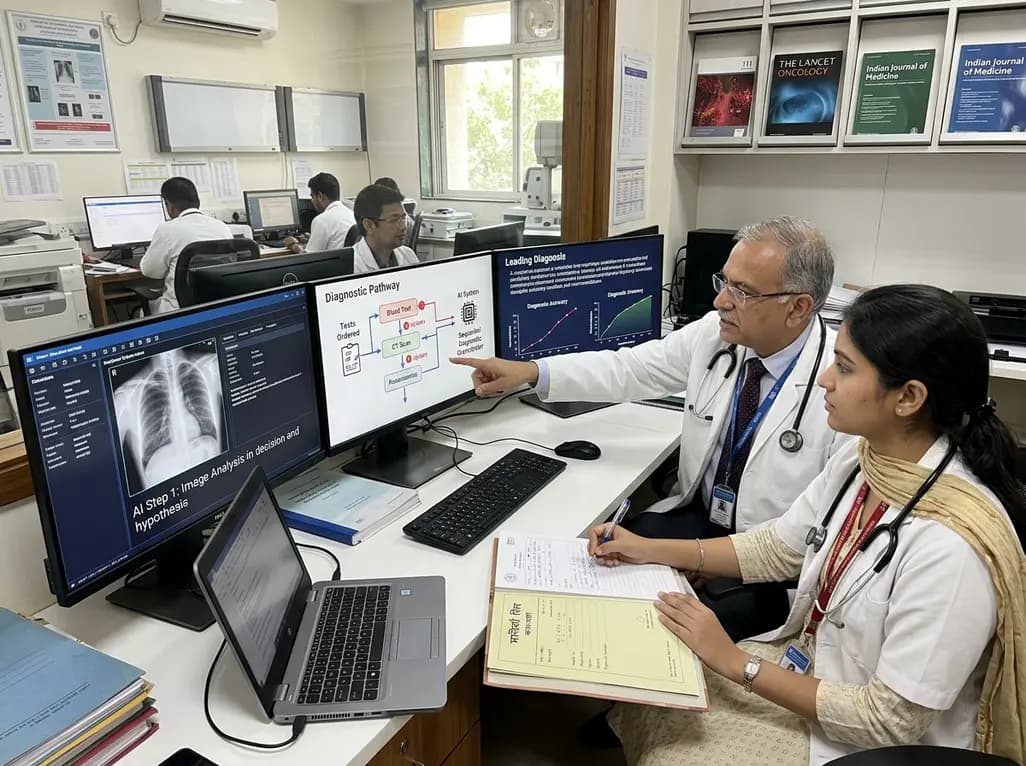
A breakthrough peer-reviewed study demonstrates that a sequential AI diagnosis system can mirror real-world clinical reasoning. By ordering stepwise tests and updating hypotheses dynamically, this multi-agent orchestrator achieved superior diagnostic accuracy while reducing investigative costs.
Today

A prenatal case highlights severe glutaric acidemia type II presenting as bilateral hyperechoic cystic kidneys at 18 weeks. Whole-exome sequencing revealed a novel homozygous ETFDH frameshift variant, demonstrating the power of rapid genetic testing in fetal renal anomalies.
Today

Review how tailored exercise programs benefit frail older patients with heart failure. Explore pathophysiological mechanisms, individualized training prescriptions, and strategies to overcome adherence barriers in clinical practice.
Yesterday

This comparative study evaluates posterior labral tears with and without glenohumeral instability, highlighting distinct demographic patterns, MRI underestimation in stable shoulders, and successful arthroscopic repair outcomes.
Yesterday

A clinical study demonstrates that early intervention with tocilizumab, either as monotherapy or bridged with corticosteroids, achieves significant proptosis reduction and resolves active inflammation in treatment-naive thyroid eye disease.
Yesterday
