.webp&w=384&q=75)

Loading, please wait...
Loading, please wait...

Ensuring reproductive autonomy is a critical component of maternal healthcare, yet access to services remains inconsistent across different social strata. A recent study by Knittel A et al. explores postpartum permanent contraception fulfillment by comparing requests and completion rates between individuals in a state prison system and those in the general community. Interestingly, the research highlights that while incarcerated patients request permanent contraception less frequently, they experience higher fulfillment rates once a request is made.
The study analyzed electronic prenatal and delivery records from the North Carolina Department of Adult Correction between 2016 and 2021. Researchers compared this data with a community sample of Medicaid-eligible patients from 2018 and 2019. The findings revealed that only 15.1% of patients in the prison clinic sample had a documented plan for permanent contraception. In contrast, 23.5% of individuals in the community sample requested these procedures. This disparity suggests that incarcerated individuals may face different counseling experiences or have different reproductive intentions compared to their community counterparts.
Despite lower request rates, the fulfillment of these requests showed an unexpected trend. Among those who requested sterilization, 45.3% of the incarcerated group had their procedure completed. Only 37.8% of the community group achieved the same. Consequently, the odds of postpartum permanent contraception fulfillment were significantly higher for those in the carceral system. This difference persisted even after adjusting for age, parity, and the route of delivery. These results raise important questions regarding the influence of institutional settings on medical decision-making and access.
In the Indian context, the Supreme Court has emphasized that prisoners do not lose their fundamental rights, including the right to health, at the prison gates. Navigating reproductive rights for incarcerated women requires a delicate balance between providing access to desired services and preventing coercion. While higher fulfillment in prisons might suggest better logistical coordination for some, it also underscores the need for robust counseling protocols. Clinicians must ensure that every patient, regardless of their legal status, receives comprehensive information about both permanent and long-acting reversible contraception (LARC) options.
Higher fulfillment rates in carceral settings may result from centralized healthcare management and reduced logistical barriers to scheduling surgery during the delivery admission. However, it is essential to ensure these rates reflect genuine patient choice rather than systemic pressure.
Most incarcerated patients are Medicaid-eligible, but their coverage is often suspended during incarceration. In the community, Medicaid patients often face administrative hurdles, such as the mandatory 30-day waiting period and specific consent forms, which can hinder the fulfillment of sterilization requests.
Common barriers in India include lack of awareness, provider bias, shortage of trained personnel in rural areas, and institutional preferences for other methods. For incarcerated women, the lack of gender-responsive health services in many prisons further complicates access.
Disclaimer: This content is for informational and educational purposes only. It does not constitute medical advice or a professional physician-patient relationship. Always seek the advice of a qualified healthcare provider for any medical concerns. Refer to the latest local and national guidelines for clinical practice.
References
Knittel A et al. Prevalence of Postpartum Permanent Contraception Requests and Fulfillment Among Individuals Experiencing Incarceration and Individuals in the Community. Obstet Gynecol. 2026 May 07. doi: 10.1097/AOG.0000000000006309. PMID: 42096710.
Arora KS, Chua A, Miller E, et al. Medicaid and fulfillment of postpartum permanent contraception requests. Obstet Gynecol 2023; 141(5): 918–925.
R. D. Upadhyay v. State of Andhra Pradesh, (2007) 15 SCC 337 (Guidelines for healthcare of pregnant prisoners in India).
"
Read summarized clinical updates, watch expert medical content, and earn CME certifications right from your smartphone.
Open your smartphone camera to scan and install.





A study exploring the request and fulfillment rates of postpartum permanent contraception among incarcerated individuals compared to the community populatio...
5 months ago
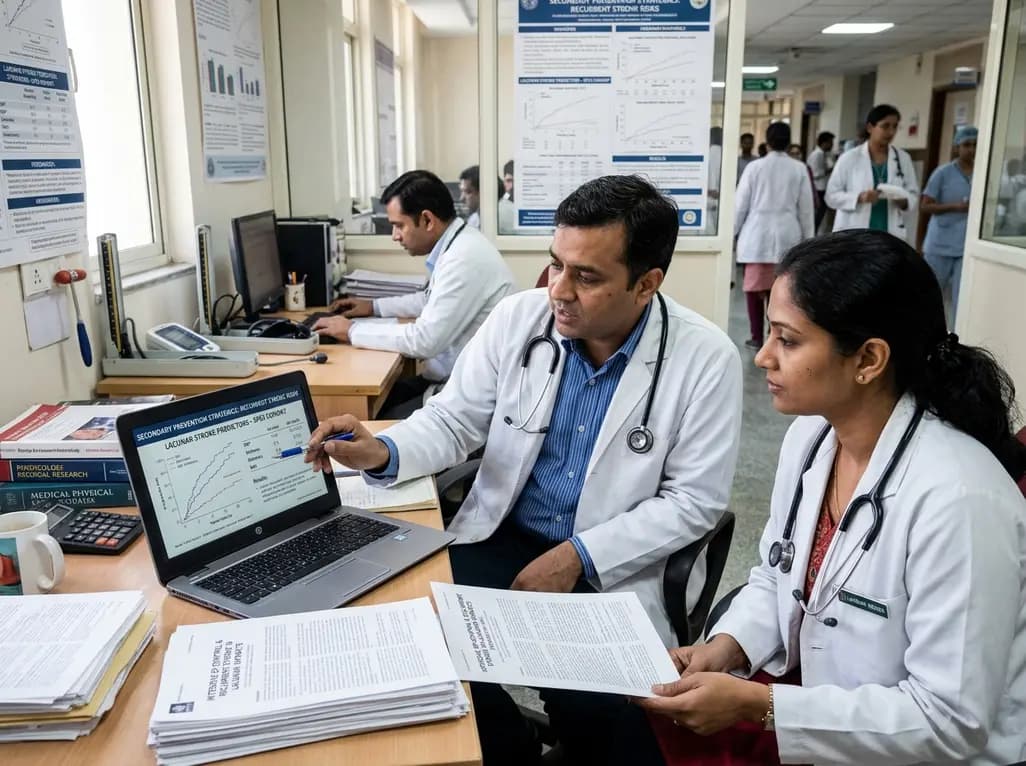
Explore vital recurrent stroke predictors in lacunar stroke patients managed with intensive blood pressure lowering. This analysis examines trial findings from SPS3 to uncover residual vascular risks, metabolic factors, and targeted secondary prevention strategies for high-risk neurological patients.
Today

Odisha has established India's first state-level clinical protocol specifically tailored for pregnant women with sickle cell disease. Developed with NHM and UNICEF, the framework provides structured antenatal screening, crisis mitigation, standardized referral pathways, and specialized interdisciplinary care.
Today

The Directorate General of Health Services directs Indian states to halt the hazardous reuse and reprocessing of single-use medical devices. Discover regulatory implications under the Drugs and Cosmetics Act, critical infection risks, legal liabilities, and operational changes required across clinical specialties.
Today

Mitochondria-targeted nanoparticles self-assembled from EGCG and L-glutamic acid effectively restore mitochondrial homeostasis, suppress synovial inflammation, and attenuate chondrocyte senescence in osteoarthritis, offering a promising disease-modifying nanotherapy.
Today

India is advancing preventive healthcare by integrating genomics, artificial intelligence, and quantum technologies. With the SANGAM programme sequencing one million Indian genomes, clinicians can unlock personalized therapies, detect cardiometabolic risks early, and curb the burden of diabetes and heart disease.
Today
