.webp&w=384&q=75)

Loading, please wait...
Loading, please wait...

Clinicians often view hospital discharge as a marker of surgical success. However, this metric does not always reflect a patient’s postoperative functional recovery or their ability to resume meaningful daily activities. A recent prospective study by Dana F et al. reveals that many patients struggle to regain their functional independence long after leaving the hospital.
The study monitored 367 elective surgery patients for 30 days post-discharge. Specifically, researchers asked patients to identify three activities essential for their quality of life. Surprisingly, only 56% of participants achieved complete recovery of these valued activities within the first month. Furthermore, recovery rates varied significantly across different functional domains. For instance, recreational activities showed the highest rates of non-recovery among the participants.
Multivariable analysis identified several independent risk factors for incomplete recovery. Lower Quality of Recovery-15 (QoR-15) scores at discharge significantly correlated with poorer long-term outcomes. Additionally, higher surgical complexity, frailty, and postoperative complications hindered the resumption of daily activities. Consequently, every point increase in the QoR-15 score raised the likelihood of achieving a full functional return. Therefore, assessing patient-perceived recovery early can help doctors identify high-risk individuals.
In the Indian healthcare context, where family-led home care is common, these findings are particularly relevant. Clinicians can use the QoR-15 questionnaire to screen patients before they go home. Moreover, combining this score with patient-identified goals allows for more personalized follow-up strategies. This approach ensures that patients do not just survive surgery but actually return to the life they value. By focusing on patient-identified activities, surgeons can improve both satisfaction and functional success.
The study indicates that while clinical metrics might look good, recreational activities are often the hardest to resume. Factors like high surgical complexity and frailty also play major roles in slowing down the process.
The QoR-15 is a validated tool that measures physical comfort, emotional state, and independence. It provides a reliable prediction of how well a patient will manage their daily routines once they return home.
Standard metrics like discharge dates do not capture what matters most to the patient. By identifying specific goals, clinicians can create targeted rehabilitation plans that improve patient satisfaction and functional outcomes.
Disclaimer: This content is for informational and educational purposes only. It does not constitute medical advice or a professional relationship. Always seek the advice of a qualified healthcare provider for any medical condition. Refer to the latest local and national guidelines for clinical practice.
References
Dana F et al. Beyond clinical metrics - Complete early recovery of patient-identified activities of daily living after surgery: A prospective observational study. Int J Nurs Stud. 2026 May 16. doi: undefined. PMID: 42143522.
Stark PA, Myles PS, Burke J. Development and psychometric evaluation of a postoperative quality of recovery score: the QoR-15. Anesthesiology. 2013;118(6):1332-40.
Campfort M, Leger M et al. Early quality of recovery according to QoR-15 score is associated with one-month postoperative complications after elective surgery. J Clin Anesth. 2022;78:110638.
"
Read summarized clinical updates, watch expert medical content, and earn CME certifications right from your smartphone.
Open your smartphone camera to scan and install.





A study shows that only 56% of patients regain full activity 30 days after surgery. QoR-15 scores and surgical complexity are key predictors of recovery....
5 months ago
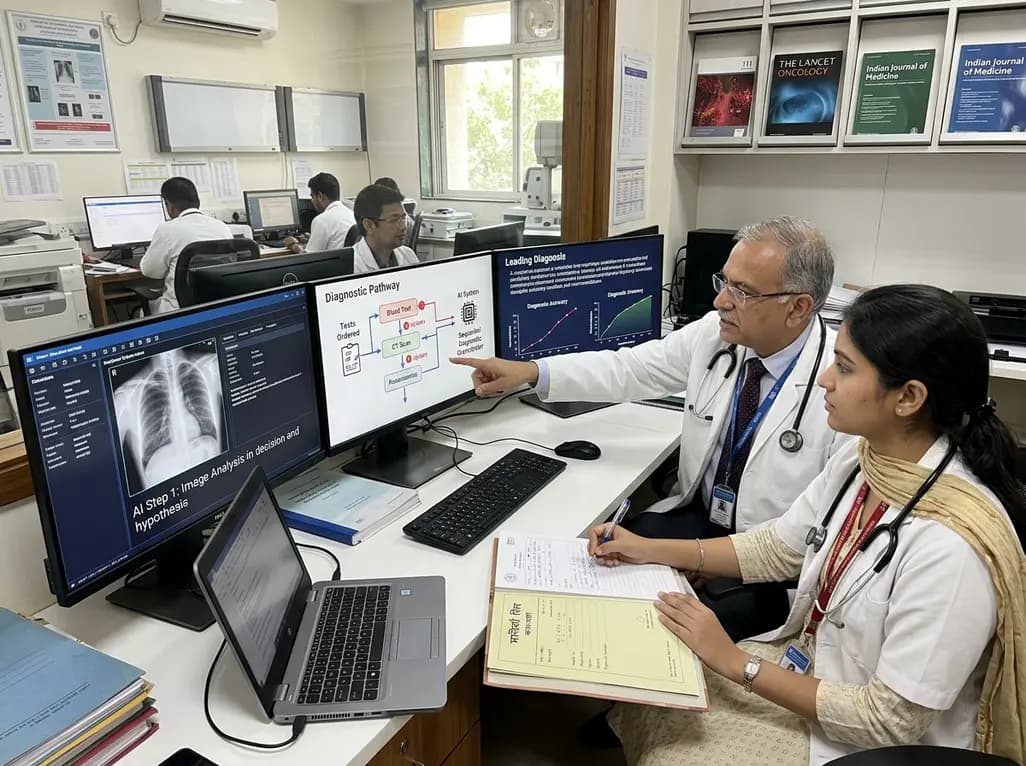
A breakthrough peer-reviewed study demonstrates that a sequential AI diagnosis system can mirror real-world clinical reasoning. By ordering stepwise tests and updating hypotheses dynamically, this multi-agent orchestrator achieved superior diagnostic accuracy while reducing investigative costs.
Today

A prenatal case highlights severe glutaric acidemia type II presenting as bilateral hyperechoic cystic kidneys at 18 weeks. Whole-exome sequencing revealed a novel homozygous ETFDH frameshift variant, demonstrating the power of rapid genetic testing in fetal renal anomalies.
Today

Review how tailored exercise programs benefit frail older patients with heart failure. Explore pathophysiological mechanisms, individualized training prescriptions, and strategies to overcome adherence barriers in clinical practice.
Yesterday

This comparative study evaluates posterior labral tears with and without glenohumeral instability, highlighting distinct demographic patterns, MRI underestimation in stable shoulders, and successful arthroscopic repair outcomes.
Yesterday

A clinical study demonstrates that early intervention with tocilizumab, either as monotherapy or bridged with corticosteroids, achieves significant proptosis reduction and resolves active inflammation in treatment-naive thyroid eye disease.
Yesterday
